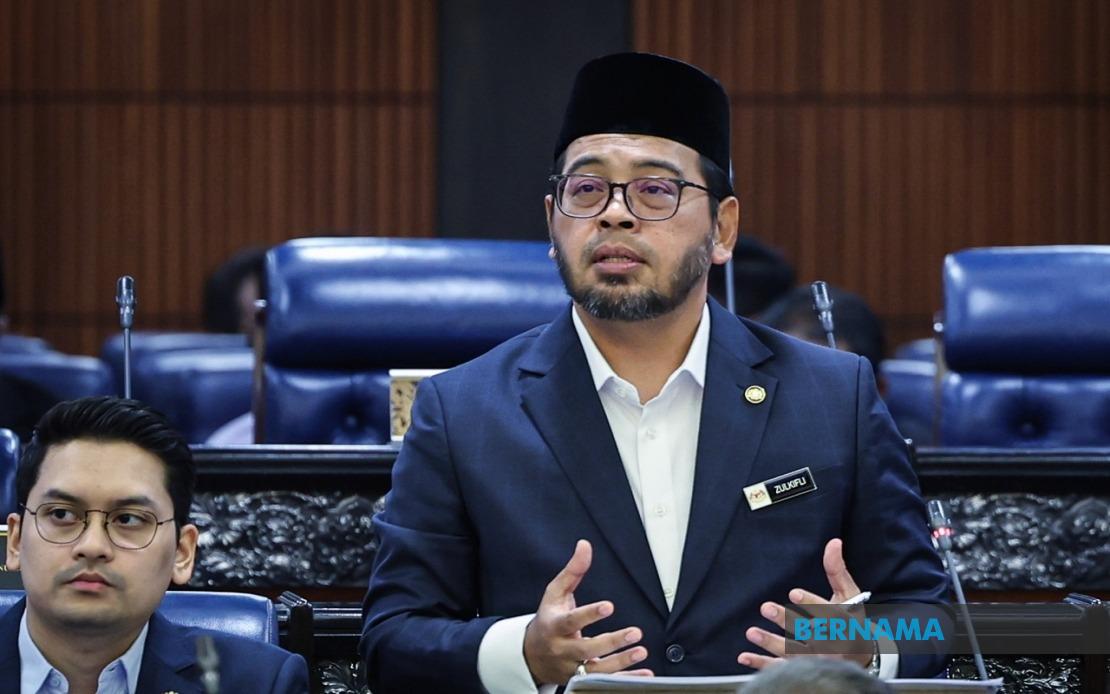
The financial crisis that engulfed Tabung Haji would never have reached the severity requiring government intervention had the pilgrimage fund's leadership responded seriously to repeated warnings from Bank Negara Malaysia beginning in 2014, according to Minister in the Prime Minister's Department (Religious Affairs) Dr. Zulkifli Hasan. Speaking during parliamentary debate on the Royal Commission of Inquiry report into the fund's collapse, Zulkifli outlined a damning timeline of regulatory alerts that went unheeded, leaving TH's balance sheet deteriorating year after year until it accumulated an asset-liability deficit approaching RM10 billion by end-2018.
Between August 2014 and September 2016, Bank Negara Malaysia transmitted five separate warning communications to TH's chairman and the minister responsible for the fund. These letters addressed critical governance failures spanning financial position assessment, reserve adequacy, and liquidity management—fundamental pillars of institutional health for any financial intermediary. Rather than triggering immediate remedial action at board level, these regulatory signals appear to have been either minimised or ignored entirely by TH's management structures. The minister's parliamentary statement suggests a widening gulf between what BNM was communicating privately and what TH's leadership was actually implementing operationally.
The gravity of TH's predicament intensified because the fund continued distributing dividends and hibah payments to contributors despite its liabilities exceeding assets. This practice violated Section 22 of the Tabung Haji Act and represented a fundamental breach of prudent financial stewardship. Rather than tightening operations during the period when warning signs were flashing, TH pressed forward with distributions that were economically unsound, essentially paying out money the institution did not possess. Such decisions suggest either profound misunderstanding of the institution's true financial condition or deliberate disregard for regulatory guidance. The Royal Commission findings support this assessment, recommending that TH should not have received unqualified audit certificates; instead, the auditors should have issued qualified opinions highlighting material breaches of compliance.
Zulkifli's remarks underscore a critical regulatory gap: despite BNM's statutory mandate to monitor non-bank financial institutions and its documented exchanges with TH leadership about remedial measures, the central bank lacked enforcement power to compel compliance. TH's management claimed to be addressing BNM's concerns, yet the institution's subsequent behaviour demonstrated that these assurances were hollow. By the time the government was forced to execute a financial bailout, the damage was already crystallised. The situation illustrates how warning mechanisms prove ineffective when institutional leaders lack either the competence or willingness to implement reforms.
The minister acknowledged that forensic auditing has already commenced on investments highlighted in the RCI report, many of which faced substantial loss exposure. Additionally, the government is examining a proposal to establish a Multi-Agency Task Force to conduct detailed investigations into each high-risk investment position. These investigative initiatives represent attempts to recover what may be recoverable and identify where culpability lies among decision-makers who approved or supervised the questionable investments that contributed to TH's distress.
Zulkifli signalled that legislative amendments to the Tabung Haji Act 1995 will be expedited, building on governance improvements already undertaken. These reforms aim to strengthen institutional safeguards and clarify the boundaries within which TH's management may operate. The minister framed these changes as essential to restoring depositor confidence, a critical consideration given that TH manages savings accumulated over decades by millions of Malaysian pilgrims. The fund's crisis struck at the heart of Islamic financial principles and created anxiety among contributors who had entrusted personal savings to what was supposed to be a secure and professionally managed institution.
The parliamentary debate itself reflected the seriousness with which Malaysian lawmakers are treating the TH affair. The special sitting lasted more than ten hours, with 39 members of parliament participating and two ministers delivering closing remarks. Speaker Tan Sri Johari Abdul noted that a third parliamentary session would continue in October, indicating that investigation and oversight will remain ongoing. This extended engagement signals parliamentary recognition that TH's collapse touches upon multiple policy domains including religious administration, financial regulation, and consumer protection.
For Malaysian depositors and the broader Islamic finance sector, the TH crisis represents a cautionary tale about institutional governance failures and regulatory coordination weaknesses. The fund serves primarily working-class and middle-class Malaysians saving specifically for the hajj pilgrimage, making it a socially significant institution. Its near-collapse created anxiety across communities that viewed TH as an extension of religious duty rather than a commercial investment vehicle. The government's intervention, while necessary to prevent total depositor loss, represented a substantial fiscal cost that could have been minimised through timely action in 2014 or 2015.
The minister's emphasis on enforcement action, asset recovery, and legislative strengthening reflects an understanding that procedural reforms alone cannot prevent future institutional failures. Malaysia's financial ecosystem requires regulators with sufficient authority and determination to enforce compliance, and institutions with leadership cultures that treat regulatory guidance as binding rather than advisory. The RCI's findings suggest both elements were absent in TH's case during the critical 2014-2016 period when intervention remained feasible.
Looking forward, the proposed amendments to the Tabung Haji Act and the multi-agency task force represent structural responses designed to prevent recurrence of the governance breakdowns that precipitated the crisis. However, their ultimate effectiveness will depend on consistent implementation and the cultivation of a compliance mindset among TH's next generation of management. For regional observers, the Malaysian experience offers insights into the governance vulnerabilities that can emerge within quasi-governmental financial institutions even in relatively sophisticated regulatory environments, and the importance of central banks maintaining not just monitoring capacity but enforcement mechanisms to compel timely remediation when problems emerge.

