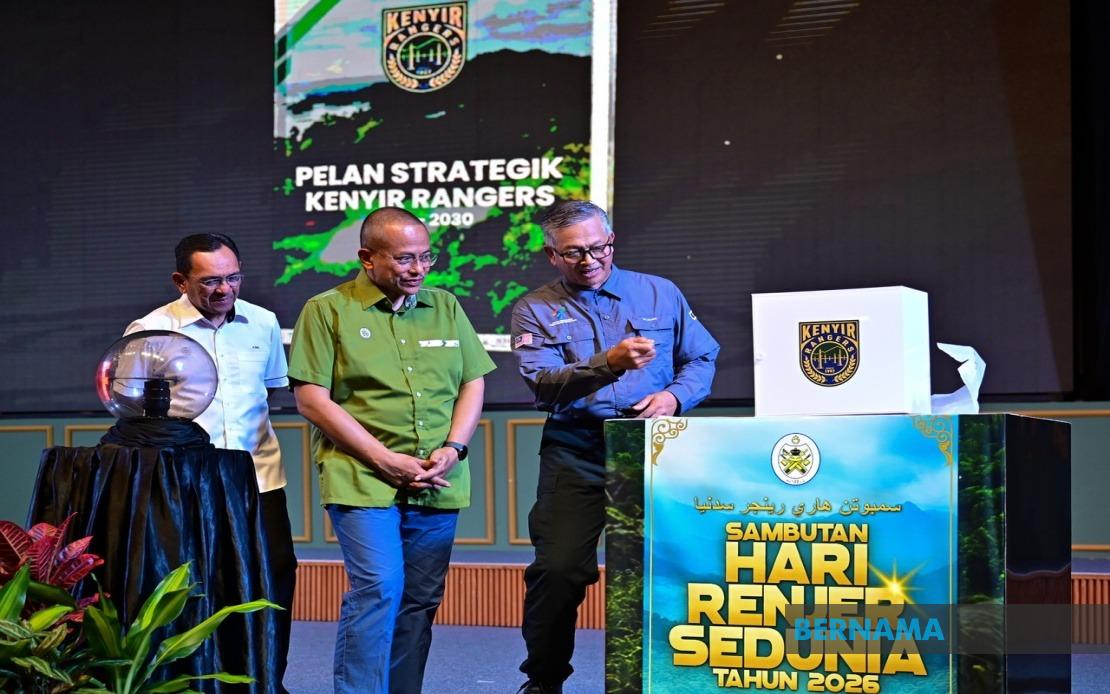
Terengganu Menteri Besar Datuk Seri Dr Ahmad Samsuri Mokhtar has called for a unified approach among government bodies to address the escalating problem of animals straying onto major highways and causing accidents. Speaking at the state-level World Ranger Day 2026 celebration at Wisma Darul Iman in Kuala Terengganu, he emphasised that tackling human-wildlife conflict requires sustained cooperation between the Wildlife and National Parks Department, the Malaysian Highway Authority, and other relevant stakeholders. The appeal comes in the wake of a troubling incident that underscores the dangers facing both motorists and animals in the region's transport corridors.
The collision on August 5 along the East Coast Expressway 2 brought the severity of the problem into sharp focus. A couple traveling in their Toyota Estima were injured when their vehicle struck a herd of elephants at Kilometre 274.6 of the expressway, shortly after passing the Cheneh Toll Plaza en route to Kuala Terengganu. This incident, along with previous encounters, has exposed critical gaps in wildlife management and highway safety protocols along one of Malaysia's most important transport arteries. The accident served as a sobering reminder that both animal and human lives hang in the balance when infrastructure development encroaches on natural habitats without adequate safeguards.
According to Ahmad Samsuri, implementing intensified patrol operations at identified conflict zones represents an immediate and pragmatic response. He highlighted that such patrols should be strategically concentrated along stretches of highway adjacent to known wildlife habitats and traditional animal migration routes. Enhanced vigilance becomes particularly crucial during the monsoon season, when increased rainfall forces animals to abandon their natural shelters in search of drier ground and alternative sources of food and water. The menteri besar noted that seasonal variations in animal behaviour require highway authorities to adjust patrol schedules dynamically rather than maintaining uniform security measures year-round.
Electric fencing emerges as a promising long-term deterrent that could prevent wildlife from accessing roadways in the first place. The measure works by creating an invisible but uncomfortable barrier that encourages animals to avoid approaching highways without causing them serious harm. However, Ahmad Samsuri acknowledged the substantial financial constraints inherent in deploying such technology across the entirety of Malaysia's expressway network. The East Coast Expressway 2 alone stretches across hundreds of kilometres, making comprehensive fencing prohibitively expensive. Instead, he suggested a targeted approach whereby fencing would be installed selectively along sections that run through or immediately adjacent to critical wildlife habitats, where animal crossings are most frequent and accident risks highest.
Beyond traditional physical barriers and patrols, the menteri besar advocated for incorporating advanced technology into the wildlife management framework. Early-warning systems capable of detecting animal movements and alerting highway operators in real time represent a frontier in preventing accidents. Such systems could enable authorities to temporarily reduce speed limits, increase visible warnings, or deploy rapid response teams to affected areas before collisions occur. These technological solutions, while requiring significant upfront investment, offer scalability advantages over labour-intensive patrol programmes and could eventually be deployed across multiple highways simultaneously. The integration of sensor networks and data analytics into highway infrastructure reflects a broader shift toward smart transportation systems in Malaysia.
The human cost of these incidents cannot be overstated. Beyond the physical injuries sustained by the couple in the August 5 accident, such collisions trigger cascading consequences including traffic disruptions, emergency response mobilisation, and psychological trauma for those involved. For Terengganu residents who depend on the East Coast Expressway 2 for commerce, medical care, and family connections, the perception of unsafe travel conditions could alter commuting patterns and economic activity. Ahmad Samsuri's acknowledgment of the tragedy and expression of sympathy for those affected reflected the emotional weight these incidents carry within affected communities, moving the discussion beyond mere technical problem-solving to recognition of human suffering.
The wildlife conservation angle presents equally compelling concerns. Elephants, as a protected species in Malaysia, face mounting pressure from habitat loss and fragmentation. Their increasing presence on highways suggests that their traditional ranges have become insufficiently resourced or accessible, forcing them into contact with human infrastructure. Each collision that results in animal fatalities represents not just an individual loss but a potential impact on already vulnerable populations. From a conservation standpoint, reducing human-wildlife conflict is therefore intertwined with preserving Malaysia's natural heritage and meeting international biodiversity commitments.
The institutional coordination Ahmad Samsuri advocated for demands clear lines of communication and shared responsibility between agencies that typically operate in silos. The Wildlife and National Parks Department possesses ecological expertise and animal behaviour knowledge, while the Malaysian Highway Authority commands resources, infrastructure access, and operational capacity. Bridging these institutional divides requires formal protocols, regular inter-agency meetings, and possibly dedicated funding streams. Without such structural arrangements, well-intentioned calls for cooperation risk remaining rhetorical without translating into concrete on-the-ground improvements.
For Malaysian highway users, particularly those traversing the East Coast Expressway 2 regularly, the menteri besar's remarks offer some reassurance that the issue is receiving high-level political attention. However, implementation timelines remain unclear. The exploration of various measures suggests that no single solution is immediately available, and the road ahead likely involves a patchwork of interventions refined over time. Motorists in Terengganu and neighbouring states would benefit from enhanced public awareness campaigns explaining seasonal wildlife risks and recommended driving behaviours during high-risk periods.
The broader Southeast Asian context makes Terengganu's experience instructive. Other nations in the region, from Thailand to Indonesia, grapple with similar human-wildlife conflicts as rapid infrastructure expansion encroaches on natural landscapes. Malaysia's approach—emphasising technology, inter-agency coordination, and targeted infrastructure investment—could serve as a model for regional peer learning. The challenge lies in ensuring that policy pronouncements translate into sustained funding and operational commitment rather than remaining aspirational statements.

