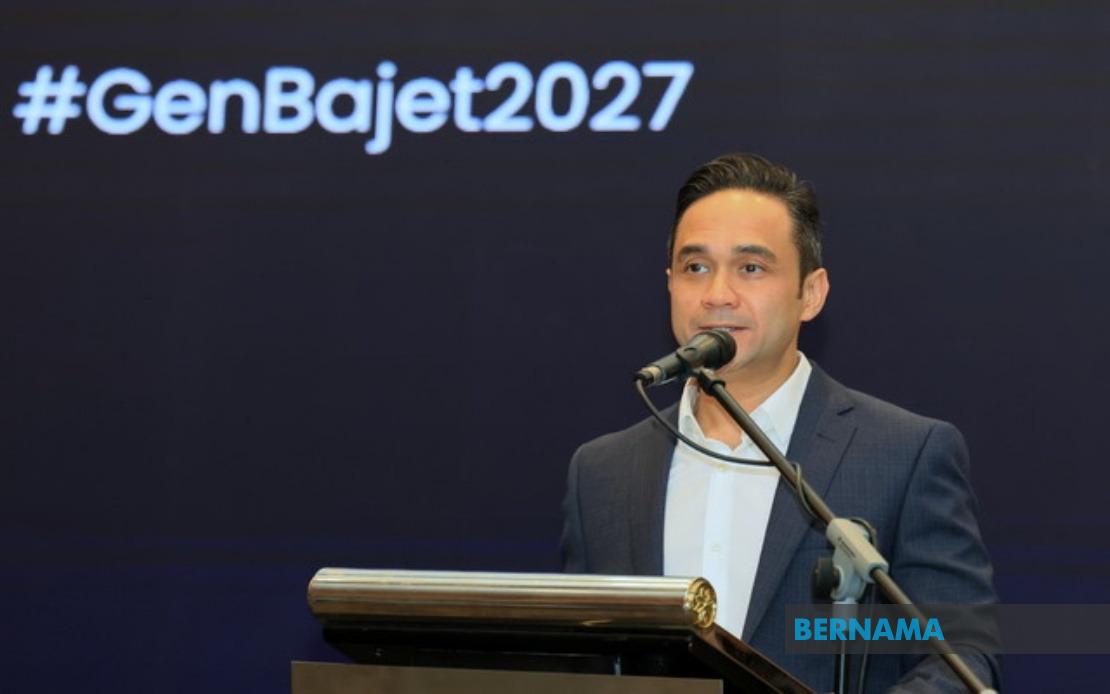
The Bumiputera Agenda Steering Unit (TERAJU) is making a strategic push to secure meaningful resources in the 2027 federal budget, emphasising that adequate financing remains essential for realising the Bumiputera Economic Transformation Plan 2035 (PuTERA35). Speaking in Cyberjaya, Nik Nazree Nik Abdul Rahman, senior director of TERAJU's Strategic Services Division, underscored the importance of budgetary commitment to translate policy ambitions into tangible economic gains for the Bumiputera community.
The comprehensive 10-year blueprint, formally launched in August 2024, represents a systematic framework designed to strengthen Bumiputera participation, ownership, and control across Malaysia's economic landscape. The initiative encompasses 132 distinct programmes structured around three foundational pillars and twelve strategic drivers, each calibrated to contribute toward measurable improvements in community wealth and economic resilience. This architecture reflects government determination to align Bumiputera advancement with the broader MADANI Economy framework, positioning ethnic economic empowerment as integral to national economic transformation rather than as a parallel concern.
Nik Nazree articulated a nuanced position regarding current implementation progress, noting that roughly 67 per cent of PuTERA35 initiatives have entered implementation phases. However, he flagged a critical distinction between activity levels and substantive outcomes, posing a question that cuts to the heart of economic policy effectiveness: whether accelerated implementation is genuinely translating into stronger Bumiputera enterprises and improved household welfare. This acknowledgement reveals a pragmatic assessment within TERAJU that programme rollout alone, without verified impact pathways, carries limited strategic value.
The roadmap identified three priority domains warranting enhanced budgetary attention. First, the energy transition sector emerged as a particular focus area, representing what officials characterise as novel economic terrain where Bumiputera enterprises can establish competitive footholds before market structures fully crystallise. Renewable energy, battery technology, and related infrastructure development present entry points theoretically more accessible than entrenched industries dominated by established players. This positioning reflects recognition that strategic industrial targeting, rather than broad-based support, yields superior outcomes for disadvantaged economic groups.
Second, TERAJU highlighted deficiencies in capital market participation among Bumiputera entrepreneurs, suggesting that existing financing mechanisms and equity-raising pathways remain underutilised or inaccessible to target constituencies. Expanding access to venture capital, public listings, and bond issuances could substantially enhance Bumiputera business scale-up capacity, transforming small and medium enterprises into competitive regional actors. The frank acknowledgement that capital market integration "has yet to be fully expanded" indicates policy makers recognise systemic barriers beyond simple awareness or financial literacy gaps.
Implementation monitoring occurs through multilayered governance architecture, including dedicated working committees and the Bumiputera Economic Council chaired directly by Prime Minister Datuk Seri Anwar Ibrahim. This cabinet-level attention theoretically accelerates decision-making and resource mobilisation, though sustained high-level engagement depends on demonstrated progress against measurable indicators. The council structure signals that PuTERA35 functions as a signature MADANI-era initiative rather than a routine departmental programme, lending political weight to budgetary negotiations.
TERAJU has committed to publishing a comprehensive implementation performance report by year-end, providing public-facing assessment of progress after two years of active programme execution. This accountability mechanism responds to legitimate scrutiny regarding whether substantial government expenditure translates into observable community benefits. Malaysian readers familiar with previous economic initiatives will recognise the importance of such transparent reporting in sustaining political and public confidence in long-term Bumiputera programmes, particularly given historical debates surrounding targeting efficiency and rent-seeking behaviour.
The timing of TERAJU's budget appeal carries strategic significance. With Budget 2027 preparation commencing, government ministries compete intensively for finite resources. TERAJU's explicit call for prioritisation reflects institutional awareness that absent proactive advocacy, routine budgetary processes may allocate insufficient funding to PuTERA35 relative to competing claims. The framing emphasises high-impact outcomes rather than programme continuity, positioning Bumiputera economic transformation as delivering economy-wide benefits rather than narrow sectional advancement.
For Malaysian stakeholders, PuTERA35 represents the most comprehensive government approach to Bumiputera economic participation in recent years, encompassing sector development, business support, human capital building, and institutional capacity enhancement. The initiative acknowledges that passive affirmative action policies—while maintaining important symbolic and redistributive functions—prove insufficient for genuine economic transformation. Active investment in enterprise development, market access, and technological capability offers potential for sustainable competitive advancement.
Regional dimensions merit consideration as well. Southeast Asia increasingly competes for manufacturing investment and technology sector talent, with several nations implementing deliberate policies to nurture indigenous business capacity. PuTERA35's emphasis on emerging sectors like energy transition positions Malaysia to capture opportunities alongside regional competitors pursuing parallel strategies. Adequate funding thus becomes not merely a domestic equity concern but a regional competitiveness imperative, particularly as investors assess government commitment to supporting local enterprise ecosystem development.
The distinction between implementation coverage and outcome quality that Nik Nazree highlighted points toward broader questions about Malaysian economic policy effectiveness. Many government programmes achieve high activity levels while producing ambiguous results. PuTERA35's 2027 budget request implicitly carries an obligation to demonstrate convincing impact evidence, justifying continued or expanded resource allocation. The promised year-end performance report will likely shape subsequent budgetary decisions and programme scope more decisively than implementation percentages alone.
Government officials acknowledge that achieving 2030 interim targets requires sustained funding commitment through remaining implementation years. The 132 identified initiatives cannot be executed simultaneously across all sectors; sequencing and resource concentration decisions will determine which communities and enterprises benefit most directly. Budget 2027 deliberations will effectively reveal government priorities within the broader PuTERA35 framework, demonstrating whether economic empowerment focus translates from rhetorical commitment into concrete fiscal allocation patterns.

