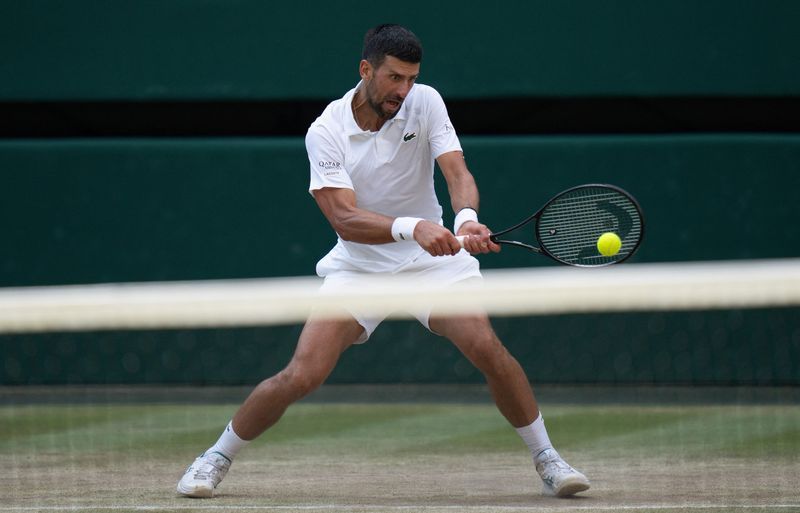
The Professional Tennis Players Association has escalated its campaign against the physical toll of modern professional tennis, using high-profile withdrawals from the Canadian Open to illustrate a systemic problem: the sport's calendar has become unsustainably demanding on athletes' bodies. The string of absences from Montreal's tournament, affecting everyone from world number one Jannik Sinner and 24-times Grand Slam champion Novak Djokovic to rising star Carlos Alcaraz, serves as a visible symptom of what the PTPA characterises as an underlying structural malady in how professional tennis organises its year.
The men's draw has been particularly ravaged by injury-related pullouts. Beyond Sinner and Djokovic, Canadian hopes were dented when hometown favourite Felix Auger-Aliassime withdrew due to a back injury, while Alcaraz's wrist problem kept him sidelined. The women's tournament has fared no better, with defending champion Victoria Mboko, Wimbledon finalist Karolina Muchova, Emma Raducanu and Jasmine Paolini all absent through injury. These are not fringe competitors—they represent the tournament's biggest draws and commercial anchors, making their collective absence a statement about the crisis the PTPA is describing.
What distinguishes the PTPA's latest intervention is the backing of empirical data gathered over an extended period. The players' advocacy body has compiled injury statistics across more than 30,000 professional matches at all competitive levels over the past eight years, work undertaken jointly with its medical director Dr. Robby Sikka in a project that commenced three years ago. This research foundation allows the organisation to move beyond anecdotal complaint into evidence-based argument, a critical shift when confronting entrenched commercial interests within professional sports governance.
The numbers presented are starkly concerning. Upper-body injuries surged 42 percent in the first quarter of 2026 when compared to the corresponding period in 2025. More dramatically, arm injuries specifically increased by 112 percent year-over-year. These figures are not marginal variations that could be dismissed as statistical noise; they represent a substantial deterioration in player health metrics coinciding precisely with changes in tournament structure that the PTPA attributes to the problem.
At the heart of the PTPA's grievance lies the ATP's OneVision strategic plan, which expanded seven of the nine Masters 1000 tournaments into 12-day formats beginning in the 2025 season. While the extension ostensibly allows for more matches and potentially more revenue, it compresses the window between tournaments that athletes require for meaningful recovery, medical treatment and training adaptation. For a sport where competitors travel globally across multiple time zones throughout the year, even marginal reductions in turnaround time accumulate into significant cumulative stress on the musculoskeletal system.
The scheduling squeeze operates alongside the existing calendar commitments that have long troubled players. Professional tennis traditionally operates on an expansive schedule running most of the year, with multiple tournaments at varying competitive levels competing for player participation. The addition of these extended event formats simply intensifies pressure on athletes already managing substantial accumulated fatigue. The PTPA contends that players have raised concerns about schedule density for years without meaningful structural response, making the latest format changes particularly egregious from a player-welfare perspective.
The association frames this dispute explicitly in terms of long-term competitive health versus short-term commercial extraction. Injury accumulation early in seasons suggests that the compressed recovery model produces not merely isolated setbacks but rather compounds damage that cascades through the competitive year. Players forced to compete while under-recovered risk both acute injuries and chronic degenerative conditions that may shorten careers and compromise the quality of competition that ultimately sustains tennis's commercial value.
In response to the PTPA's warnings, the ATP has maintained that players retain discretion over their schedules and that the organisation is developing incentive structures to encourage appropriate participation levels. However, this position sits uneasily with the structural reality that top-ranked competitors face intense pressure to accumulate ranking points and appearance fees, creating implicit rather than explicit compulsion to participate regardless of personal fitness. The PTPA argues that genuine player choice requires either structural reduction in mandatory commitments or significantly enhanced recovery protocols built into the calendar itself.
The PTPA's recommendations address multiple levels of reform. The organisation calls for reversing the 12-day Masters 1000 format, substantially reducing mandatory tournament commitments to allow adequate recuperation, and institutionalising player involvement in calendar restructuring decisions. Critically, it advocates for what it describes as a data-driven approach, using injury epidemiology to inform scheduling architecture rather than allowing commercial considerations alone to determine event length and frequency.
For Southeast Asian readers, this dispute carries particular resonance given the region's emergence as a significant venue within professional tennis's commercial geography. As tournaments expand and schedules intensify, the physical demands on players necessarily intensify competition pressure across the calendar. A fundamentally unhealthy competitive structure ultimately threatens the quality of the sport itself, reducing marquee matchups as top players withdraw due to injury or fatigue. The PTPA's battle thus extends beyond player welfare into questions about whether professional tennis is structuring itself in ways that ultimately diminish its own appeal and sustainability.

