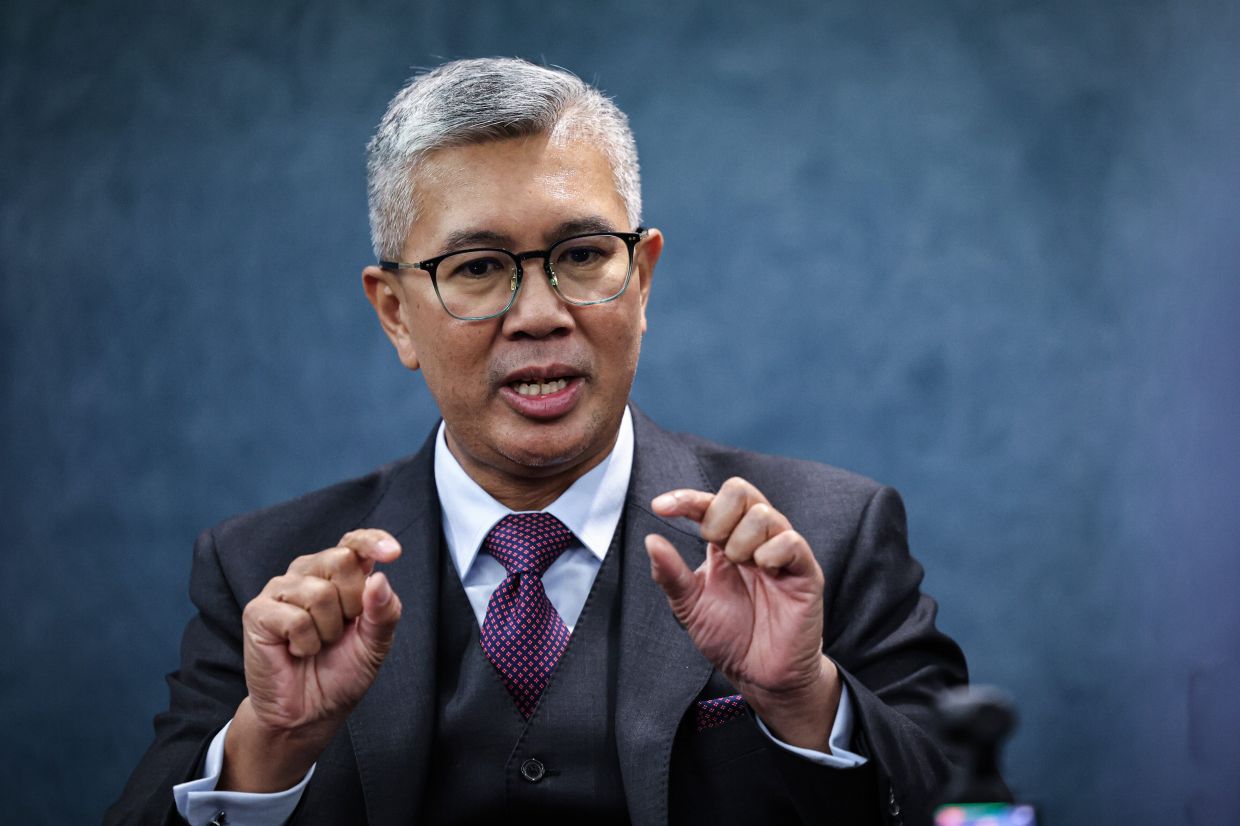
Malaysia's Investment Development Authority chairman Tengku Datuk Seri Zafrul Abdul Aziz has sounded an urgent call for ASEAN nations to deepen their energy cooperation, warning that the region faces a staggering funding gap that threatens to undermine its transition to cleaner power sources. Speaking at the 7th International Sustainable Energy Summit in Kuala Lumpur, he identified a mismatch between ambitious net-zero commitments and the practical mechanisms needed to execute them—framing the challenge not as a lack of political will but as a structural failure in capital coordination across Southeast Asia.
The scale of the challenge is sobering. ASEAN requires approximately US$200 billion annually through 2030 to finance its energy transition, yet current mechanisms fall far short of mobilising such investment. This projection reflects the enormous infrastructure upgrades necessary across the region's ten economies, from power generation capacity to grid modernisation and supporting technologies. The funding gap represents perhaps the single most critical obstacle to meeting climate pledges, and according to Tengku Zafrul's assessment, it cannot be solved by any single nation acting alone—a reality that fundamentally reshapes how Southeast Asia must approach its energy future.
The obstacles preventing rapid progress are multifaceted and deeply institutional. Even as virtually every ASEAN government has endorsed net-zero targets, projects languish in pre-bankability phases, unable to attract private capital because of regulatory uncertainty and perceived risk. Fragmented national regulatory frameworks create friction for cross-border energy trading, while financing structures remain overwhelmingly domestic and siloed. Risk-sharing instruments that could unlock institutional investment—pension funds, sovereign wealth funds, and insurance mechanisms—are either absent or inadequately developed. This ecosystem dysfunction means that even when promising renewable projects are identified, they struggle to secure the patient capital necessary to move from concept to operation.
Tengku Zafrul's three-pronged proposal begins with the ASEAN Power Grid, an infrastructure initiative aimed at achieving full regional integration by 2045. The concept harnesses Southeast Asia's considerable geographic and climatic diversity: Laos possesses significant hydroelectric potential, Indonesia sits atop geothermal reserves, Vietnam's coastlines offer wind resources, and Malaysia commands solar capacity. By interconnecting these resources through a unified grid, ASEAN could optimise generation across the region, allowing renewable surpluses in one country to serve demand in another. Such integration would reduce reliance on fossil fuels while improving grid stability and resilience—outcomes that individual national strategies cannot achieve alone.
The second initiative proposes establishing an ASEAN Green Investment Facility that would amalgamate capital from multiple sources: sovereign wealth, pension fund reserves, and private investment. By pooling these funding streams, the facility would reduce the burden on any single national treasury while creating sufficient scale to attract sophisticated institutional investors. This approach recognises that the capital exists within Southeast Asia but remains fragmented across jurisdictions and asset classes, preventing optimal deployment. A coordinated facility could apply standardised due diligence processes, manage currency and political risks collectively, and thereby lower the cost of capital for qualifying projects across the region.
Third, Tengku Zafrul emphasised the necessity of coordinated crisis management protocols—a prescient concern given the region's experience with energy supply disruptions. He advocated for joint fuel reserves, aligned emergency communication channels, and monitored supply chains that would enable ASEAN to respond collectively to future shocks. This proposal emerged from the implicit lesson of recent global energy turbulence, when fragmented national responses amplified vulnerabilities. A genuinely regional approach would establish collective buffers and information systems that strengthen every member's security by preventing panic-driven hoarding or market dysfunction.
Malaysia itself has positioned itself as a potential champion of this agenda through several domestic initiatives: the New Industrial Master Plan 2030, the National Energy Transition Roadmap, and a Green Investment Strategy. These frameworks signal Malaysian commitment to transitioning its own energy mix while creating policy stability for investors. However, Tengku Zafrul was emphatic that true leadership requires bringing others along—a statement that reflects both diplomatic reality and practical necessity. A region where Malaysia or Singapore advances rapidly while neighbouring economies lag behind creates asymmetries that ultimately limit overall progress and generate new tensions.
The framing of ASEAN's challenge as fundamentally regional rather than national represents a significant analytical shift from earlier energy policy discourse in Southeast Asia. Previously, each nation tended to view energy security primarily through a domestic lens, pursuing self-sufficiency where possible and treating cross-border arrangements as secondary. This new approach inverts that hierarchy, arguing that regional interdependence, properly managed through integrated institutions, actually enhances security by spreading risk and optimising resources. For Malaysia specifically, this positioning offers both opportunity and responsibility—opportunity to lead regional infrastructure development with potential economic benefits, and responsibility to ensure that transition benefits are equitably distributed.
The timeline implied by Tengku Zafrul's remarks—annual funding required through 2030, full grid integration by 2045—reflects both the urgency of climate imperatives and the necessarily gradual nature of infrastructure transformation. Every year of delay increases cumulative exposure to stranded fossil fuel assets, climate risks, and the eventual costly scramble to compress decades of transition into compressed periods. The rhetorical emphasis on urgency and unity served to underscore that these are not aspirational objectives that individual nations can postpone, but rather existential requirements that demand immediate coordinated action.
For Malaysian policymakers and businesses, the implications are substantial. Successfully executing the energy transition while remaining globally competitive requires securing capital at reasonable cost, which depends on participating in functioning regional markets and pooled investment vehicles. Companies involved in renewable energy, energy technology, and grid modernisation could position themselves advantageously if regional cooperation accelerates. At the same time, Malaysia's substantial existing fossil fuel infrastructure—both generation capacity and export industries—faces potential disruption if the transition accelerates unevenly across ASEAN, as investors and markets penalise lagging economies.
The broader Southeast Asian context adds complexity to Tengku Zafrul's prescriptions. ASEAN members span vastly different development levels, energy endowments, and climate vulnerabilities. Cambodia and Laos depend on hydropower but face upstream development constraints; Vietnam seeks to reduce coal dependence while maintaining industrial competitiveness; the Philippines confronts both energy poverty and typhoon risks; and the smaller island states face existential climate threats. These divergent circumstances make coordinated action genuinely difficult, yet the alternative—allowing fragmented responses to predominate—appears increasingly untenable given the magnitude of required investment and the interconnected nature of modern energy systems.
The conceptual innovation in Tengku Zafrul's address lies in its explicit recognition that ASEAN's energy challenge is fundamentally an institutional and coordination problem rather than a resource constraint. The region possesses the necessary capital, technology, and natural resources; what it lacks is the policy architecture and investment mechanisms to mobilise them effectively. This diagnosis suggests that progress depends less on discovering novel funding sources than on creating the governance frameworks and risk-sharing instruments that allow existing capital to flow toward energy transition projects. For Malaysia and its neighbours, accepting this reality and acting upon it with genuine urgency represents perhaps the defining policy challenge of the coming decade.

