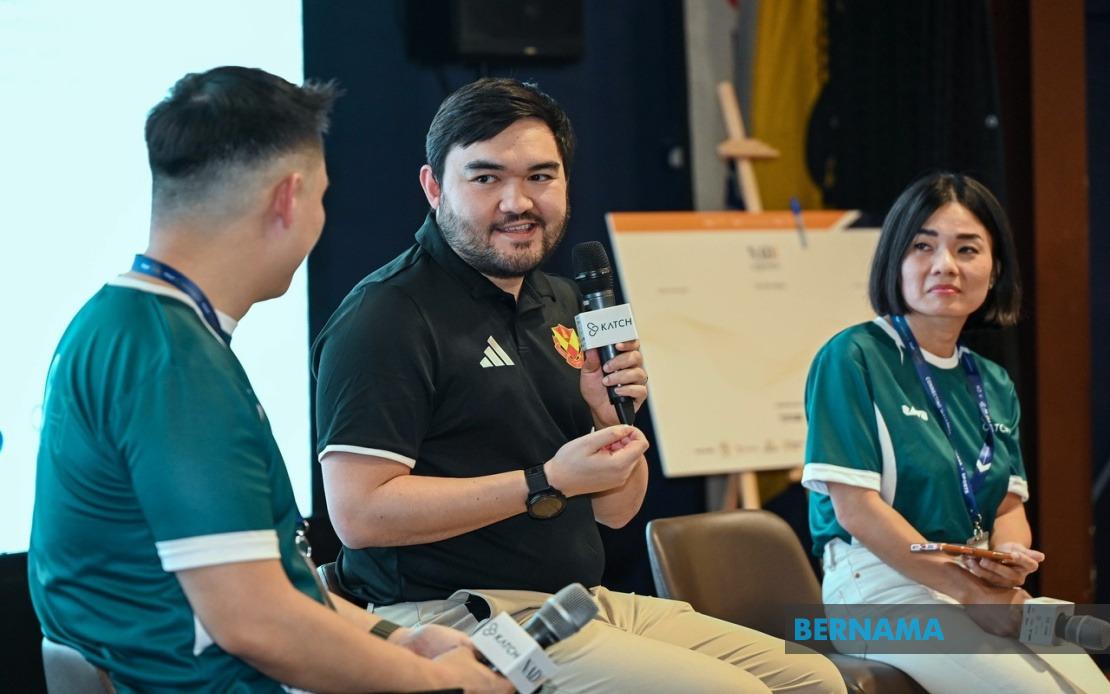
Selangor's commanding performance at the Malaysia Games (SUKMA) 2026 represents more than just a medal haul—it should serve as a turning point for how the state nurtures athletic talent from the ground up. Speaking at an event in Petaling Jaya on August 27, the Raja Muda of Selangor, Tengku Amir Shah Sultan Sharafuddin Idris Shah, articulated a vision for consolidating this achievement by embedding regular competitive opportunities throughout the state's youth sports ecosystem. His message was clear: sustained excellence requires structural change in how young athletes train and compete.
The competitive mindset cannot be forged in isolation. Tengku Amir Shah emphasized that young athletes need consistent platforms for competition, ideally taking place every weekend, to maintain momentum and provide meaningful targets for their training regimens. Without regular fixtures to work towards, even naturally talented youths risk losing focus or drifting away from organized sport entirely. The principle underlying this observation reflects international best practice in talent development: competition drives preparation, preparation drives improvement, and improvement drives retention. For Malaysian youth sports, where participation often fluctuates and facilities remain uneven across regions, this structural approach could fundamentally alter the current trajectory.
His perspective draws from direct experience managing sports initiatives in Selangor. Before assuming his current role and deepening his involvement with football administration, Tengku Amir Shah developed considerable expertise in grassroots sporting culture, particularly through his work with the Selangor Youth Community. This background informs his conviction that grassroots development remains essential to long-term sporting strength, and cannot be treated as secondary to elite competition. Rather, grassroots initiatives form the bedrock upon which championship performances are built.
The Selangor Champions League exemplifies the kind of intervention that can catalyze both talent identification and competitive culture simultaneously. This football-focused initiative aggregated social teams across Selangor into a structured competitive framework, enabling organizers to assess talent while simultaneously elevating playing standards. The success of this model suggests potential for replication across other sports capturing public imagination. Tengku Amir Shah specifically identified pickleball and chess as candidates for similar community-level league structures, reflecting awareness that competitive engagement extends beyond traditional athletic disciplines.
Selangor's SUKMA 2026 medal tally—101 gold, 73 silver, and 71 bronze medals—underscores the scale of competitive capacity within the state. As the host and overall champion, Selangor demonstrated both organizational capability and sporting depth across multiple disciplines. Yet this achievement, while impressive, poses a strategic question: how can such performance be sustained and deepened beyond a single Games cycle? Tengku Amir Shah's advocacy for expanded grassroots competition directly addresses this challenge, arguing that one-off performances matter less than building institutional capacity for continuous improvement.
The selection of specific sports for the Selangor contingent at SUKMA 2026 itself merits consideration as a deliberate strategy. By curating the sports represented, Selangor created concentrated opportunities for young athletes to demonstrate quality, sportsmanship, and competitive discipline across chosen domains. This selective approach, combined with adequate preparation time and resources, likely contributed to the overall championship result. However, the state's future sporting trajectory depends on widening such opportunities beyond the formal Games structure into routine community competition.
Malaysian youth sports faces a structural challenge: the gap between school-based athletics and elite national teams remains substantial, with insufficient intermediate competitive opportunities to facilitate smooth progression. Many promising young athletes plateau or abandon sport during adolescence not due to lack of talent, but because competition becomes too sporadic or too specialized. Regular community competitions address this directly by creating a steady supply of competitive experiences that keep young athletes engaged, motivated, and continuously developing their technical and mental skills.
The economic implications also merit attention. Sustained grassroots competition requires investment in facilities, officials, organization, and promotion—costs that state governments and sporting bodies must consider alongside recruitment and coaching expenditure. Yet this investment generates measurable returns through improved participation rates, healthier youth populations, and enhanced pipeline efficiency for elite development programs. For Selangor, a state with superior resources compared to many Malaysian regions, demonstrating this model's viability could provide evidence for scaled adoption elsewhere.
Tengku Amir Shah's remarks emerged during the NADI Connecting Wellness, Fitness and Sports With RMS event, which convened fifty leaders from the wellness, fitness, and sports sectors to align their collective vision for sectoral development. This gathering itself reflects growing recognition among Malaysian sporting stakeholders that fragmented efforts produce fragmented results. The convergence around principles of regular competition and youth engagement suggests emerging consensus that grassroots structure requires priority attention in Malaysia's sporting policy framework.
Implementing Tengku Amir Shah's vision would require coordination between state government, municipal authorities, educational institutions, and sporting organizations—a coordination challenge that demands sustained commitment. However, the alternative—continuing to rely primarily on sporadic major events and elite training programs while allowing grassroots capacity to atrophy—appears increasingly untenable given Malaysia's regional sporting ambitions. SUKMA 2026 provided Selangor with exceptional momentum; transforming that momentum into institutional change would demonstrate whether Malaysia's sporting leadership can think beyond medal counts to embrace the systematic development philosophy essential for genuine sporting advancement.

