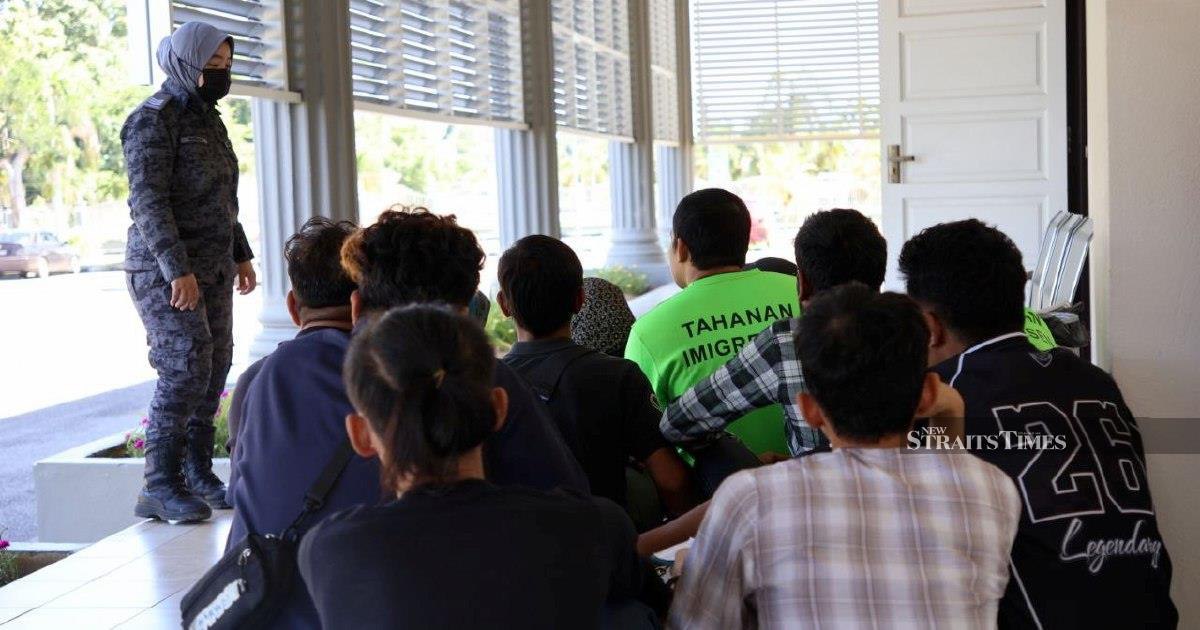
Ten undocumented migrants faced charges in the Sessions Court in Pasir Mas today, with prosecutors alleging violations of Malaysia's immigration statutes covering unauthorized entry, overstaying beyond permit validity, and misuse of travel documentation. The group included three foreign women among those brought before the court, underscoring the continuing challenge immigration authorities confront in managing irregular movement across the nation's borders.
The charges reflect patterns of immigration non-compliance that have persisted despite stepped-up enforcement operations across Malaysian ports of entry and interior checkpoints. Such cases routinely cycle through Kelantan's courts, given the state's proximity to Thailand and its role as a transit corridor for undocumented movement in the northern region. Officials have long identified the porous nature of cross-border zones as a persistent vulnerability requiring sustained, multi-agency coordination.
The allegation of social visit pass abuse suggests that some migrants obtained legitimate short-term travel documents but remained in the country well beyond the permitted duration, either through oversight, deliberate evasion, or lack of economic means to finance onward travel. Immigration authorities distinguish between inadvertent overstay—sometimes arising from bureaucratic confusion or document loss—and calculated violations by those deliberately circumventing exit requirements. The mixing of these categories in formal charges can mask underlying vulnerabilities in how Malaysia processes vulnerable populations.
Malaysia's immigration framework distinguishes sharply between those who enter through official ports with proper documentation and those who breach borders clandestinely. The former category, even when overstaying, occupies a legal position distinct from illegal entrants, though courts treat both groups under overlapping statutory provisions. The presence of women in this group adds complexity, as enforcement agencies increasingly recognize gendered vulnerabilities in migration enforcement and the heightened risks certain individuals face during detention and deportation procedures.
The Pasir Mas Sessions Court handles a consistent throughput of immigration cases reflecting both formal prosecutions of enforcement breaches and administrative removals processed through parallel channels. These court appearances generate formal criminal records that complicate future immigration applications for affected individuals across Southeast Asia, where regional databases increasingly share enforcement information. For many defendants, the consequences extend beyond immediate penalties to long-term migration disadvantages and reduced employment prospects in destination markets.
Kelantan's position as a primary northern entry point means its courts function as a frontline venue for immigration disputes and prosecutions. The state handles significant cross-border traffic both through formal channels and irregular pathways. Enhanced enforcement in recent years, driven partly by concerns about security screening and labour market protections, has resulted in rising caseloads that strain both prosecution and judicial resources. Court backlogs in immigration matters remain a persistent issue across Malaysian jurisdictions.
The prosecution of overstaying charges demonstrates that Malaysian authorities maintain active pursuit of non-compliance even when initial entry occurred through semi-legitimate means. Social visit passes, issued to tourists and temporary visitors, remain vulnerable to misuse by migrants seeking extended stays for employment or family reunification. Detection often occurs through routine traffic stops, workplace raids, or administrative checks at accommodation facilities rather than through proactive border surveillance. This reactive enforcement approach inevitably captures cases after violations have accumulated over extended periods.
These charges carry significant implications for Malaysia's broader immigration governance framework. Southeast Asian nations increasingly struggle to balance humanitarian considerations regarding migrant vulnerabilities against mounting public pressures for stringent enforcement. Malaysia's approach has tilted markedly toward compliance-focused prosecution in recent years, reflecting political demands from constituencies concerned about impacts on job availability and public services. However, advocates note that court-centric enforcement occasionally overshadows root-cause interventions addressing why individuals risk illegal migration despite known legal penalties.
The identity and nationality composition of the defendants remains unreported in available court documentation, though regional trends indicate substantial migration flows originating from Myanmar, Cambodia, and Indonesia. Many undocumented migrants maintain transnational family and economic ties that complicate their legal status determination. Consular cooperation in processing deportations varies significantly depending on bilateral relations and the receiving country's capacity for repatriation operations. Delays in deportation execution remain a secondary challenge even after successful prosecution.
Malaysia's commitment to prosecuting immigration violations reflects alignment with ASEAN standards on border integrity, though implementation inconsistencies across member states create vulnerabilities. Harmonization efforts have proceeded slowly, with countries maintaining divergent enforcement philosophies and capacity levels. For Malaysia, managing irregular migration through the courts while simultaneously addressing labour market demands for migrant workers presents an ongoing policy tension that legislative frameworks struggle to resolve comprehensively.
The Pasir Mas case exemplifies recurring dynamics in Malaysian immigration enforcement: reactive prosecution of accumulated violations, differential treatment based on documentation status rather than underlying circumstances, and resource allocation toward punishment rather than preventive interventions. Courts process these cases efficiently, yet sentencing frameworks often reflect statutory minimums rather than individualized assessment. For affected migrants, court proceedings mark formal entry into removal machinery that typically concludes with transportation to land borders and handover to destination-country authorities.
Broader regional migration patterns suggest that unauthorized overstaying and illegal entry will continue generating steady caseloads for Malaysian courts absent structural changes to regional labour policies, bilateral agreements facilitating legitimate migration, and domestic programmes addressing migrant vulnerability factors. Current prosecution trends indicate Malaysia's immigration authorities will maintain assertive enforcement postures, particularly in border-proximate jurisdictions like Kelantan where preventive capacity remains constrained relative to caseload demands.

