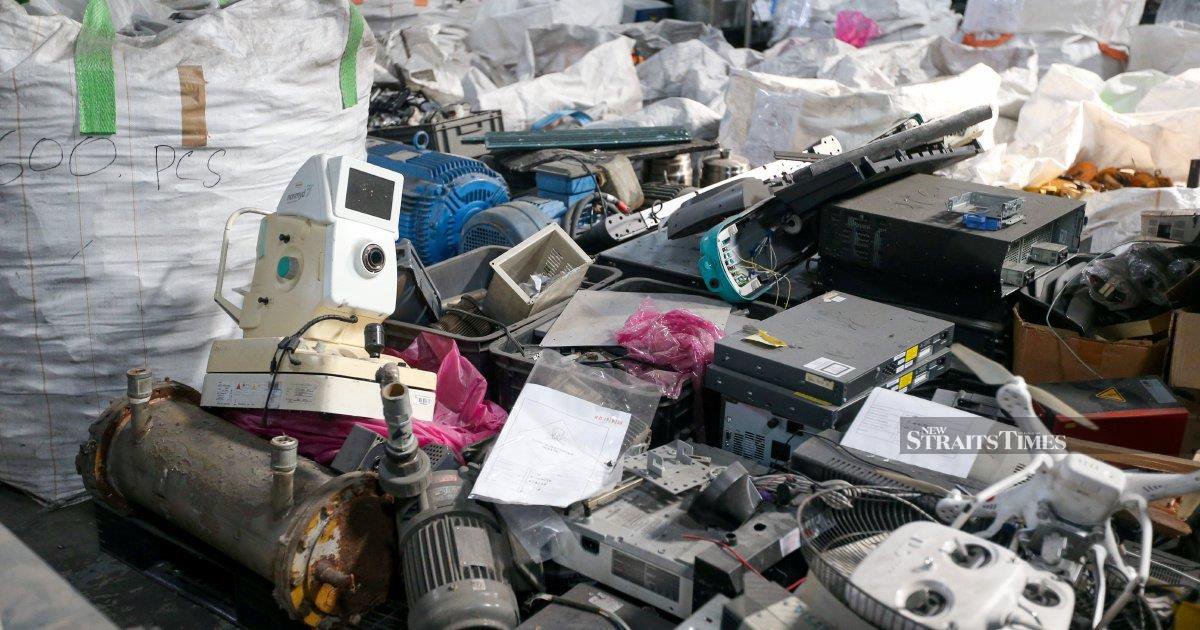
Ten personnel from Malaysia's General Operations Force have been taken into custody as part of an investigation into allegations of extortion involving an e-waste recycling facility located in Tasek Gelugor, Penang. The arrests mark a significant moment in the country's ongoing efforts to address corruption within its uniformed services, particularly those deployed in enforcement and law enforcement roles.
The e-waste processing sector, while crucial for Malaysia's environmental management and circular economy objectives, has long been vulnerable to irregular demands from officials. Penang's manufacturing base, which includes substantial electronic and electrical waste processing operations, forms part of a wider Southeast Asian network dependent on responsible governance and transparent regulatory frameworks. The alleged extortion incident reflects broader challenges in ensuring compliance across industries that handle hazardous materials and generate significant economic activity.
The General Operations Force operates as a paramilitary unit within Malaysia's law enforcement structure, typically involved in emergency response, counter-terrorism, and public order operations. The deployment of such units in investigations and enforcement activities means their personnel interact regularly with commercial enterprises across multiple jurisdictions. When allegations emerge of abuse of authority within such organisations, they carry particular weight given the asymmetry of power between uniformed personnel and business operators.
Extortion cases involving officials typically involve systematic demands for payment in exchange for overlooking regulatory violations, facilitating operations, or providing protection from enhanced scrutiny. In the context of e-waste facilities, such practices could potentially compromise environmental compliance, worker safety standards, and the integrity of recycling processes designed to recover valuable materials while managing hazardous substances safely. The allegations suggest possible breaches of not only criminal law but also regulatory frameworks governing both law enforcement conduct and industrial operations.
Malaysia has intensified anti-corruption initiatives in recent years, with various government agencies coordinating enhanced investigations into allegations involving public officials. The detention of the ten personnel indicates that authorities have gathered sufficient preliminary evidence to warrant formal questioning. The investigation process will likely involve examining financial records, communications, and witness testimonies to establish whether systematic or isolated incidents occurred.
For the e-waste recycling industry in Malaysia, such incidents create operational uncertainty and potential reputational damage. Legitimate operators complying with environmental regulations face the prospect of increased scrutiny while grappling with the reality that official processes themselves may have been compromised. This dynamic can inadvertently disadvantage responsible businesses competing against those willing to make irregular payments, thereby distorting market conditions and undermining policy objectives for sustainable waste management.
The location in Tasek Gelugor, within Seberang Perai district, places this incident within Penang's industrial heartland where numerous manufacturing and processing operations concentrate. The state's position as a major electronics hub means e-waste volumes have grown substantially over decades, making recycling infrastructure increasingly vital. Allegations affecting such facilities thus carry implications beyond individual cases, touching upon how effectively Malaysia manages the environmental and economic dimensions of electronic waste streams.
International standards and bilateral trade agreements increasingly emphasise that exporting nations must maintain transparent governance of recycling operations and waste management facilities. Any suggestion of corruption within regulatory oversight could potentially affect Malaysia's standing with trading partners and its capacity to attract investments in circular economy technologies. The investigation therefore carries significance beyond the immediate parties involved, affecting broader perceptions of institutional integrity.
The investigation's progression will likely involve coordination between multiple agencies, including the police force, the Malaysian Anti-Corruption Commission, and potentially officers from environmental and occupational safety departments. The complexity of establishing extortion in commercial contexts often requires forensic financial analysis, communication intercepts, and willing cooperation from business operators who may fear retaliation. Building robust cases typically demands sustained investigative effort and witness protection mechanisms.
For Malaysia's enforcement community, cases involving alleged corruption by uniformed personnel reflect internal governance challenges that institutions must address transparently to maintain public confidence. The visibility of these investigations demonstrates accountability mechanisms functioning, though the ultimate credibility depends on fair processes, proportionate consequences, and demonstrated systemic reforms. Without effective institutional responses, allegations can accumulate, eroding trust across the sectors where such personnel operate.
The e-waste industry, despite its essential role in managing electronic waste that poses environmental and health risks, remains a domain where governance frameworks require continuous strengthening. Facilities depend on regulatory predictability and lawful oversight rather than the kind of irregular impositions that extortion represents. As Malaysia develops its circular economy ambitions and pursues greater self-sufficiency in resource recovery, ensuring corruption-free administration of industrial regulations becomes increasingly important for attracting legitimate operators and maximising environmental outcomes.

