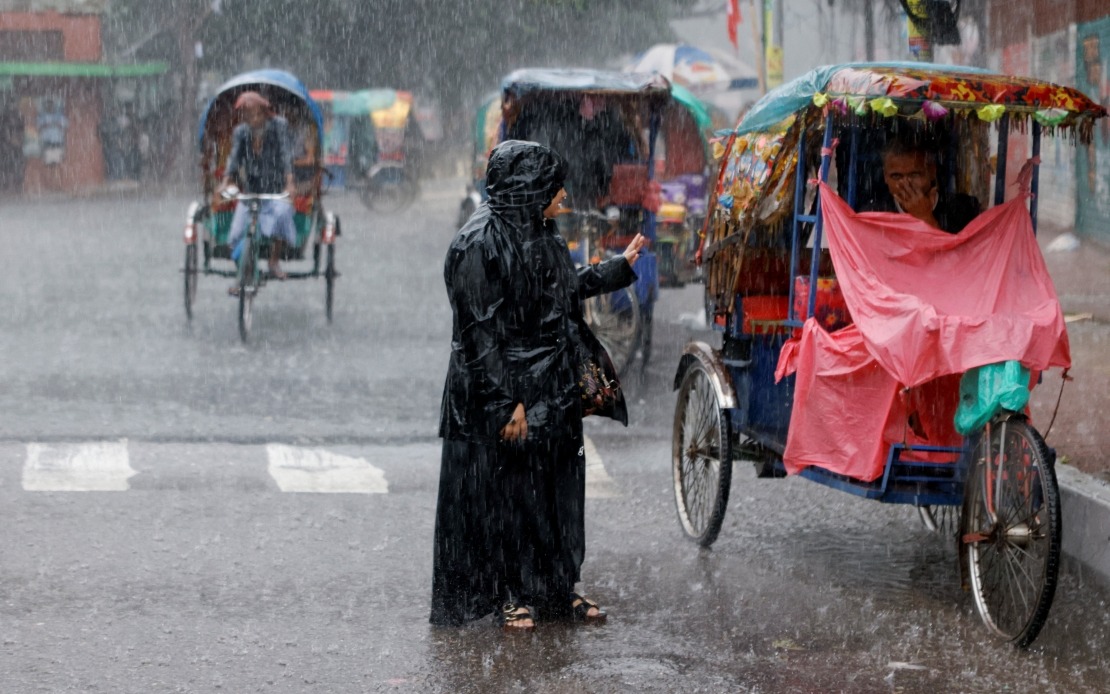
Ten children have lost their lives in a succession of landslides that swept through Bangladesh's southeastern Chattogram region on Wednesday, as an active monsoon system unleashed torrential rainfall across the vulnerable hilly terrain. The tragedies unfolded across multiple locations within the region, with the most severe incident claiming eight young lives in Cox's Bazar district, while two additional separate incidents in Chattogram city's remote hillside communities claimed two more children. The scale of this disaster underscores the recurring vulnerability of southeastern Bangladesh during the monsoon season, when saturated earth becomes unstable and gravity claims lives in some of the nation's most geographically challenging terrain.
According to Mohammed Mizanur Rahman, Bangladesh's Refugee, Relief and Repatriation Commissioner, the catastrophic Cox's Bazar landslide on Wednesday afternoon proved instantly fatal for eight children, whilst a further five individuals sustained injuries from the same incident. The commissioner's account, relayed to international news agencies, painted a picture of sudden devastation that gave communities little warning or opportunity to seek shelter. The speed at which these geological events unfolded—transforming stable hillsides into zones of lethal instability within minutes—demonstrates the particular peril that monsoon season presents to populations living in elevated areas across this region.
Meteorological analysis reveals the extraordinary intensity of the rainfall systems bearing down on Chattogram. A senior meteorologist from Bangladesh's Meteorological Department explained that an exceptionally vigorous monsoon system had channelled unprecedented volumes of moisture across parts of the region, though the official requested anonymity when discussing departmental assessments. The statistical evidence of this phenomenon proved striking: Chattogram city recorded its heaviest rainfall in four decades, with the 24-hour period ending at 3.00 pm local time on Tuesday measuring 412 millimetres—surpassing the previous record of 411 millimetres established in 1983 by a single millimetre. This rainfall intensity, though marginal in numerical terms, represented a crossing of a critical meteorological threshold that left the ground saturated beyond its capacity to maintain structural integrity on steep slopes.
The concentration of casualties among children reflects both demographic and geographic factors specific to Cox's Bazar and other vulnerable districts. Many hillside communities in this region remain inhabited by populations living in modest circumstances, often in structures lacking robust reinforcement or relocation infrastructure. Children, being more vulnerable during rapid evacuations and less able to navigate dangerous terrain quickly, frequently comprise a disproportionate share of landslide fatalities across South Asia. The incident therefore carries particular weight within Bangladesh's ongoing dialogue about climate resilience, disaster preparedness, and the protection of vulnerable populations.
Beyond immediate casualty figures, the broader context of environmental vulnerability shapes how these incidents reverberate through policymaking discussions. Chattogram's vulnerability to landslides stems from its geological composition—ancient hill formations interspersed with river valleys and deltaic plains create naturally unstable conditions during periods of moisture saturation. The region's susceptibility has worsened considerably over recent decades as deforestation and unplanned development have removed vegetation that once stabilised slopes, whilst improper construction on hillsides has increased weight on unstable ground. The Wednesday tragedy thus represents not merely a weather event but the culmination of longer-term environmental and developmental pressures.
Emergency response mechanisms swung into action following the initial disasters, with authorities undertaking extensive evacuation operations across Chattogram's hillside communities designated as at-risk zones. These efforts aimed to prevent further casualties by removing residents before additional rainfall could trigger secondary landslides—a common pattern when monsoon systems persist over several days or weeks. The evacuation strategy, though resource-intensive and disruptive to communities, reflects hard-won lessons from previous seasonal disasters that claimed hundreds of lives across the region.
The tragedy carries significant implications for Southeast Asian nations with similar geographic vulnerabilities. Myanmar, Thailand, the Philippines, and Indonesian regions all experience comparable monsoon-triggered landslide hazards, yet disaster preparedness, early warning systems, and evacuation infrastructure vary considerably across the region. Bangladesh's experience demonstrates both the limitations of current protective measures and the imperative for enhanced regional cooperation on disaster mitigation. Malaysian stakeholders, whilst residing in a nation with different geological profiles, can observe Bangladesh's struggles as cautionary examples relevant to flood-prone areas across peninsular and East Malaysian territories.
Climate change considerations inevitably surface in discussions of intensifying monsoon phenomena. Scientific consensus indicates that warming atmospheric conditions may amplify monsoon intensity in certain years, though year-to-year variability remains substantial. Bangladesh's meteorological records, stretching back multiple decades, provide valuable datasets for understanding long-term precipitation trends, yet even these records contain data gaps that complicate definitive attribution. Wednesday's rainfall event, whilst historically significant, cannot be mechanistically linked to climate change without more comprehensive analysis, though the broader pattern of increasingly intense precipitation events across South Asia aligns with climate projections.
Governmental responses to such disasters typically involve both immediate humanitarian assistance and longer-term structural considerations. Bangladesh's disaster management apparatus, though improving steadily, remains constrained by budgetary limitations and competing development priorities. The nation's vulnerability reduction strategy increasingly incorporates early warning systems, community-based risk awareness programmes, and selective relocation schemes for populations inhabiting the most hazardous locations. Yet comprehensive solutions remain elusive, particularly given the economic pressures that drive continued habitation of risky terrain.
International humanitarian organisations have historically responded to Bangladesh's monsoon-season disasters with emergency assistance, shelter provision, and medical support. These interventions, whilst crucial during acute crisis phases, address symptoms rather than underlying vulnerabilities. Sustainable approaches require investing in resilient housing standards, enforcing building codes on hillsides, maintaining vegetation cover on slopes, and developing alternative livelihood opportunities in safer locations. Such investments entail significant capital expenditure and require commitment extending far beyond individual disaster response cycles.
For Malaysian observers, Bangladesh's recurring summer monsoon tragedies underscore the importance of maintaining robust disaster preparedness infrastructure. Malaysian states experiencing flash flooding and landslide risks in areas such as Pahang, Terengganu, and Selangor maintain relatively advanced warning systems, yet complacency remains a hazard. The comparative advantage Malaysia enjoys in terms of institutional capacity and economic resources should inform a humanitarian perspective toward less-resourced neighbours facing equivalent natural hazards with far greater human consequence. Regional cooperation mechanisms, whether through ASEAN frameworks or bilateral partnerships, offer pathways toward sharing expertise and resources that could incrementally improve disaster outcomes across the broader region.

