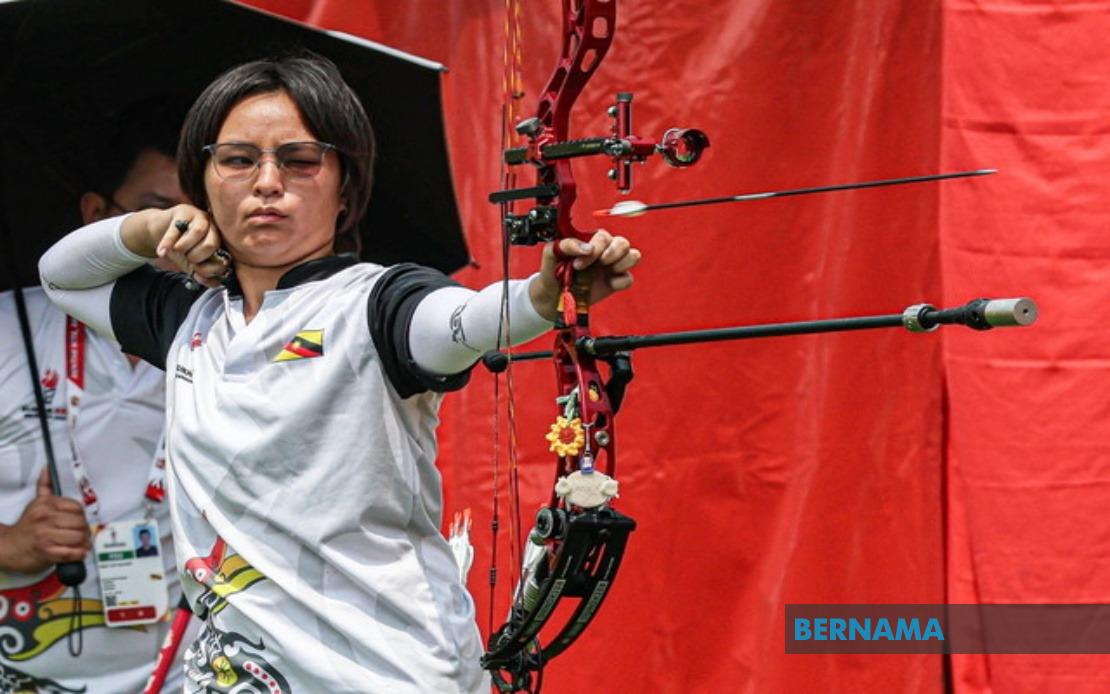
Seventeen-year-old Wee Yee Qi announced herself on the SUKMA stage at Bangi today with a pair of gold medals, validating a tactical shift in her archery career that has already begun to reshape her competitive trajectory. The Miri-born competitor's decision to transition from recurve to compound late last year—a move born from frustration with her earlier discipline—has proven prescient, delivering immediate and tangible results at Malaysia's premier multi-sport Games for young athletes.
Yee Qi's first triumph came in the mixed team archery final, where she partnered with Eason Lau Hui Wan to overcome Kedah's pairing of Muhammad Zaim Ahmad and Ili Nabihan Shafizan in a nail-biting contest that finished 151-150. The narrow margin underscored the competitive intensity at the Games, where fractions of points often separate medal positions. This victory immediately positioned her among the standout performers of the Games' opening days, a remarkable achievement for an athlete competing in her first SUKMA.
Her second gold came shortly after in the women's team event, where Sarawak's trio of Yee Qi, Aira Nadirah Aizuddin and Nur Zara Aisyah Khairul Fadly mounted a compelling comeback against Terengganu. The final score of 217-213 masked a dramatic narrative: the Sarawak contingent had trailed throughout the first three rounds before producing decisive performances in the closing end to snatch victory from their opponents Airazalia Azrai, Nur Shafiena Mohd Shuhamri and Putri Aqiera Issandra Ismayuddin. Such comebacks, particularly under the pressure of SUKMA competition, often define the champions who emerge from these Games.
In comments to media after the finals at the National Institute of Valuation Stadium, Yee Qi demonstrated maturity beyond her years, graciously crediting her coaching team for their instrumental role in her development. She reflected on six years spent in the sport, tracing her archery journey to a talent identification programme at her school where her aptitude was first recognised. That early intervention, coupled with consistent family support, established the foundation upon which today's achievements rest. Her acknowledgement of her coaches' guidance—particularly their efforts in providing exposure through various competitions—reveals an athlete who understands that international-level performance requires accumulated experience and deliberate preparation.
The transition to compound represented both a decisive moment and a calculated gamble for Yee Qi. Recurve archery, the more traditional discipline, had not yielded the breakthrough performances she sought. Rather than persisting with an approach yielding diminishing returns, she and her coaching staff elected to pivot toward compound, a choice that demanded technical retraining and mental adjustment. That this gamble has paid off so quickly—with two golds at her Games debut—suggests either remarkable technical aptitude or a particularly astute match between her physical attributes and the compound bow's demands, or most likely both.
Yet Yee Qi's competitive calendar presents near-term competing priorities. She must now redirect her focus toward the Sijil Pelajaran Malaysia examinations scheduled for November, a critical educational milestone that will occupy her attention through the final months of the year. For Malaysian student-athletes, this balancing act between academic and sporting commitments remains a perennial challenge, one that requires discipline and institutional support to navigate successfully. Her determination to return to full-time archery training after her examinations suggests she views her educational obligations as a necessary but temporary interruption rather than a distraction from her sporting ambitions.
Yee Qi's articulated long-term vision encompasses representing Malaysia at the international level, a goal that positions her within a progression pathway extending well beyond SUKMA. The National Sports Council and coaching ecosystem have been working to develop elite archers capable of competing credibly in regional and world championships. Her twin golds at SUKMA mark her as someone warranting sustained investment and development, provided she can sustain her trajectory through the transitional years ahead. Many promising junior athletes experience plateaus or regressions after early success; maintaining momentum requires continued access to quality coaching, training facilities and competition exposure.
Sarawak's archery programme appears to have cultivated a particularly strong cohort this Games cycle, with Yee Qi's performances complemented by solid finishes from her teammates. The state's investment in developing young archers reflects a broader pattern whereby states with dedicated sporting infrastructure and committed coaching talent tend to produce stronger performances across disciplines. This pattern has implications for sports development policy across Malaysia, suggesting that consistent funding and institutional commitment at the state level yields measurable returns.
Elsewhere in the competition, Selangor secured bronze medal finishes in both the mixed team and women's team events. In the mixed team bronze-medal match, Muhammad A'rif A'fiq Suhaimi and Nur Alyaa Nazurah Fadzil Fairuz defeated Sabah's pairing of Hiew Ichin and Catherine Looi Mei Qi Abdullah 154-152, while Selangor's women's team of Amira Batrisyia Mohamad Azizul Rahman, Nur Alya Sofrina Mohd Sarif and Nur Alyaa Nazurah Fadzil Fairuz claimed their own bronze after beating their opponents 219-212. These placements underscore the competitive quality across several states' archery programmes.
The archery competition at SUKMA 2026 thus far demonstrates the sport's growing competitiveness within Malaysia's youth sports ecosystem. The narrow margins separating medal positions, the dramatic comebacks in matches, and the emergence of accomplished young athletes like Yee Qi all point toward a discipline that has successfully cultivated depth of talent. As Yee Qi herself progresses and others follow her trajectory, Malaysian archery appears well-positioned to generate competitors capable of defending national colours at SEA Games and potentially beyond.

