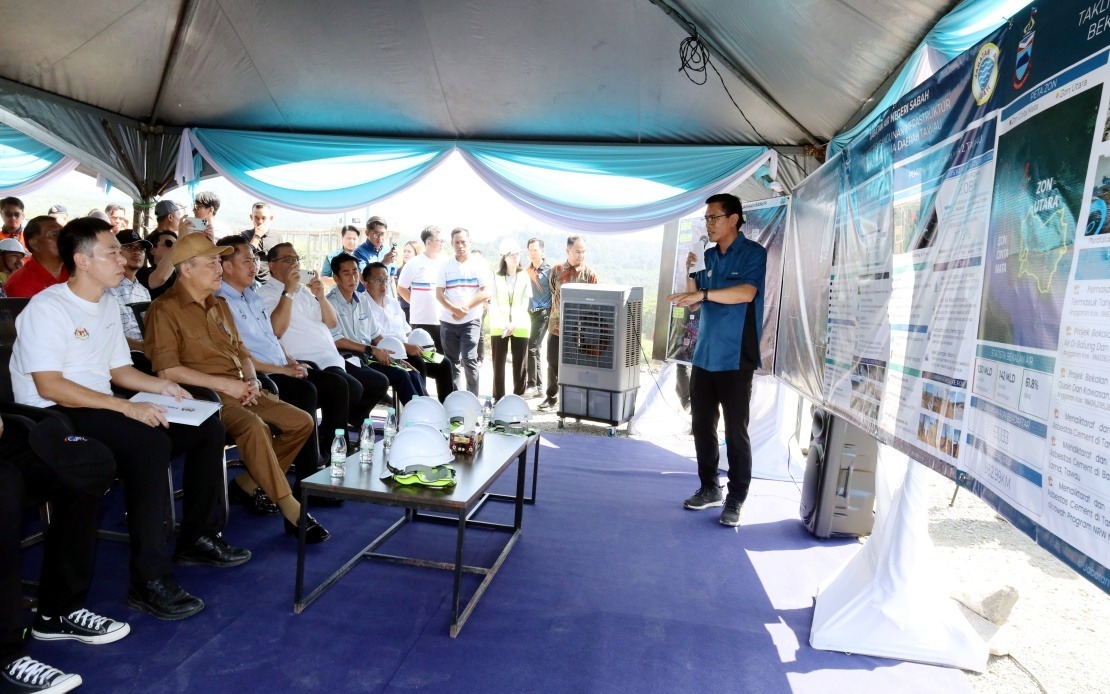
Tawau's chronic water supply crisis, which has plagued the eastern Sabah district for years, is on track to be resolved by the end of 2027 following steady progress on the RM450.5 million Tawau Water Supply Scheme Phase III. The landmark infrastructure project represents the state government's most significant commitment to addressing what Sabah Chief Minister Datuk Seri Hajiji Noor acknowledged as a longstanding problem inherited from previous administrations but now being tackled with substantial public investment.
During a site inspection in early August, Chief Minister Hajiji confirmed that despite the contractor requesting a time extension, the project remains scheduled for completion before the end of 2027. He emphasised the government's determination to see the initiative through, noting that while the administration did not create the water shortage, it recognises its responsibility to invest heavily in resolving the infrastructure deficit. The chief minister also signalled willingness to allocate additional funding if required, pending technical assessments from the Sabah State Water Department and the Department of Irrigation and Drainage.
At the heart of Phase III lies the construction of the Tawau Dam, which had achieved 74.04 percent completion as of late July. The dam will serve as the project's critical component, storing 30 million cubic metres of raw water to supply the existing Cinta Mata 1 treatment facility and the new Cinta Mata 2 plant. A comprehensive network of 11.6 kilometres of 700-millimetre diameter pipelines will connect these treatment plants and the Utara WTP, creating an integrated water distribution system.
The scale of Tawau's existing water deficit underscores the urgency of this development. The district currently produces only 130 million litres of treated water daily, falling short of the demonstrated demand of 142 million litres. This 12-million-litre daily shortfall affects some 53,133 registered water accounts across Tawau and surrounding communities, creating persistent supply constraints that impact both residential and commercial consumers. The gap between supply and demand has been a recurring frustration for residents and a drag on economic development in the region.
Once completed, the three water treatment plants—Cinta Mata 1, Cinta Mata 2, and Utara—will collectively deliver a treated water production capacity of 161 million litres per day. This represents a 31-million-litre daily increase over current output, moving supply substantially beyond the current demand of 142 million litres and providing a comfortable buffer for future growth. The Cinta Mata 2 facility alone will contribute 30 million litres daily and is expected to directly benefit approximately 42,000 consumers in Tawau proper and neighbouring areas.
The Cinta Mata 2 Water Treatment Plant carries an individual project cost of RM299.9 million and remains on a different completion timeline than the dam, with its scheduled delivery set for July 22, 2028. As of late July, the facility had achieved 16.08 percent physical progress, indicating it is in early construction phases. The staggered completion dates reflect the complexity of coordinating multiple components of an integrated water system, though all elements are expected to be functional before end-2027.
Beyond resolving the acute water supply shortage, the Tawau Dam project yields additional infrastructure benefits for the district. The structure will significantly reduce flood risks in downstream areas of Tawau, addressing a secondary vulnerability that has periodically affected the region. This dual-benefit approach—simultaneously expanding water availability and mitigating flood hazards—represents efficient use of capital investment and demonstrates integrated water resource management principles increasingly important for Southeast Asian cities facing climate variability.
For Malaysian observers, the Tawau project illustrates broader challenges facing Eastern Malaysia's development agenda. Sabah and Sarawak have historically received less per capita federal infrastructure investment than Peninsular Malaysia, and water supply deficits remain a competitive disadvantage in attracting both industrial investment and skilled workers to East Malaysian towns. The state's commitment of RM450.5 million to this single project signals determination to close infrastructure gaps, though similar constraints persist across Sabah's other districts and in neighbouring Sarawak.
The project's progress also reflects evolving governance dynamics in Sabah following the 2020 political realignment. Chief Minister Hajiji's explicit acknowledgement that the water crisis was inherited rather than created under his tenure illustrates how infrastructure deficits become political challenges requiring bipartisan recognition. By framing the resolution effort as competent stewardship rather than partisan blame, the government has attempted to build consensus around the expensive but necessary investment.
Contractor requests for time extensions, while noted, have not derailed the schedule according to official statements. Such requests are routine in major infrastructure projects involving dam construction, which faces inherent uncertainties related to geological conditions, monsoon impacts, and supply chain complexities. The fact that extensions have been sought but not permitted to push completion beyond end-2027 suggests project management confidence, though observers will monitor future progress reports closely given the substantial public funds committed.
Looking ahead, the completion of Phase III will position Tawau to support sustained economic growth and population expansion. Reliable water supply is a prerequisite for attracting manufacturing, agro-processing, and tourism development—all sectors identified in Sabah's economic diversification strategy. The project therefore transcends basic infrastructure provision, becoming foundational to regional competitiveness within Malaysia's federal structure.
For Tawau residents accustomed to rationing and supply interruptions, the end of 2027 represents a concrete target date for relief. Should the project maintain its current trajectory, the district will transition from chronic scarcity to surplus supply within roughly three years, fundamentally transforming daily life and economic opportunity. The RM450.5 million investment, while substantial, will have demonstrable return in quality of life improvements and economic enablement across one of Sabah's most important population centres.

