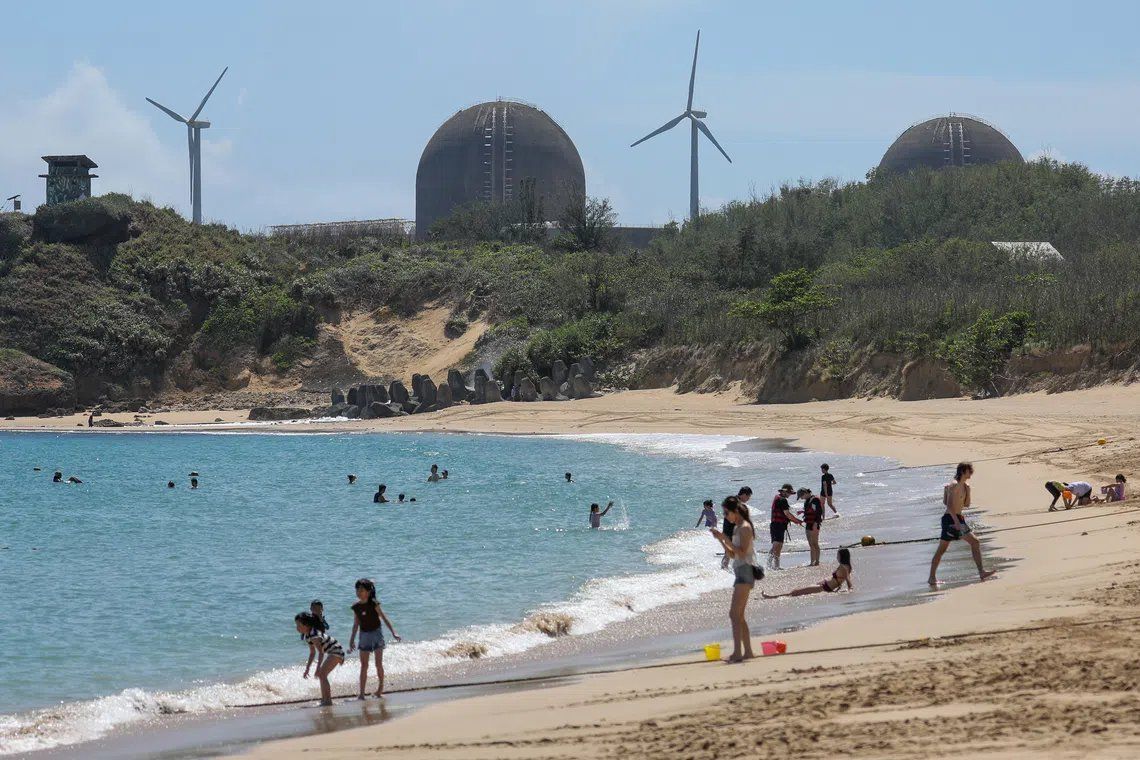
Taiwan faces another pivotal choice on nuclear energy when voters head to the polls on November 28 for simultaneous "nine-in-one" local elections and a crucial referendum on the island's energy future. The nuclear question represents the fourth time Taiwanese voters have been asked to weigh in on atomic power within eight years—a frequency that raises fundamental questions about how direct democracy functions within Taiwan's competitive political landscape. Rather than reflecting genuine shifts in public sentiment on energy policy, observers increasingly view these recurring votes as tactical instruments wielded by opposition parties to drive turnout among their core constituencies during elections that will determine 11,051 local government positions across the island.
The November referendum presents a deceptively broad framing of the nuclear question, asking whether Taiwan should abandon its "Nuclear-Free Homeland" policy ostensibly to "protect public health, ensure stable and affordable electricity supplies, strengthen national defence resilience and support the development of artificial intelligence industries." This phrasing encapsulates the competing pressures shaping Taiwan's energy debate. Recent geopolitical disruptions—particularly concerns about maritime chokepoints affecting global oil supplies—combined with surging electricity demand driven by artificial intelligence infrastructure expansion, have genuinely altered the calculus around energy security. Yet experts emphasise that these substantive policy considerations pale beside the electoral mathematics motivating the referendum's placement.
The Central Election Commission approved only this nuclear referendum from three proposals submitted this year, rejecting a measure that would legalise caning for serious crimes and another proposing mandatory allocation of traffic fine revenues to road safety. The commission's decision to block the caning proposal on human rights grounds suggests some institutional guardrails remain, yet the approval of the nuclear question proceeded despite legitimate concerns about rushed deliberation. Associate Professor Lin Jia-he from National Chengchi University's College of Law highlights a troubling temporal compression: while Switzerland typically requires three to five years between referendum proposal and vote, Taiwan's November referendum underwent only a three-month consideration period. This abbreviated timeline leaves insufficient opportunity for the public to grapple with "rigorous, complex and diverse" energy policy options and technical tradeoffs that merit sustained examination.
The opposition coalition—comprising the Kuomintang and Taiwan People's Party—evidently calculated that positioning themselves as champions of law-and-order and energy pragmatism could mobilise conservative voters more likely to support their local candidates. This calculation carries historical precedent. During the 2018 local elections, when ten national referendums were held simultaneously, the KMT achieved notably strong electoral performance. Qi Dongtao, senior research fellow at the East Asian Institute at the National University of Singapore, argues that "this electoral consideration is probably at least as important as the policy substance of the referendums themselves." The opposition strategy appears designed to increase turnout among their base voters precisely in close local races where such marginal increases could determine outcomes for county magistrates and other regional officials.
Political scientist Chong Ja Ian from NUS identifies an additional strategic dimension: opposition parties seek to establish issues around which they can consolidate messaging and rally supporters who feel the governing Democratic Progressive Party has mishandled critical portfolios. The KMT particularly cultivates an image as the party of strict law enforcement and economic competence, positioning itself as emulating Singapore's reputation for order and prosperity. By advancing the caning referendum and supporting nuclear energy reconsideration, the opposition attempts to frame these as areas where they would pursue tougher policies if freed from what they characterise as DPP constraints. This framing transforms referendums from mechanisms for clarifying public will into platforms for partisan grievance and policy differentiation.
The institutional transformation enabling this pattern traces to 2017, when Taiwan substantially lowered thresholds for initiating and passing referendums. Previously, referendums required 50 percent turnout to achieve validity, which explains why former president Chen Shui-bian's cross-strait relations referendums failed in 2004 despite commanding overwhelming support from those who participated. The reformed system requires merely that "Yes" votes exceed "No" votes, with valid "Yes" votes constituting at least 25 percent of the total electorate. This dramatic lowering of barriers transformed the referendum mechanism from an instrument reserved for questions of singular national importance into a routinely accessible tool for any organised faction seeking to mobilise supporters or constrain government flexibility.
Taiwan legal experts worry that the proliferation of referendums within short timeframes overwhelms voters' capacity for informed deliberation. Associate Professor Lin emphasises that few democracies employ national referendums at Taiwan's current frequency and pace. When voters encounter multiple complex questions—particularly those designed primarily to drive turnout rather than resolve genuine policy ambiguity—fatigue and cynicism inevitably follow. The result degrades the quality of democratic participation, transforming what should be moments of genuine popular sovereignty into exercises in partisan mobilisation where the substantive merits of proposals become secondary to their utility in electoral strategy.
Public sentiment increasingly reflects this disillusionment. Sean Chang, a 39-year-old public relations professional who voted in the November 2018 referendum when ten questions appeared simultaneously with local elections, describes the evolution of his thinking as one of growing scepticism. While he initially believed referendums reflected genuine democratic deliberation, he came to view them as "a tool for each political party to manipulate public opinion." This intellectual journey—from endorsing direct democracy to abandoning engagement with it—captures the corrosive effect that weaponised referendums inflict on democratic institutions. When citizens experience repeated cycles of voting on questions they perceive as strategically rather than substantively motivated, they rationally withdraw attention and reduce participation, effectively undermining the legitimacy that direct democracy requires.
Qi cautions that the current trajectory threatens to hollow out referendums as authentic instruments of popular sovereignty. "This can turn referendums from an instrument of direct democracy into another arena of partisan competition," he observes. Ideally, referendums should remain reserved for major questions where compelling reasons exist to seek direct popular authorisation rather than delegating decisions to elected representatives. Taiwan's experience demonstrates how lowered thresholds combined with partisan incentives can invert this principle, converting direct democracy into merely another weapon in ongoing party competition. The risk emerges not from referendums themselves but from their proliferation in service of tactical electoral advantage rather than genuine resolution of fundamental questions.
Looking toward Taiwan's national elections due by 2028, the November local elections and accompanying referendums will serve as important bellwethers for national sentiment. How voters respond to the nuclear question, and whether they participate with genuine conviction or strategic calculation, will signal whether opposition parties have successfully mobilised their base or whether public skepticism has deepened further. The outcome carries implications extending beyond Taiwan itself. Southeast Asian democracies watching Taiwan's experience confront uncomfortable questions about referendum mechanisms: whether direct democracy mechanisms designed to amplify popular voice inevitably become instruments of partisan advantage, and whether institutional safeguards can preserve deliberative space within competitive party systems. Taiwan's trajectory suggests that absent structural reforms—whether raising thresholds, extending deliberation periods, or restricting referendum frequency—direct democracy risks transformation into a hollow ritual that erodes rather than strengthens democratic legitimacy.

