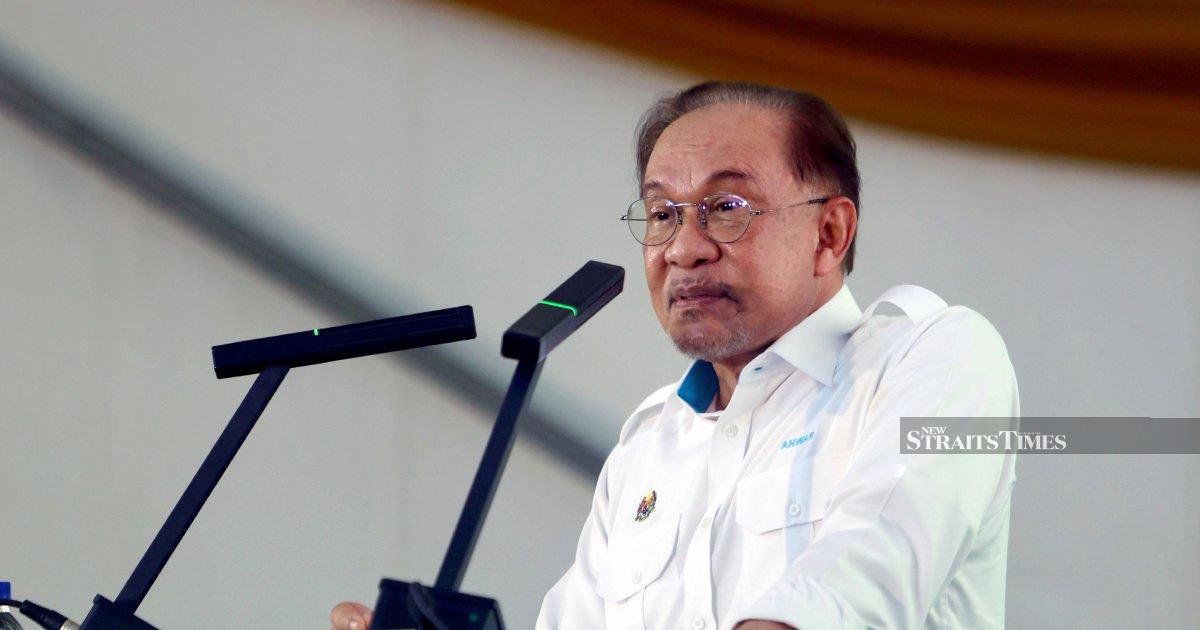
The Taiwan Chamber of Commerce & Industry in Malaysia (TCCIM) has expressed considerable unease following Prime Minister Datuk Seri Anwar Ibrahim's recent characterization of Taiwan as "part of China", cautioning that such statements carry potential consequences for technology and semiconductor sector expansion in the country.
The chamber's formal response represents a significant signal from Taiwan's business community in Malaysia, reflecting broader sensitivities around political positioning on cross-strait relations. Taiwan's semiconductor and technology firms have become increasingly important investors across Southeast Asia, including Malaysia, where they operate manufacturing facilities and research operations worth billions of ringgit. The TCCIM's intervention suggests that multinational Taiwan-based corporations operating in Malaysia view political rhetoric on the island's status as material to their investment calculus and operational environment.
Anwar's description of Taiwan's geopolitical position appears to have triggered immediate concern within business circles that have long sought to maintain Malaysia as a neutral and welcoming destination for Taiwan-based technology enterprises. The semiconductor sector in particular has become a critical component of Malaysia's electronics manufacturing base, with Taiwan-headquartered companies operating major facilities in states such as Penang and Johor. For context, Taiwan accounts for a substantial portion of the world's semiconductor manufacturing capacity through entities like Taiwan Semiconductor Manufacturing Company (TSMC), whose presence and expansion decisions carry significant weight for host economies.
The chamber's intervention highlights an inherent tension in Malaysia's diplomatic positioning. The country maintains formal diplomatic relations with the People's Republic of China while simultaneously serving as a crucial regional hub for Taiwan business interests seeking operational bases. This delicate balance has enabled Malaysia to benefit economically from both relationships, but it also creates vulnerability when political statements appear to tilt too visibly in one direction. Business communities typically prefer political ambiguity and stability, and explicit positioning on contested geopolitical questions can unsettle investor confidence.
For Taiwan's technology sector particularly, investment decisions involve multiyear planning cycles and substantial capital commitments. Companies evaluate regulatory environments, political stability, and perceived receptiveness from host governments when deciding whether to expand facilities, establish regional headquarters, or channel research and development resources into specific locations. A perception that a host country's government views Taiwan unfavorably could influence these strategic decisions, potentially redirecting investments toward competing destinations in Thailand, Vietnam, or Singapore where political messaging has remained more consistently welcoming to Taiwan business interests.
The TCCIM's public expression of concern also carries implications for bilateral Malaysia-Taiwan relations beyond the commercial sphere. Taiwan's diplomatic footprint is necessarily limited given international recognition of the People's Republic of China, and much of Taiwan's regional influence operates through commercial channels and civil society networks. When business chambers voice concern about political statements, they effectively serve as transmission mechanisms for Taiwan government sensitivities without requiring Taiwan to lodge formal protests, which could escalate diplomatic tensions.
Anwar's administration has historically attempted to maintain balanced engagement across geopolitical fault lines, seeking to avoid alienating either Beijing or Taiwan while maximizing economic benefits from both relationships. However, the TCCIM statement suggests that even carefully calibrated public language may be perceived by Taiwan business stakeholders as insufficient clarity regarding Malaysia's commitment to remaining an attractive destination for Taiwan capital and expertise. The investment climate in technology sectors is particularly sensitive to political risk assessments, given the strategic importance of semiconductors and the ongoing global competition for advanced manufacturing capabilities.
The semiconductor sector deserves particular attention given its role in Malaysia's economic strategy. The country has long positioned itself as a critical node in global electronics supply chains, and Taiwan-based companies have been essential to this positioning. Any perception that Taiwan investors face diplomatic headwinds in Malaysia could encourage these companies to consolidate operations in other Southeast Asian locations or reduce planned expansions. This would carry consequences not merely for foreign direct investment flows but also for high-skilled employment, technology transfer, and Malaysia's competitive positioning in advanced manufacturing sectors.
The TCCIM's formal concern also signals that Taiwan's business community in Malaysia will likely continue monitoring official government statements and policy signals for further clarification on Anwar's administration's stance toward Taiwan. Business groups traditionally prefer unambiguous commitments to non-discrimination and equal treatment regardless of territorial claims or geopolitical positioning. The chamber's intervention suggests that Anwar's remarks created sufficient ambiguity to warrant a corrective signal from those with substantial economic interests at stake.
Moving forward, this incident underscores the reality that Malaysia's technology sector development remains intertwined with geopolitical navigation. The country's ability to attract continued investment from Taiwan, China, and other major technology centers depends substantially on maintaining credible commitment to political neutrality and non-interference in cross-strait matters. The TCCIM statement, while diplomatically measured, represents a clear indication that explicit political positioning on Taiwan's status risks practical consequences for the investment relationships upon which significant portions of Malaysia's advanced manufacturing base depend.

