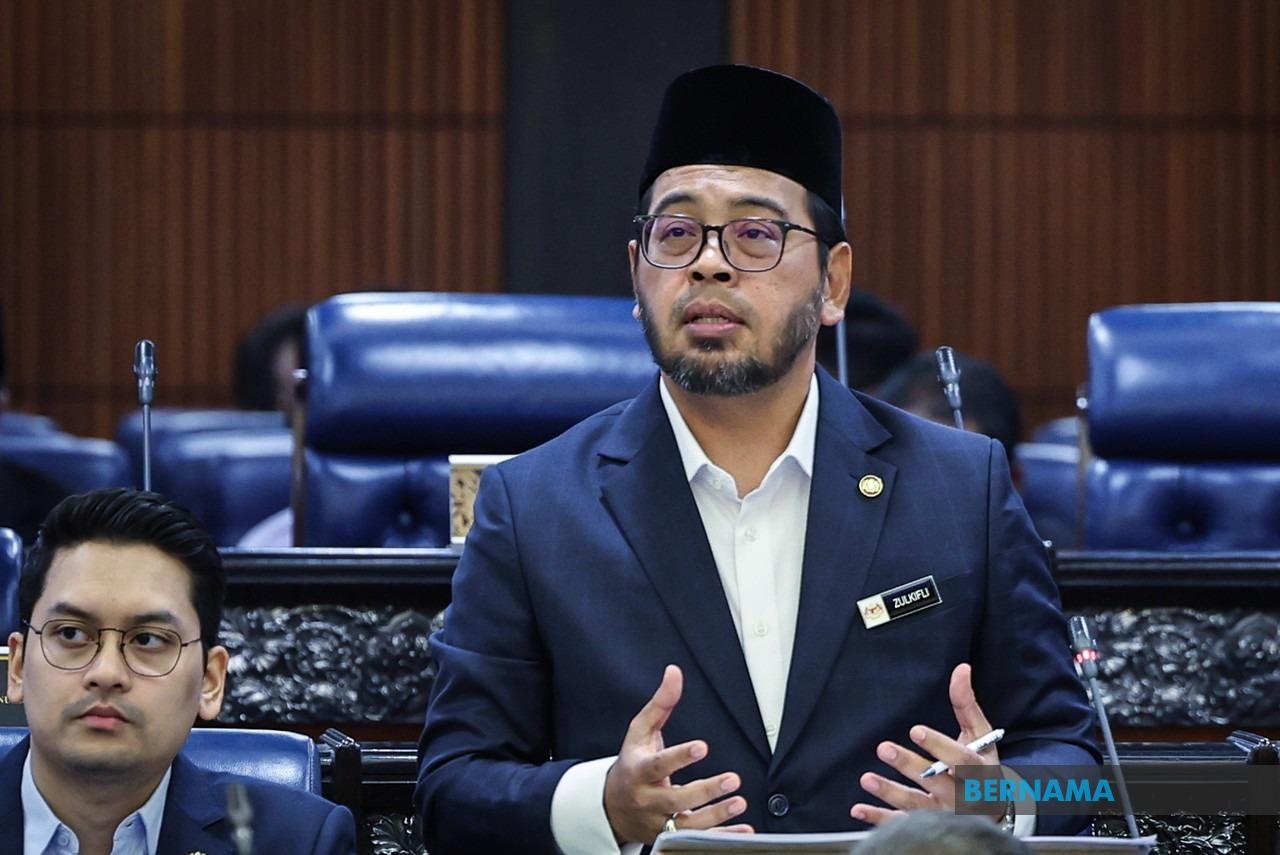
Malaysia's Tabung Haji has emerged significantly stronger after implementing a comprehensive restructuring programme that began in 2018, according to Minister in the Prime Minister's Department (Religious Affairs) Dr Zulkifli Hasan. Speaking during a parliamentary briefing on the Royal Commission of Inquiry findings into the institution, Zulkifli underscored how systematic reforms across multiple fronts have placed the pilgrimage management body on firmer financial footing while preserving its core mission of enabling Malaysians to perform the haj.
The recovery strategy anchored on nine interconnected reform pillars addresses the breadth of institutional challenges that had previously destabilised Tabung Haji. Restoring the organisation's financial health formed the cornerstone, supported by parallel initiatives to enhance governance structures and strengthen accountability mechanisms throughout the organisation. Equally important were measures designed to elevate investment performance and engineering sustainable dividend returns for the millions of Malaysian depositors whose savings fund the institution's operations. This multifaceted approach reflects an acknowledgement that Tabung Haji's difficulties stemmed not from single systemic failures but rather from compounding weaknesses across governance, investment strategy, and operational efficiency.
Beyond financial stabilisation, the reform agenda pursued broader institutional objectives that directly shape the haj experience for Malaysian pilgrims. Ensuring continued affordability of pilgrimage remained paramount, recognising that access to this foundational Islamic obligation should not become dependent on wealth. Simultaneously, reformers prioritised protecting the interests and welfare of the roughly three million Malaysians maintaining deposits with Tabung Haji, framing depositor protection as integral to institutional legitimacy. The programme also targeted service excellence meeting international standards, professionalised leadership insulated from political interference, and the construction of a genuinely trustworthy Islamic institution capable of enduring for generations.
These efforts have begun yielding demonstrable results. Zulkifli noted that asset and liability restructuring has successfully restored Tabung Haji's financial position, a milestone particularly significant given the depth of the institution's previous difficulties. The achievement becomes more impressive when contextualised within Malaysia's inflation environment. Since 2001, when the government introduced financial assistance schemes for haj pilgrims, cumulative inflation reached 250 per cent by 2023. Despite this erosion of purchasing power, Tabung Haji has managed to maintain the haj package price at RM33,300 across three consecutive seasons spanning 2024 to 2026. This represents a remarkable feat of cost management rather than a simple freezing of prices.
The mechanisms enabling this stability reveal sophisticated procurement strategies refined through the reform process. Tabung Haji negotiated long-term air travel contracts that lock in competitive pricing despite volatile aviation markets where fuel costs and capacity pressures typically drive increases. Accommodation expenses, traditionally a major cost driver, were reduced through direct negotiation with hotel proprietors in Mecca and Medina, eliminating intermediary markups that previously inflated charges. These tactical wins compound when addressing the mounting expenses associated with expanded services and facilities in the Holy Land, from improved health screening to enhanced crowd management. By absorbing these incremental costs while maintaining stable pilgrim fees, Tabung Haji has essentially subsidised enhanced service quality through operational efficiency gains.
Institutional transformation extends into governance domains less visible to pilgrims but essential to long-term sustainability. Tabung Haji secured the Labaytum Diamond Award for two consecutive years, positioning it as the premier hajj management organisation globally and representing its fifth consecutive Labaytum recognition overall. This accolade signals that professional management standards, internal controls, and operational transparency have reached levels matching or exceeding international benchmarks. The award validates that Malaysian pilgrims benefit from management practices comparable to those governing hajj operations in other major Muslim-majority nations.
The professionalisation of leadership structures has proven foundational to these achievements. Tabung Haji's management team now operates with genuine autonomy from political pressure and bureaucratic interference, permitting decision-making grounded in institutional strategy rather than electoral cycles or ministerial preferences. This autonomy, carefully calibrated within appropriate oversight frameworks, has enabled long-term planning that balances pilgrim affordability with financial sustainability, depositor protection with investment returns, and service expansion with cost discipline. Strategic planning implemented without fear of sudden policy reversals has created conditions for the sustained excellence reflected in international recognition.
For Malaysian Muslims contemplating pilgrimage, these reforms translate into tangible benefits beyond maintained pricing. The enhanced governance and service standards reflected in international awards mean that logistics, health protocols, and accommodation standards have improved measurably. Depositors gain confidence that their accumulated savings remain secure and will generate reasonable returns, essential for Tabung Haji's continued relevance as a savings vehicle. The broader Malaysian economy benefits from Tabung Haji's financial stability, as the institution manages billions in assets that once, when mismanaged, represented a drain on government resources.
The transformation also carries significance extending beyond Tabung Haji itself. The institution represents a distinctive Malaysian institutional model—a government-linked body with religious functions, serving millions while operating in deeply competitive global markets. Its successful restructuring after acute financial distress demonstrates that governance failures can be substantially remedied through systematic reform, professional appointment processes, and insulation from political interference. This lesson resonates for other government-linked institutions struggling with similar challenges, suggesting that recovery is possible when political will supports genuine transformation rather than merely cosmetic changes.
Zulkifli's parliamentary presentation appears designed to build public confidence that Tabung Haji's difficulties, once a source of national concern, have been substantially addressed through credible institutional reforms rather than short-term financial fixes. The RCI inquiry findings, by endorsing the recovery progress, provide external validation that the changes undertaken represent genuine structural improvements. For Malaysian depositors and pilgrims, particularly those in lower-income brackets for whom haj affordability remains marginal, these assurances carry profound significance as they contemplate participating in one of Islam's five pillars.

