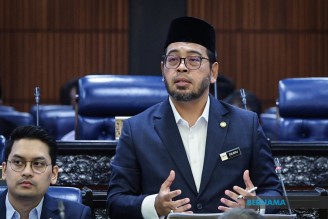
Tabung Haji's ill-fated investment in Putrajaya Perdana Bhd has emerged as a cautionary tale of institutional capture, with the Islamic pilgrimage savings fund losing RM145.3 million through a transaction that simultaneously entangled it with the controversial 1Malaysia Development Bhd network. Minister in the Prime Minister's Department (Religious Affairs) Dr Zulkifli Hasan disclosed the extent of the damage during parliamentary proceedings, revealing that Putrajaya Perdana ranked among 14 problematic investments that collectively inflicted billions of ringgit in losses on Tabung Haji, according to findings in the Royal Commission of Inquiry's comprehensive report released in late July.
The governance structure that enabled this investment raises profound questions about institutional independence and fiduciary responsibility. Tabung Haji placed its then-chairman at the helm of Putrajaya Perdana, creating a direct line of influence that would prove disastrous. This dual leadership arrangement coincided with a period when Tabung Haji's chief executive officer simultaneously sat on 1MDB's board of directors, establishing overlapping directorates that blurred institutional boundaries and created fertile ground for conflicting interests. The arrangement presented an awkward conflict: decisions ostensibly made in Tabung Haji's interest may have served the broader agendas of entities struggling with their own financial crises.
The entanglement extended beyond Putrajaya Perdana. Tabung Haji purchased prime real estate at the Tun Razak Exchange directly from 1MDB during the height of the scandal, a transaction that crystallized the fund's exposure to the web of problematic deals surrounding the now-infamousfintech initiative. Rather than maintaining arm's length from the troubled entity, Tabung Haji became a substantial property buyer at a moment when 1MDB faced mounting scrutiny over its financial management and governance practices. Dr Zulkifli's parliamentary statement pointedly questioned whether these acquisitions truly served Tabung Haji's core mission of safeguarding Malaysian pilgrims' savings, or instead functioned as a rescue mechanism for struggling entities elsewhere in the governance ecosystem.
The FGV Holdings experience compounds the picture of investment misjudgment that characterized this period. The listing of Felda Global Ventures, promoted as Malaysia's largest initial public offering after mobilizing over RM10 billion in capital, initially appeared a national success story. Yet Tabung Haji's subsequent losses exceeding RM1 billion demonstrated how even seemingly prestigious investments could evaporate. The fund's response to the deteriorating share valuations—which plummeted more than 80 percent—revealed institutional dysfunction. Rather than acknowledging losses transparently, Tabung Haji modified its impairment accounting policies, effectively using financial engineering to mask the scale of damage to ordinary Malaysians whose savings underpinned these investments.
The road to partial recovery has been paved with significant concessions. Tabung Haji repurchased the Tun Razak Exchange land it had sold in 2018 for RM400 million, but the 2024 buyback at RM270 million represented a staggering loss of approximately RM130 million—a bitter reminder of the transaction's original miscalculation. Similarly, the reacquisition of the UJ Estates oil palm plantation operations, which Tabung Haji had disposed of for RM800 million, required paying RM695 million in current market valuation plus RM115 million in cash, translating to an enterprise value around RM580 million. These buyback transactions, while representing management attempts to correct past errors, underscore the massive value destruction that occurred during the problematic period.
The Royal Commission of Inquiry's comprehensive investigation, formally presented to the King in August 2022 after appointment in January 2022, examined the complete spectrum of institutional failures spanning 2014 to 2020. The resulting 211-page report documented not merely specific bad decisions but systemic weaknesses in management protocols, operational oversight, and governance frameworks that allowed such decisions to proceed unchallenged. The RCI identified 25 distinct recommendations for remedial action, with Tabung Haji implementing approximately 75 percent of these suggestions by late July, indicating both the scope of necessary change and the fund's commitment to institutional rehabilitation.
For Malaysian citizens who entrust their hajj savings to Tabung Haji, these revelations carry particular resonance. The fund manages monies set aside by millions of ordinary Malaysians specifically for the Islamic pilgrimage obligation, making it not merely a financial institution but a custodian of religious aspirations and family planning. The losses incurred through questionable investments directly reduced the purchasing power of these accumulated savings, effectively penalizing ordinary Malaysians for governance decisions made at the institutional elite level. The connection to 1MDB, already a symbol of national financial mismanagement, compounds public concern about whether adequate safeguards exist to protect such spiritually significant savings.
The broader Southeast Asian context amplifies these concerns. Malaysia's experience with Tabung Haji's losses, when viewed alongside 1MDB's international dimensions and regional investment patterns, reveals vulnerabilities in emerging market institutions managing large pools of capital. Sophisticated financial instruments, international property transactions, and overlapping board directorates create opacity that governance structures designed for simpler eras struggle to penetrate. Regulators across Southeast Asia must grapple with how to modernize oversight mechanisms while respecting institutional autonomy and market principles.
Moving forward, the implementation of RCI recommendations signals institutional commitment to preventing recurrence. Separating executive roles across institutions, implementing independent audit functions, establishing clear investment criteria unlinked to external agendas, and enforcing transparent financial reporting represent essential guardrails. The fact that 75 percent of recommendations have already been adopted suggests receptiveness to change, though the remaining 25 percent deserves close scrutiny to understand any implementation obstacles. For Tabung Haji to restore the confidence of Malaysian pilgrims whose savings fund its operations, visible adherence to strengthened governance protocols must become demonstrable through consistent decision-making that prioritizes institutional independence and fiduciary responsibility above all other considerations.

