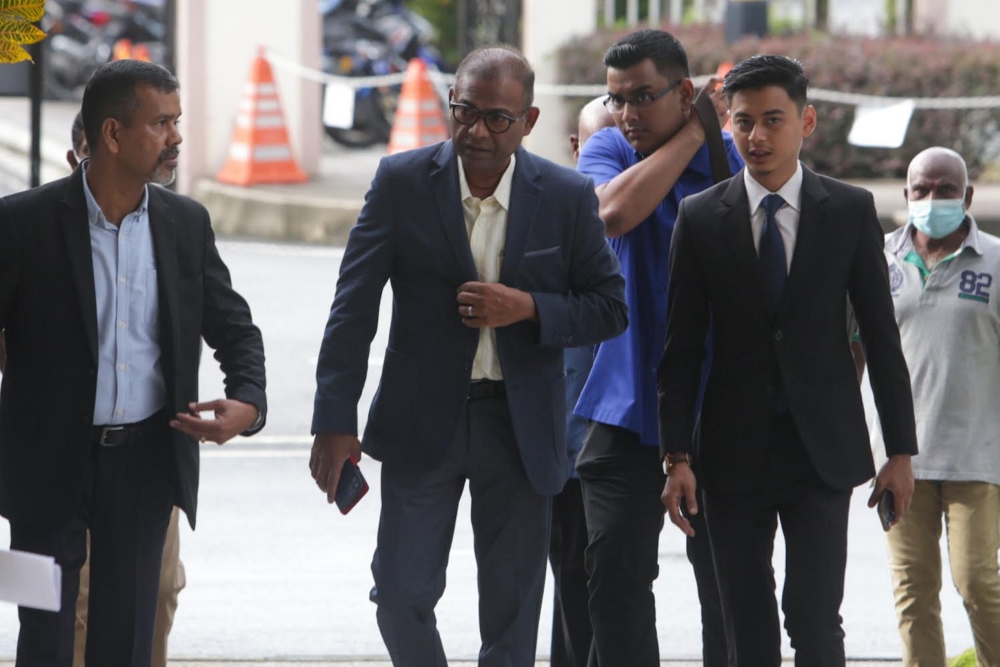
Mounting speculation on social media about the former Baling Member of Parliament Datuk Seri Abdul Azeez Abdul Rahim being detained by the Malaysian Anti-Corruption Commission has been flatly rejected by his family, with his son publicly dismissing the claims as baseless rumours. The denial comes amid heightened public interest in the ongoing Royal Commission of Inquiry into Tabung Haji, the pilgrimage fund that has faced persistent scrutiny over governance and financial management issues.
The younger Abdul Azeez characterised the widely circulated reports as unsubstantiated gossip devoid of factual foundation, emphasising that no such arrest had occurred. His intervention represents a direct pushback against the viral nature of the allegations, which had gained traction across various online platforms throughout the week. The clarification underscores the challenge facing public figures and their families in an era where misinformation can proliferate rapidly without official confirmation.
The context of these rumours extends beyond a single individual's reputation. The Tabung Haji Royal Commission has become a focal point for broader concerns about institutional accountability in Malaysia's religious and financial sectors. Established to examine governance structures and financial irregularities at Tabung Haji, the inquiry has cast a wide investigative net, examining transactions, administrative decisions, and management practices spanning several years of operation.
For Malaysian observers, the Tabung Haji investigation carries particular significance given the fund's centrality to the country's Islamic financial ecosystem. The pilgrimage savings scheme manages billions of ringgit belonging to millions of Malaysian Muslims preparing for the Hajj pilgrimage. Any mismanagement or irregularities could directly impact the financial security of ordinary Malaysians saving for one of Islam's five pillars. This explains why media coverage and public discussion of the RCI remains intense and emotionally charged.
Abdul Azeez's political career and positions have occasionally intersected with matters touching on religious institutions and governance. His tenure as Baling MP and involvement in various legislative matters made him a visible figure in Malaysian political discourse. The emergence of rumours linking his name to the Tabung Haji investigation therefore triggered immediate public curiosity and social media speculation, even without substantive evidence.
The MACC's role in investigating financial institutions has expanded considerably over the past decade, and the agency has demonstrated willingness to pursue cases involving significant sums of public money. However, the distinction between genuine investigative activity and unfounded rumour-mongering remains crucial for maintaining public trust in both the anti-corruption apparatus and the integrity of civil discourse. Spurious allegations can undermine both the credibility of actual investigations and the reputation of individuals falsely implicated.
For Malaysian political observers, the incident highlights the volatile intersection between traditional media reporting and unverified social media claims. Without clear official statements or press releases from the MACC or other authorities, speculation fills the void left by information scarcity. This dynamic has become increasingly problematic in Malaysia's information environment, where viral claims sometimes outpace official clarifications by hours or days.
The family's public rebuttal represents a calculated response aimed at preventing the rumour from becoming embedded in public memory. In an age of digital permanence, where screenshots and reposts ensure that deleted content remains accessible, acting swiftly to deny false claims becomes essential damage control. The son's willingness to engage directly with the issue suggests confidence in the family's position and perhaps recognition that silence might be interpreted as tacit admission.
Tabung Haji itself has faced numerous challenges in recent years, including reported financial losses, investment concerns, and questions about dividend distributions to account holders. The Royal Commission's mandate to investigate these matters represents an important institutional response to documented problems within the fund's operations. However, the investigation's scope and progress remain matters of legitimate public interest and scrutiny.
Looking forward, the distinction between the ongoing legitimate inquiry into institutional governance and unsubstantiated personal allegations will become increasingly important. Malaysian society benefits from robust investigations into the stewardship of public institutions and funds. Simultaneously, the country's political culture and public discourse suffer when rumours about individual arrests circulate without verification, potentially poisoning the broader conversation about institutional accountability.
The episode also illustrates how investigations into high-level institutional matters can create an environment conducive to speculation about multiple individuals. When major inquiries proceed with multiple phases and diverse evidentiary gathering, the public naturally wonders about the scope of potential consequences and which figures might ultimately face charges or other consequences. This uncertainty, while sometimes productive for institutional introspection, can also generate unfounded claims that spread faster than formal announcements.

