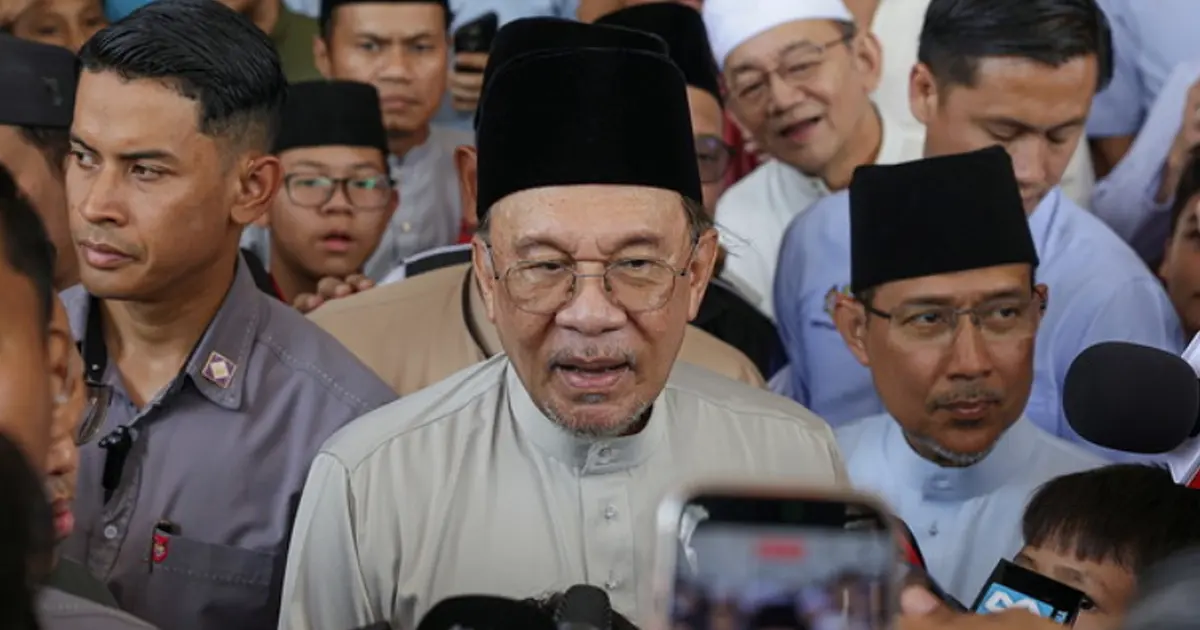
Prime Minister Anwar Ibrahim has confirmed that the long-awaited Royal Commission of Inquiry report examining Tabung Haji's operations has been made available to the public in its complete and unedited form. The confirmation comes after weeks of speculation about whether the sensitive findings would be subject to any government filtering, a concern that had gained traction among transparency advocates and members of parliament.
Anwar's statement addresses mounting pressure on his administration to demonstrate commitment to accountability in state institutions. The Tabung Haji scandal has attracted significant public attention given the organisation's role as the primary pilgrimage financing vehicle for Malaysian Muslims, managing the savings of hundreds of thousands of account holders. The stakes are particularly high because issues at the institution directly affect the financial security of ordinary Malaysians preparing for their hajj journeys.
The RCI's investigation into Tabung Haji was initiated to examine various allegations of financial mismanagement, investment decisions, and governance lapses that had accumulated over several years. These concerns centred on how the organisation deployed member funds, the transparency of its operations, and the effectiveness of its board oversight mechanisms. The inquiry represented an official acknowledgement that questions about Tabung Haji's stewardship warranted independent and rigorous examination.
By insisting that no editorial modifications were made to the report, Anwar is positioning his government as genuinely committed to institutional transparency—a cornerstone of his reform agenda since taking office. This stance carries weight for Malaysian observers who have historically witnessed instances where sensitive government reports were delayed, redacted, or selectively released. The complete publication signals a departure from that pattern, at least in this instance.
The decision to release the unvarnished RCI findings has implications beyond Tabung Haji itself. It potentially sets a precedent for how other commissions of inquiry reports are handled under the current administration. Opposition figures and civil society groups have seized on this moment to press expectations that future official investigations will similarly resist the temptation toward suppression or sanitisation of uncomfortable conclusions.
For the Malaysian public, access to the full report enables direct engagement with the commission's findings rather than relying on media interpretation or political spin. This democratisation of information particularly matters in cases involving institutions that hold public trust, where citizens have a vested interest in understanding exactly what went wrong and how accountability measures will be enforced. The report's availability also provides material for parliament's oversight committees and professional bodies to assess.
However, the mere publication of an unedited report does not automatically guarantee that its recommendations will be implemented with equal vigour. Questions remain about whether the government will follow through with prosecuting individuals identified as responsible for breaches, restructuring Tabung Haji's governance framework, or providing remedies to affected account holders. The RCI report is a necessary but insufficient step toward genuine resolution of the institutional problems it documents.
Tabung Haji's importance in Malaysia's financial landscape cannot be overstated. With assets exceeding tens of billions of ringgit, the organisation's stability directly influences the retirement security and pilgrimage aspirations of a substantial portion of the Muslim population. Any governance failures at Tabung Haji represent not merely an administrative inconvenience but a betrayal of public confidence in an institution designed to serve ordinary Malaysians' spiritual and financial goals.
The RCI process itself reflects evolving standards for investigating state-linked entities in Malaysia. Rather than allowing internal audits or ministry-level reviews to remain confidential, the government opted for a formal, independent commission with powers to compel testimony and access internal documents. This represents a recognition that public institutions managing citizen savings require external scrutiny beyond conventional administrative channels.
International observers monitoring Malaysia's governance trajectory have noted the RCI process as one of several initiatives suggesting incremental progress toward institutional accountability. Alongside efforts in other sectors, the Tabung Haji investigation and its unredacted publication contribute to a narrative of cautious reform. Whether this momentum sustains depends largely on the government's follow-through on the report's likely recommendations regarding prosecutions, board appointments, and operational restructuring.
Looking ahead, the acid test for Anwar's transparency commitment will be the pace and scope of action taken in response to the RCI's conclusions. Public confidence in the government's willingness to embrace accountability rests not merely on releasing reports but on demonstrating that such investigations catalyse meaningful institutional change. For Tabung Haji account holders and the broader Malaysian public, the report's publication marks the beginning rather than the conclusion of the accountability process.

