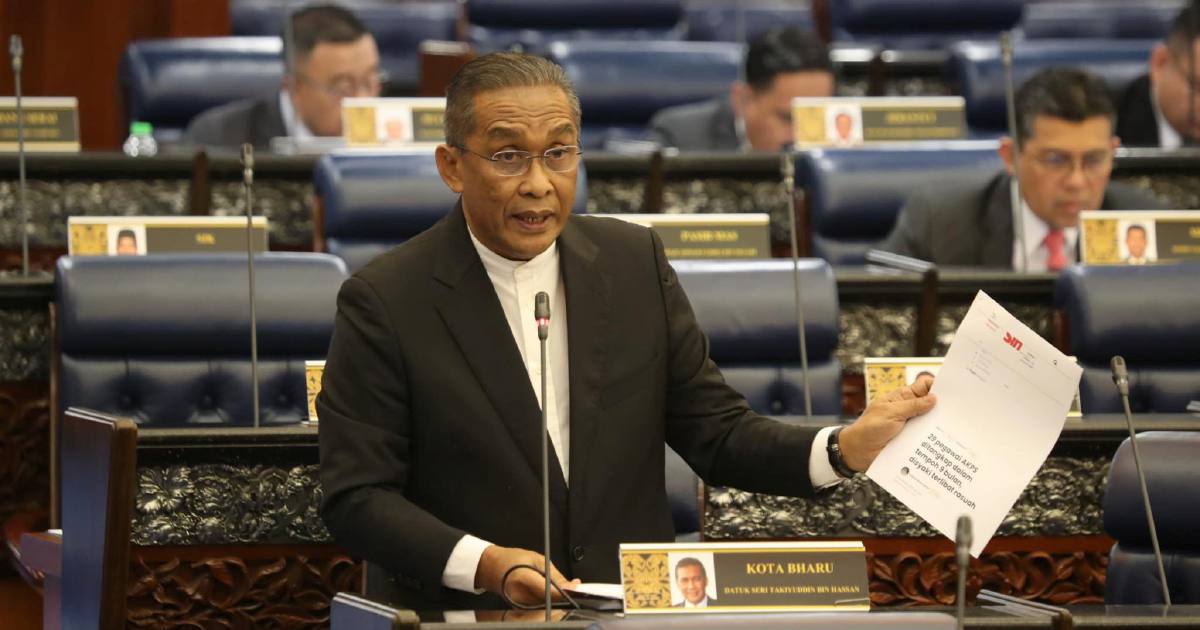
The opposition's chief parliamentary strategist, Datuk Seri Takiyuddin Hassan, has publicly advocated for postponing the extraordinary Dewan Rakyat session convened to discuss the Royal Commission of Inquiry findings on Tabung Haji until Prime Minister Datuk Seri Anwar Ibrahim resumes his attendance in Parliament. This intervention signals the opposition's calculated approach to a politically sensitive matter that has drawn considerable public and institutional scrutiny in recent months.
Takiyuddin's recommendation introduces a procedural dimension to deliberations that have already generated widespread debate across Malaysia's political landscape. The timing of such parliamentary proceedings carries significance not merely for legislative protocol but for the substance of discourse that legislators will undertake when examining the RCI's conclusions regarding the troubled Islamic pilgrimage fund. His position underscores the opposition's awareness that the Prime Minister's participation would fundamentally shape the nature and tenor of parliamentary proceedings.
The Tabung Haji matter has remained a focal point of public concern, given the fund's importance to Malaysian Muslim pilgrims undertaking the Hajj journey and the various allegations that precipitated the Royal Commission of Inquiry's establishment. The RCI was tasked with investigating serious concerns about governance, financial management, and administrative practices within the institution, making its report a document of considerable national interest and consequence for millions of Malaysian families who have contributed to or relied upon the fund.
Tabung Haji, formally known as the Lembaga Tabung Haji, serves as the principal vehicle through which Malaysian Muslims save for and finance their religious pilgrimage to Mecca. The fund's institutional health and transparent operations hold profound significance not only for the immediate financial security of prospective pilgrims but also for confidence in Malaysia's management of public Islamic financial institutions more broadly. Concerns that emerged prior to the RCI's commissioning had reverberated throughout the Muslim community and triggered demands for comprehensive accountability mechanisms.
The opposition chief whip's call for deferment may reflect strategic considerations about how parliamentary debate should unfold. Anwar's presence in the chamber could substantially influence the dynamics of questioning, the government's capacity to respond comprehensively to critiques, and the overall legislative tenor of an examination into institutional failures or mismanagement. The Prime Minister's direct involvement in these discussions would enable more authoritative responses to technical queries and policy directions than subordinate ministers might provide.
From a procedural standpoint, postponing significant debates pending the return of key figures reflects established parliamentary practice in Westminster-derived systems, though such requests are not routinely granted. The practical considerations of ensuring the Prime Minister's participation in debates touching upon government accountability and institutional reform carry institutional logic. However, competing parliamentary demands and legislative calendars often necessitate proceeding with scheduled business regardless of individual absences.
The opposition's intervention highlights how Malaysia's parliamentary opposition continues to engage strategically with government business beyond direct partisan conflict. Rather than simply blocking proceedings or maximising partisan advantage through the Prime Minister's absence, Takiyuddin's approach suggests recognition that the substantive quality of parliamentary debate matters. This orientation reflects a more sophisticated understanding of opposition responsibility within democratic institutions.
For Malaysian observers tracking institutional governance and religious fund management, the timing and manner of the Tabung Haji RCI discussion carries implications for how comprehensively the institution's challenges will be addressed through legislative and policy channels. The fund's recovery and reformed operations depend partly upon parliamentary scrutiny establishing clear accountability mechanisms and triggering necessary administrative reforms. Postponing debate does not eliminate ultimate accountability but may alter the intensity and comprehensiveness of parliamentary examination.
The broader context involves rebuilding public confidence in Islamic financial institutions and demonstrating that governance failures trigger sustained institutional response rather than superficial political theatre. The RCI's investigation presumably identified specific areas requiring remedial action, and parliamentary debate offers an opportunity for the government to articulate its reform agenda transparently. Whether such debate occurs with or without the Prime Minister's presence remains a question that balances procedural concerns against substantive legislative imperatives.
Takiyuddin's position ultimately invites consideration of how Malaysia's parliamentary system calibrates between ensuring key governmental figures participate in significant debates and maintaining legislative momentum. The opposition chief whip's measured approach suggests recognition that Tabung Haji reform serves public interest purposes extending beyond immediate partisan positioning. As Parliament considers when and how to formally address the RCI findings, the underlying institutional challenges facing Malaysia's pilgrimage fund demand comprehensive and authoritative responses regardless of the specific timing parliament ultimately determines.

