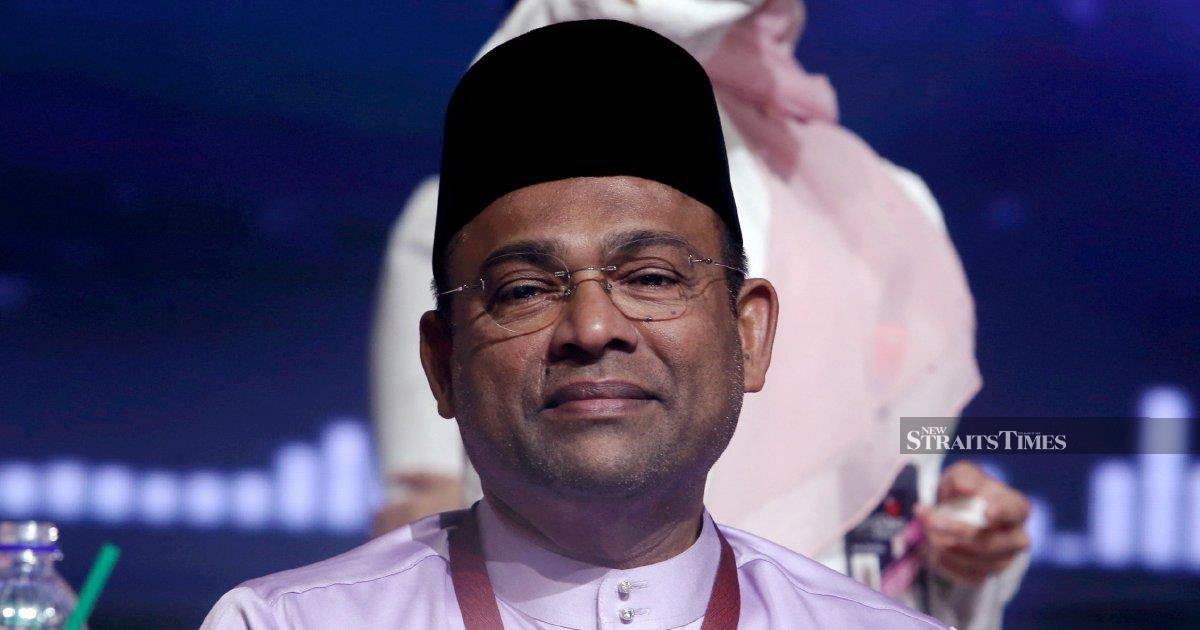
Datuk Seri Abdul Azeez Abdul Rahim, who previously headed Tabung Haji, has moved to distance himself from the controversy surrounding the Royal Commission of Inquiry report into the massive fund that manages pilgrimage savings for millions of Malaysians. The former chairman responded dismissively to Bersatu's public call for him to disclose whether he had been contacted by the Malaysian Anti-Corruption Commission regarding findings contained in the RCI report, contending that his name does not appear in the document.
The exchange marks the latest flashpoint in the ongoing fallout from the RCI's investigation into Tabung Haji, which uncovered significant governance failures and financial irregularities at the institution. The inquiry had been widely anticipated to shed light on decision-making processes and accountability structures that allowed substantial losses to accumulate over several years. Bersatu's intervention suggests political pressure remains intense on figures associated with the fund's administration during periods when major problems allegedly occurred.
Tabung Haji, formally known as the Lembaga Tabung Haji, holds paramount importance within Malaysia's Muslim community as the custodian of approximately RM90 billion in pilgrim savings. The fund's primary mandate involves facilitating Hajj journeys for Malaysian Muslims whilst managing their dedicated savings accounts. Any erosion of confidence in the institution carries profound implications not merely for individual savers but for the broader reputation of Islamic financial stewardship in Southeast Asia.
The RCI investigation was established following public revelations that Tabung Haji had experienced mounting financial losses, sparking urgent questions about internal controls, board oversight, and the adequacy of risk management frameworks. These disclosures triggered widespread concern among the millions of Malaysians who had entrusted their Hajj savings to the organisation over decades, many questioning whether their accumulated funds remained secure and appropriately deployed.
Azeez's assertion that his name does not feature in the RCI report appears designed to deflect accountability attributions. However, his prominence as former chairman would typically place him within the scope of institutional histories and decision-making reviews conducted during such inquiries. The specificity of his denial raises questions about the actual content and scope of the final RCI document, particularly regarding which individuals and periods the commissioners examined in detail.
Bersatu's demand for clarity about MACC contact reflects the political dimension surrounding the Tabung Haji matter. As an opposition party, Bersatu has leverage to pursue accountability questions, particularly if earlier administrations bore responsibility for systemic failures. The MACC, as Malaysia's premier anti-corruption body, typically investigates matters referred through RCI findings, conducting independent assessments to determine whether criminal conduct occurred and whether prosecutorial action is warranted.
The interplay between the RCI report, MACC investigations, and political scrutiny illustrates how institutional accountability in Malaysia operates across multiple overlapping channels. Whilst the RCI provides investigative and fact-finding authority, the MACC possesses prosecutorial discretion and investigative reach to pursue matters involving public officials and fund administrators. This division of responsibilities can create periods of ambiguity regarding who bears responsibility and what consequences will ultimately follow.
For Malaysian Hajj pilgrims, the protracted institutional review process generates considerable uncertainty. Many savers remain uncertain about the ultimate findings, the identity of decision-makers responsible for losses, and whether recovery mechanisms or compensatory measures will be implemented. The absence of rapid, decisive public accountability can erode confidence in not merely Tabung Haji but the broader ecosystem of government-linked institutions managing citizens' savings.
The RCI into Tabung Haji represents one of Malaysia's most significant recent examinations of institutional governance and fiduciary responsibility. Unlike commercial organisations where investors bear market risks, a government-linked fund managing religious obligation savings operates under heightened public trust expectations. The pilgrims who accumulated these savings did so with implicit confidence in institutional stewardship, making any discovered mismanagement or inadequate oversight particularly damaging to public faith.
Azeez's rejection of Bersatu's demands may prove temporary if MACC investigations substantiate involvement by former leadership during critical periods. The MACC possesses independent investigative authority and does not require RCI explicit naming to pursue individuals for potential misconduct. Institutional records, financial documentation, and testimony can establish decision-making chains and responsibility chains independent of RCI report narrative emphasis.
The ongoing controversy surrounding Tabung Haji reflects broader governance challenges confronting Malaysia's institutional architecture. Where complex financial organisations experience significant losses, determining precise accountability requires methodical investigation, clear documentary evidence, and willingness among public agencies to pursue findings through to substantive conclusions. The Tabung Haji matter will likely continue generating scrutiny until MACC investigations conclude and whether prosecutorial action follows becomes apparent.
For Malaysian citizens and especially the Hajj-intending community, the resolution of the Tabung Haji accountability question carries symbolic importance beyond the immediate financial stakes. It will signal whether Malaysia's institutional accountability mechanisms function effectively when examining government-linked entities and whether individuals occupying leadership positions during problematic periods ultimately face consequences commensurate with the public trust they violated.

