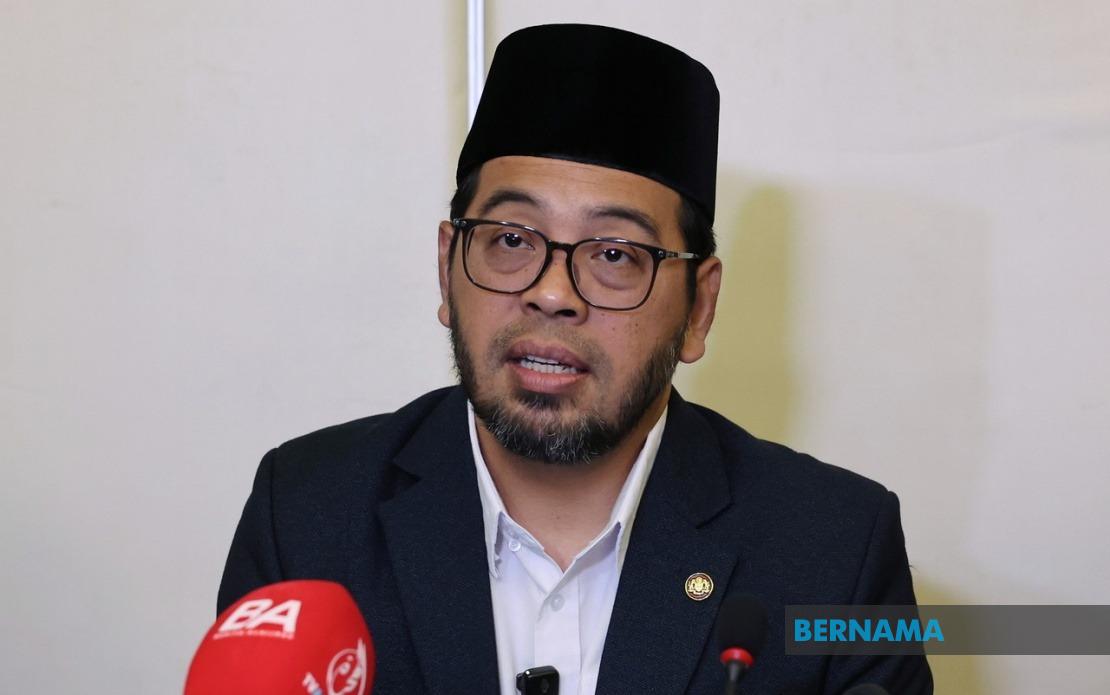
Malaysia's Tabung Haji (TH), the institution responsible for managing the country's pilgrimage fund, has substantially strengthened its position through a comprehensive recovery effort, according to Religious Affairs Minister Dr Zulkifli Hasan. Speaking during a special sitting of the Dewan Rakyat, he outlined how the fund has emerged from a period marked by operational and financial challenges that accumulated over several years, underscoring the government's commitment to restoring public confidence in an institution that holds sacred significance for the nation's Muslim community.
When the MADANI Government assumed office at the end of 2022, Tabung Haji was grappling with inherited complications that had festered since 2018. These included problematic asset holdings that had lost competitive advantage and created structural vulnerabilities within the institution. Rather than rushing toward punitive measures, the government deliberately granted TH operational space and autonomy to undertake a thorough institutional refresh. This strategic patience has yielded tangible results, permitting a measured unveiling of the recovery process to the public and stakeholders who depend on the institution.
The minister's statement carries particular weight given the public nature of the recovery announcement and its timing. In July, the Cabinet unanimously approved the release of a 211-page Royal Commission of Inquiry report compiled over more than a year. The RCI, chaired by former Chief Justice Tun Mohamed Raus Sharif and staffed by prominent experts in banking, finance, public administration, syariah law and accounting, had examined governance weaknesses spanning 2014 to 2020. The decision to make these findings public represented a deliberate pivot toward transparency, contrasting sharply with previous approaches that had kept such inquiries confidential.
The recovery narrative gains credibility through international recognition. Tabung Haji has received five World's Best Haj Management Awards across four consecutive years, a distinction that underscores operational excellence and international competitiveness. These accolades suggest that capable and integrity-driven leadership has successfully repositioned the institution as a globally competitive hajj management provider, restoring not merely financial health but professional standing within the international Islamic pilgrimage sector.
However, the recovery story is inseparable from accountability measures. Following the Cabinet's decision to publicize the RCI findings, the Malaysian Anti-Corruption Commission and police immediately commenced investigations into allegations of misappropriation. Several individuals linked to the funds diversion were detained as enforcement agencies moved decisively to investigate potential criminal conduct. This enforcement response signals that institutional recovery and criminal accountability are complementary rather than competing priorities, establishing that no party can exploit TH's sacred mission for personal gain without facing consequences.
The minister articulated the stakes with unusual emotional clarity, emphasizing that Tabung Haji deposits represent far more than financial assets. Parents set aside money gradually to enable their children to perform hajj, while teachers, small traders, retirees, farmers, fishermen, rubber tappers and taxi drivers entrust their savings to the institution not primarily for investment returns but to fulfill a religious obligation. This portrayal of TH depositors as ordinary Malaysians pursuing spiritual aspirations rather than commercial investors establishes why breaches of trust transcend technical financial matters and touch upon religious duty and community cohesion.
This framing also addresses why the government deemed it necessary to pursue a public inquiry and full enforcement investigation rather than contain the matter administratively. Zulkifli emphasized that when institutions holding such magnitude of trust face compromises, silence becomes complicit. Political narratives cannot be permitted to overshadow the concrete interests of depositors and the broader Muslim community. The government's position reflects a recognition that restoring confidence in TH requires not concealment but comprehensive exposure coupled with decisive corrective action and enforcement.
The RCI report itself identified specific operational and governance weaknesses, subsequently offering 25 recommendations for systemic improvement. As of late July, implementation stood at 75 percent completion, with remaining recommendations actively advancing. This measurable progress demonstrates that recovery encompasses not merely financial rehabilitation but structural transformation aimed at preventing recurrence of identified vulnerabilities. The concrete nature of these reforms—addressing documented gaps rather than launching vague improvement initiatives—provides a foundation for stakeholder confidence.
The timing of this announcement also reflects coordination with the monarchy. The King issued a directive that investigations into RCI findings proceed comprehensively, transparently and without compromise, establishing a clear royal expectation that truth-seeking and accountability would drive the enforcement response. This alignment between government policy, enforcement agency action and royal directive creates a unified institutional response unlikely to be derailed by political opposition or institutional inertia. For Malaysian Muslims planning their hajj through Tabung Haji, such coherence provides assurance that their deposits face scrutiny and protection at the highest governmental levels.
The implications for Southeast Asian pilgrimage management are noteworthy. As the region's largest Muslim-majority nation managing substantial pilgrim flows annually, Malaysia's approach to institutional accountability in hajj fund management may influence governance standards across the region. Other Southeast Asian nations managing pilgrim savings accounts will observe whether Malaysia's transparency-plus-enforcement model succeeds in restoring depositor confidence without destabilizing hajj operations. This regional perspective positions the Tabung Haji recovery not merely as a domestic governance narrative but as a test case for balancing institutional accountability with operational continuity in faith-based financial systems.
Looking forward, the completion of enforcement investigations and implementation of remaining RCI recommendations will determine whether Tabung Haji's recovery represents genuine structural transformation or cosmetic rehabilitation. The minister's confidence that capable leadership can steer the institution effectively rests ultimately upon the enforcement outcomes and the sustained implementation of governance improvements. For the millions of Malaysians whose hajj aspirations and savings depend upon institutional integrity, the recovery's success hinges not on ministerial statements but on demonstrated operational excellence and complete accountability for past lapses.

