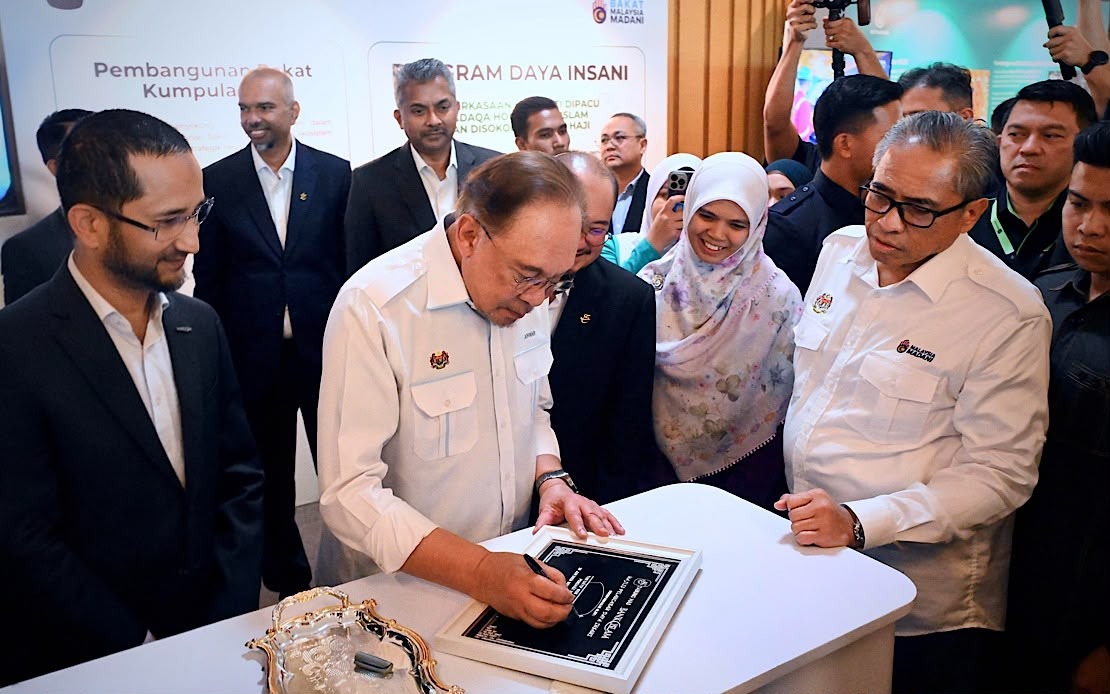
Tabung Haji and Bank Islam Malaysia Berhad have jointly unveiled the Asnaf Youth Development Programme for Inclusive and Sustainable Empowerment, or DAYA INSANI, a skills and employment initiative backed by RM1 million in initial funding. The programme was formally launched on Monday in conjunction with Prime Minister Datuk Seri Anwar Ibrahim's MADANI Talent initiative in Sendayan, Negeri Sembilan, and is expected to benefit more than 100 underprivileged youth and orphans over its initial phase.
The initiative represents a significant pivot towards human capital development among Malaysia's most vulnerable populations. Rather than offering direct financial assistance alone, the two Islamic financial institutions have structured DAYA INSANI to provide comprehensive pathways combining specialist skills training, hands-on industry exposure, and direct employment placement with pre-identified partner organisations. This holistic approach addresses a persistent gap in the Malaysian education-to-employment pipeline, where many young people from lower-income households struggle to access both quality vocational training and the professional networks necessary for sustainable career advancement.
The programme's architecture involves strategic partnerships with an array of technical and professional training providers. The Kulim Hi-Tech Park Skills Centre will deliver advanced technical training to produce skilled workers for high-tech manufacturing sectors, while Kolej Universiti Bestari and Kumpulan Medic Iman Sdn Bhd focus on nursing and healthcare qualifications. The Malaysian Professional Accountancy Centre will train prospective accountants to professional standards, and Showme Education will develop specialised therapists. This diversified approach allows young participants to pursue pathways aligned with both labour market demand and their individual aptitudes.
What distinguishes DAYA INSANI from conventional skills programmes is its alignment with broader national development goals. By anchoring the initiative within Tabung Haji's hajj pilgrimage mission and Bank Islam's social finance framework, the programme embeds youth empowerment within Islamic principles of community welfare and economic justice. This positioning reflects a deliberate effort to channel Islamic financial resources towards addressing structural inequality, positioning social finance not as charity but as strategic investment in human potential. For Malaysian policymakers and business leaders, this model suggests how faith-based financial institutions can complement government workforce development strategies.
Evidence of programme traction already exists. The nursing diploma stream with Kolej Universiti Bestari commenced in 2024 with 19 students currently enrolled, and one graduate has already entered the workforce, validating the employment placement mechanism. The technical training cohort at Kulim Hi-Tech Park began in June with 13 participants and aims to scale to 100 participants in the near term, indicating strong institutional capacity to absorb larger cohorts. These early results provide proof of concept that the integrated model functions effectively despite Malaysia's competitive labour market.
Tabung Haji Group Managing Director and Chief Executive Officer Mustakim Mohamad framed the initiative as part of a broader philosophical commitment to human development within the Islamic finance sector. He emphasised that the agency views investment in human capital among the asnaf—a Quranic term referring to eight categories of people eligible to receive zakat—as the highest-value use of institutional resources. This perspective extends beyond immediate economic returns, positioning youth empowerment as foundational to community resilience and intergenerational mobility, particularly among families with limited access to professional networks or quality education.
Bank Islam's commitment to the programme extends its social finance mandate beyond traditional microfinance. Group Chief Executive Officer Raja Datin Paduka Teh Maimunah Raja Abdul Aziz described DAYA INSANI as demonstrating the bank's belief that systematic access and structured support can unlock potential among marginalised youth. This positioning aligns with global trends in impact investing and social finance, where financial institutions increasingly view community development as integral to long-term business sustainability and stakeholder value creation. For Malaysian banks seeking to differentiate themselves through environmental, social and governance credentials, this model offers a replicable template.
The programme's funding mechanism remains open to additional contributions from corporations, institutions and individuals, creating a multi-stakeholder financing structure. This approach distributes financial responsibility while building institutional buy-in from private sector employers who benefit from a talent pipeline of trained workers. Such collaborative funding models have gained traction across Southeast Asia as governments struggle to resource skills development at scale, and private-public partnerships increasingly supplement public investment in vocational education.
Context matters here for Malaysian readers. The country faces a documented skills gap, with employers frequently reporting difficulty recruiting workers for technical and professional roles despite rising youth unemployment. DAYA INSANI targets precisely this mismatch by ensuring training directly reflects employer requirements and includes guaranteed pathway mechanisms to employment. This contrasts with some traditional vocational programmes that operate disconnected from actual labour market needs, resulting in trained workers unable to find relevant positions.
The programme's focus on asnaf communities carries particular significance in Malaysia's social policy landscape. Zakat-eligible populations—including low-income households, orphans, and those in debt—represent substantial portions of the Malaysian population, particularly in rural and economically disadvantaged areas. By directing substantial institutional resources toward youth within these communities, Tabung Haji and Bank Islam are acknowledging both the moral imperative and economic logic of inclusive growth. Youth unemployment and underemployment in disadvantaged communities correlate with social instability and reduced intergenerational mobility, factors that ultimately constrain broader economic development.
The DAYA INSANI framework also illustrates how Islamic financial principles can be operationalised for contemporary social challenges. Beyond traditional zakat distribution, the programme demonstrates how Islamic financial institutions can leverage their capital, expertise and institutional networks to address structural barriers to economic participation. This model potentially offers lessons for other Islamic finance players across Southeast Asia seeking to align their business models with sustainable development objectives while generating measurable social impact.
Looking forward, the programme's success will depend on sustained employer engagement, quality of training delivery, and post-placement support to ensure participants remain employed and advance within their chosen fields. Early indicators suggest the partnerships are functional and motivated, but scaling from 100 to significantly larger cohorts will require continuous programme refinement and potentially additional funding commitments. For Malaysia's talent development agenda, DAYA INSANI represents an important institutional innovation in how Islamic finance can serve as a catalyst for inclusive economic participation among historically marginalised populations.

