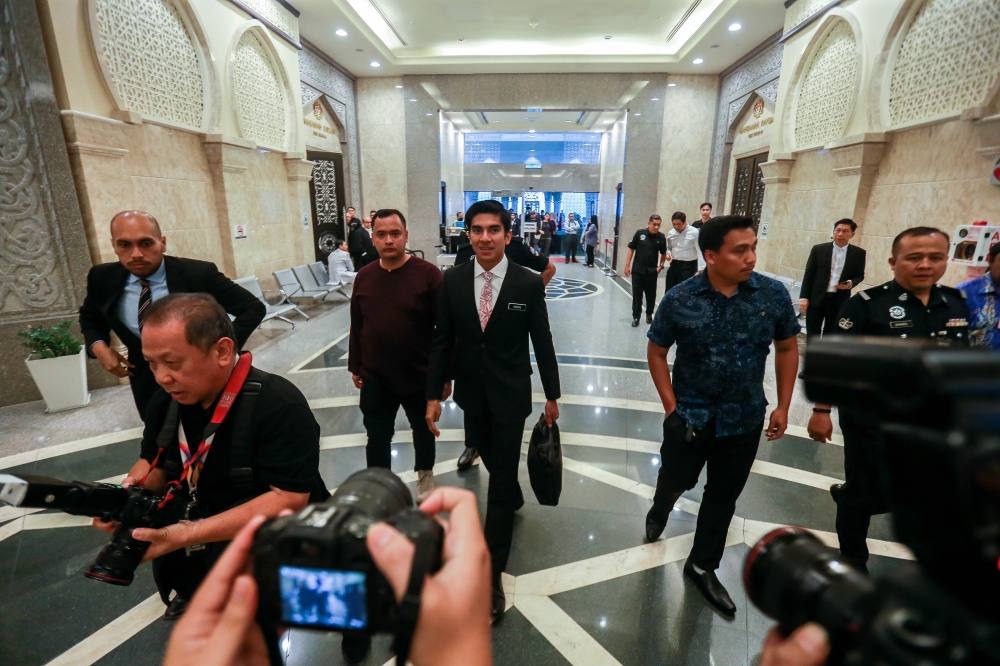
Muar Member of Parliament Syed Saddiq Syed Abdul Rahman arrived at the Palace of Justice in Putrajaya on July 13 for what many observers regard as a pivotal moment in his political career. The appearance before Malaysia's highest court drew considerable public attention, with supporters assembling in the early morning hours to demonstrate their backing for the prominent young politician. The atmosphere at the palace reflected the significance many Malaysians attach to the proceedings, as civil society groups and political allies converged to witness the verdict.
Syed Saddiq did not face the day alone. His family members and fiancée were present at the Palace of Justice, providing personal support during what observers characterised as a high-stakes judicial moment. The presence of close relatives underscored the personal dimensions of the case beyond its political ramifications, illustrating how significant legal proceedings can intersect with individuals' lives and relationships. Their attendance signalled a show of solidarity that extended beyond political calculations to encompass family unity.
The Federal Court hearing represents a crucial juncture for Syed Saddiq, whose political trajectory has been marked by both prominence and controversy. As a relatively young figure in Malaysian politics, the outcome of this judicial review carries considerable weight for his continued standing and future political prospects. The case touches upon issues that resonate broadly within Malaysia's political landscape, explaining the public interest and media attention surrounding the proceedings.
The gathering of crowds at the palace demonstrated substantial public engagement with Malaysia's judicial system. Citizens from various backgrounds converged to observe proceedings affecting a political figure whose actions and decisions have proven divisive across different segments of society. This turnout reflects broader patterns of civic participation in high-profile legal cases involving political personalities, a phenomenon that has become increasingly prominent in recent Malaysian politics.
Syed Saddiq's position as Muar MP places him within the national legislative framework, making his legal standing a matter of broader political consequence. The Federal Court's jurisdiction over the case suggests that fundamental constitutional or statutory issues were at play, rather than routine procedural matters. Such appellate proceedings often address questions of law that establish precedents affecting beyond the immediate parties involved.
The timing of the judgment carried strategic significance within Malaysia's political calendar. Legal outcomes involving prominent parliamentary members frequently intersect with ongoing political negotiations and coalition dynamics at the national level. The court's decision would inevitably generate ripple effects across political circles, influencing perceptions of governmental stability and institutional credibility.
Observers of Malaysian politics noted that cases involving young political figures like Syed Saddiq attract particular scrutiny because they signal how the legal system treats rising political talent. The judiciary's approach to such matters shapes confidence in institutional independence and impartiality, particularly among younger citizens evaluating Malaysia's democratic foundations. The visibility of the proceedings reflected recognition that judicial decisions affecting politicians carry implications extending beyond individual cases.
The presence of media personnel and public interest in court proceedings reflects Malaysia's evolving relationship with political accountability and transparency. Court cases involving political figures increasingly occur within frameworks of public scrutiny and media coverage that contrasts with earlier periods of Malaysian political history. This shift towards greater openness in political-legal matters demonstrates changing expectations regarding how power is exercised and questioned within democratic systems.
For Syed Saddiq specifically, the Federal Court appearance represented a critical test of his ability to navigate Malaysia's complex institutional landscape. Regardless of the verdict's direction, the experience would likely influence his political strategy and public positioning moving forward. The support demonstrated by assembled crowds suggested that segments of the Malaysian public viewed his case through sympathetic lenses, though opinions remained divided across broader constituencies.
The Federal Court's deliberations took place within Malaysia's constitutional framework, where judicial review serves as an important mechanism for resolving disputes involving governmental authority and individual rights. The fact that Syed Saddiq's case reached this level indicated that lower court determinations had raised questions warranting the highest court's attention. Such cases contribute to the gradual development of Malaysian jurisprudence on matters affecting political participation and governmental powers.
The day's proceedings underscored Malaysia's ongoing grappling with questions concerning power distribution between executive, legislative, and judicial institutions. Cases involving elected officials tested the independence of courts from political pressures while ensuring that political figures remained accountable to legal standards applicable across society. This balance remains contested terrain in Malaysian institutional development.
As the Federal Court prepared to deliver its judgment, observers recognised that outcomes in such politically resonant cases shape public perception of institutional fairness and trustworthiness. Beyond the immediate consequences for Syed Saddiq himself, the court's decision would communicate important messages about judicial independence and the rule of law to Malaysian citizens monitoring developments from across the country.

