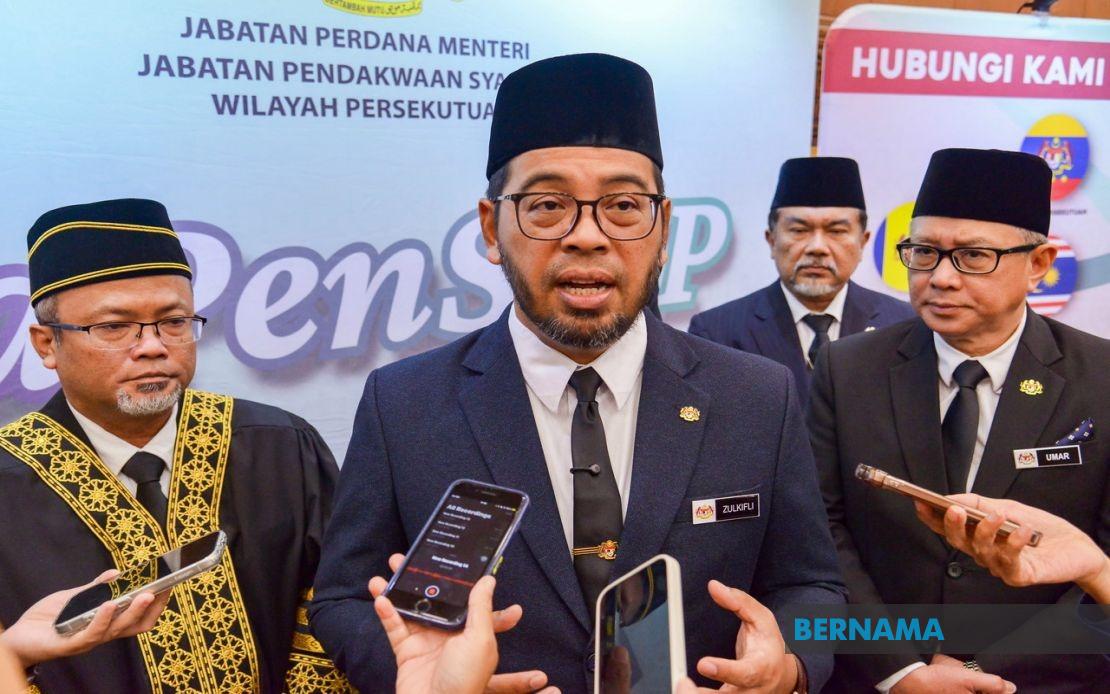
The Malaysian government is putting finishing touches to landmark legislation that would establish formal salary and remuneration provisions for Syariah judges, bringing the long-discussed reform closer to parliamentary consideration. Minister in the Prime Minister's Department (Religious Affairs) Dr Zulkifli Hasan confirmed on July 15 that the Syariah Judges' Remuneration Act proposal has entered its final phase, with key documentation prepared and undergoing refinement before submission for further governmental action. The announcement signals momentum on what has become a politically significant initiative aimed at improving the professional status and financial security of judges operating within Malaysia's dual legal system.
The protracted development of the remuneration framework reflects the complexity inherent in restructuring compensation across Malaysia's federated Islamic court system. Dr Zulkifli explained that the Department of Syariah Judiciary Malaysia, commonly known as JKSM, is conducting a comprehensive examination in collaboration with multiple government agencies. This investigative phase has extended beyond mere number-crunching; it incorporates extensive engagement sessions with affected stakeholders who have insights into the practical implications of any proposed changes. Such deliberate consultation represents a necessary approach given the constitutional reality that Islamic law enforcement remains partly a state responsibility, requiring careful coordination across different jurisdictions.
The financial dimensions of implementing standardised judicial remuneration have emerged as a central consideration prolonging the process. Dr Zulkifli acknowledged that thorough analysis remains essential because the proposals carry significant budgetary consequences and intersect with various administrative mechanisms. Rather than rushing legislation that might prove unworkable, officials are conducting deeper investigations to ensure the framework can be sustained and implemented consistently. This methodical approach, while requiring patience, reflects lessons learned from previous reform attempts in the region that overlooked practical implementation challenges.
Prime Minister Datuk Seri Anwar Ibrahim previously signalled strong governmental backing for the initiative, stating on July 15, 2024, that the administration remains committed to expediting implementation of the proposed act. This high-level endorsement reflects recognition that improving compensation for Syariah judges carries broader implications for judicial independence and public confidence in Islamic courts. When judicial officers lack adequate remuneration relative to their responsibilities and qualifications, the judiciary becomes vulnerable to external pressures and struggles to attract talented legal professionals. By addressing compensation through formal legislation rather than ad hoc administrative decisions, the government seeks to insulate Islamic courts from politicisation and resource uncertainty.
Beyond the remuneration framework, the government simultaneously pursues a companion institutional reform through the proposed Syariah Prosecution Department, or JPSM. Dr Zulkifli disclosed that this parallel initiative is undergoing policy-level refinement ahead of Cabinet presentation. The establishment of a dedicated prosecution service for Islamic courts would represent a structural modernisation, creating a professional cadre responsible for prosecuting cases before Syariah tribunals. Currently, prosecution functions lack such institutional clarity, and formalising this role through legislation would enhance both efficiency and accountability within the Islamic legal system.
The process governing these interrelated reforms emphasises federal-state coordination, acknowledging that while Islam remains a federal matter, states retain considerable authority over Islamic affairs within their territories. Dr Zulkifli stressed that engagement with state governments has proceeded systematically, ensuring that regional perspectives inform policy development. This collaborative framework is not merely procedural courtesy; it reflects constitutional requirements and practical necessity, as implementation ultimately requires state cooperation and resources. The minister characterised the undertaking as a collective endeavour rather than centralised imposition, recognising that sustainable reform demands buy-in from multiple jurisdictional levels.
For Malaysian observers, the advancing legislation represents a significant recognition that the Syariah judiciary, despite operating parallel to civil courts, requires professionalisation equivalent to secular judicial structures. The dual legal system serving roughly six million Muslim Malaysians demands judicial officers of comparable calibre and security to their civil counterparts. Inadequate compensation has historically hindered recruitment and retention of qualified candidates, potentially compromising case outcomes and public satisfaction. Formal remuneration legislation addresses these concerns systematically, signalling that Islamic jurisprudence commands governmental priority and resource commitment.
The Southeast Asian context further illuminates Malaysia's initiative. Across the region, Islamic legal systems face varying degrees of institutional development and resourcing. Malaysia's effort to standardise and legislate Syariah judicial compensation positions it as a regional leader in formalising Islamic legal infrastructure. Such structural improvements, if successfully implemented, could provide a model for other jurisdictions managing similar dual legal arrangements or seeking to strengthen their Islamic court systems. The reforms also reflect broader conversations about rule of law and judicial independence that transcend religious boundaries, appealing to international standards while respecting constitutional arrangements.
The timeline for Cabinet submission remains somewhat fluid, as Dr Zulkifli emphasised that additional feedback collection continues. However, the characterisation of documentation as being in final phases suggests that major policy questions have been resolved and refinement now addresses technical and procedural details. Once Cabinet approval is secured, the proposals would advance toward parliamentary consideration, where they would face scrutiny from lawmakers and potentially civil society observers. The legislative journey ahead, while potentially contentious given sensitivities around Islamic law, appears adequately prepared given the extensive prior consultation and interagency coordination already undertaken.

