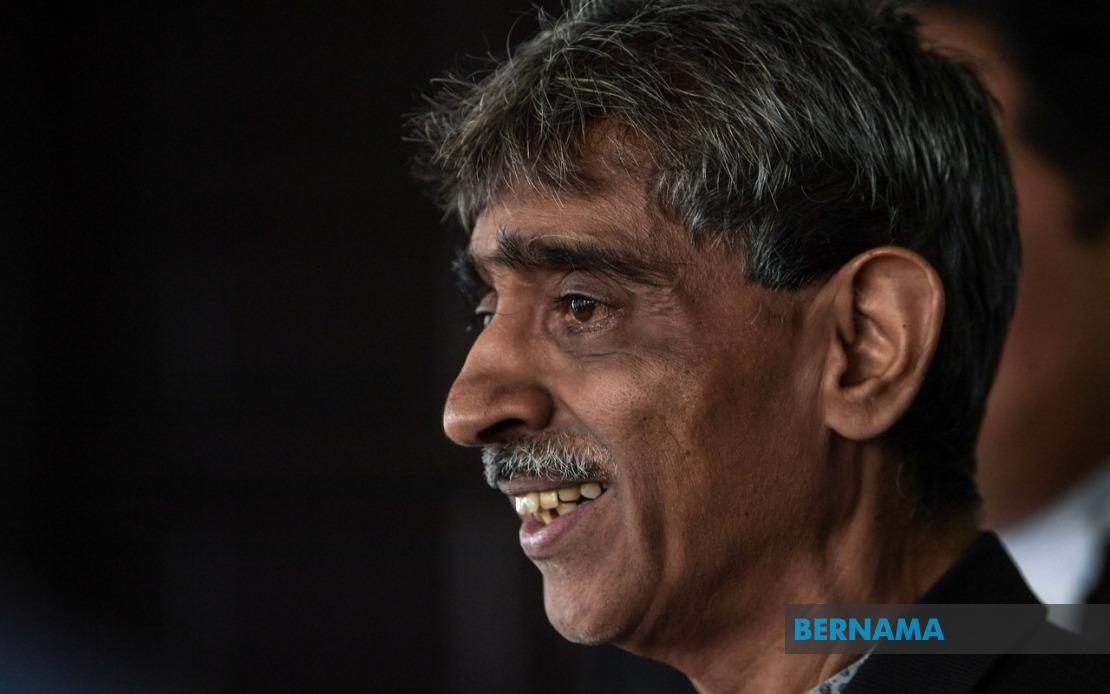
Criminal charges must follow swiftly once investigative agencies have gathered sufficient evidence in matters stemming from the Tabung Haji Royal Commission of Inquiry, according to lawyer Mohamed Haniff Khatri Abdulla. Speaking on the heels of the inquiry's findings, he emphasised that decisive legal action should be pursued irrespective of the status or position of those implicated, as a means of restoring faith in the institution among its depositors and the general public. The recommendations emerging from the RCI exercise will only carry meaningful weight if they translate into tangible prosecutorial steps, he stressed.
The pathway from investigation to courtroom represents a critical phase in addressing what has been a significant governance and financial management scandal affecting millions of Malaysians. Mohamed Haniff, drawing on his direct involvement in the RCI proceedings, articulated a clear position: once inquiries reach a definitive conclusion backed by admissible evidence, criminal proceedings ought to commence without delay. Such action, he contended, would demonstrate governmental resolve and signal to the public that accountability remains paramount, ultimately rebuilding institutional credibility that has been substantially eroded.
Yet Mohamed Haniff cautioned against interpreting individual prosecutions as markers that the entire investigative process has been completed. The distinction is material: the Royal Malaysia Police and the Malaysian Anti-Corruption Commission continue examining multiple dimensions of Tabung Haji's operations, and completing charges against some individuals does not signify the closure of broader inquiries. This nuance requires careful articulation to the public sphere, he warned, to forestall misconceptions that might take root if progress announcements are handled carelessly or appear sporadic.
Strategic communication emerges as a vital counterpart to prosecutorial action in the lawyer's framework. He urged the government and relevant authorities to release updates in deliberate stages, allowing the public to understand that prosecutions represent culmination of specific investigative components where evidence has matured sufficiently, while other lines of inquiry remain in progress. Without such clarification, public perception risks becoming distorted, potentially breeding cynicism that future legal actions reflect political considerations rather than evidence-based determinations. The cumulative effect of poor communication strategy could undermine the very confidence-restoration efforts that prosecutions are meant to achieve.
The investigative landscape encompassing the Tabung Haji matter is expansive and complex. Nearly 200 individuals have been called by law enforcement agencies to furnish statements, reflecting the breadth of potential misconduct touching on governance frameworks, investment decision-making, and potential legal violations. Such scale necessarily demands considerable time and methodical examination. Mohamed Haniff projected that the investigation phase alone could extend three to six months further, a timeline that emphasises why precipitate action would be counterproductive and why the public must calibrate expectations accordingly.
To enhance investigative efficiency and prosecutorial coordination, Mohamed Haniff proposed that the Attorney General's Chambers establish a dedicated taskforce specifically devoted to evaluating all investigation papers submitted by the PDRM and MACC in relation to the Tabung Haji RCI. This unit, he suggested, should comprise three Deputy Public Prosecutors possessing specialised expertise in both anti-corruption investigations and conventional criminal jurisprudence. The rationale is straightforward: given that two law enforcement agencies operate under distinct procedural protocols, a unified prosecutorial body reviewing materials in an integrated fashion would eliminate gaps, reduce redundancy, and accelerate the progression from investigation to charges.
Former Court of Appeal judge Datuk Yaacob Md Sam lent substantial weight to these considerations, drawing on his extensive experience as a conducting officer in multiple royal commissions. Yaacob underscored a critical legal principle often misunderstood in public discourse: RCI findings, while authoritative, do not themselves constitute admissible evidence in criminal or civil court proceedings and carry no binding legal force under the Commissions of Inquiry Act 1950. An RCI functions fundamentally as a fact-finding exercise operating within government-prescribed terms of reference, generating recommendations for consideration by executive and enforcement authorities. The actual evidentiary foundation for prosecution must derive from independent investigation work undertaken by the police and anti-corruption agencies.
This distinction carries profound implications for how the Tabung Haji matter will proceed judicially. Although the RCI has already completed its inquiry and published conclusions, law enforcement bodies must now re-examine evidence through their own institutional lenses, adhering to the rigorous standards demanded by criminal procedure and the rules of evidence. Only testimony and documents gathered through these formal investigative channels—conducted according to established police and MACC protocols and subject to legal scrutiny—can be introduced before a court. The RCI report functions, in effect, as a preliminary roadmap directing investigators toward lines of inquiry, not as a substitute for their independent work.
Yaacob elaborated that authorities must pursue comprehensive re-examination of all pertinent factual dimensions to ascertain whether the conduct identified by the RCI rises to the threshold of criminal offence. This determination requires assessment by trained prosecutors and investigators versed in the applicable criminal statutes, a process that cannot be rushed or abbreviated without jeopardising the integrity and viability of eventual prosecutions. The institutional separation between an RCI's investigative function and law enforcement's prosecutorial function, while procedurally distinct, must operate in practical coordination to translate findings into legitimate legal action.
The implications for Malaysian institutional reform and public accountability are substantial. The Tabung Haji scandal has exposed vulnerabilities in governance oversight affecting a pillar institution trusted by millions of citizens for the safekeeping of their savings. Public confidence hinges not merely on the identification of wrongdoing through an RCI, but on demonstrable follow-through in the criminal justice system. However, this follow-through must remain anchored in rigorous evidentiary standards and procedural propriety; expedience pursued at the expense of legal foundation would ultimately undermine the credibility of whatever prosecutions emerge and invite challenges that could unravel convictions.
The challenge confronting Malaysian authorities is thus to navigate between two hazards: languor that permits public disillusionment to deepen through apparent inaction, and haste that compromises the legal foundation for sustained accountability. Mohamed Haniff's proposal for a dedicated prosecutorial taskforce within the Attorney General's Chambers offers a constructive institutional mechanism for achieving this balance. By concentrating expertise and imposing unified oversight on papers emanating from multiple enforcement agencies, such a structure could accelerate progress while maintaining the prosecutorial rigour upon which legitimate convictions ultimately depend. Regular, carefully calibrated public communication about investigative progress and the basis for any charges would complement this institutional reform, fostering realistic expectations and demonstrating that the rule of law, rather than political calculation, is driving the process forward.

