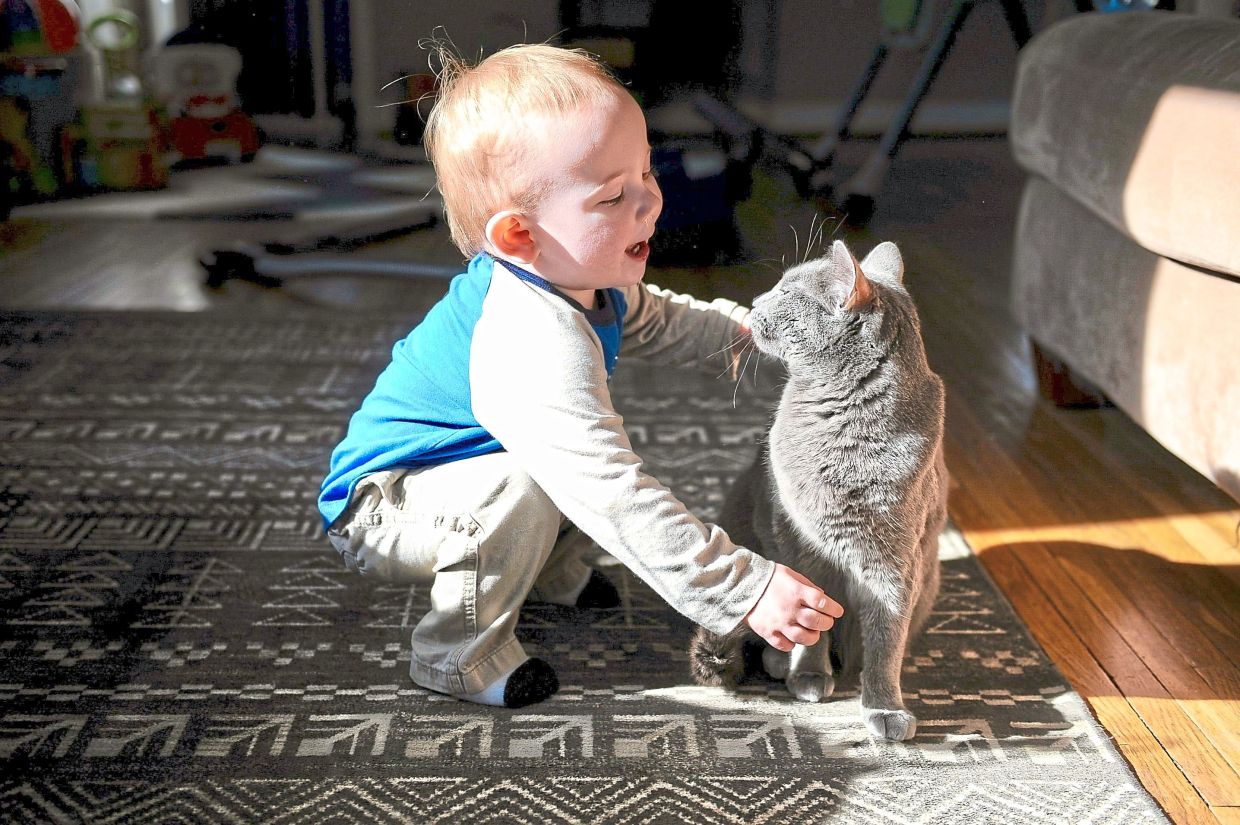
Feline companions have long carried an unfair reputation in the medical community, routinely blamed for triggering asthma attacks in susceptible children. Yet a large-scale Swedish study now demonstrates that this widely held belief lacks scientific foundation, at least for the short term. Researchers from Karolinska Institutet have published findings from a two-year cohort study of nearly 30,300 children that found no meaningful differences in asthma outcomes between youngsters living with cats and those without them, upending conventional wisdom that pet dander serves as a potent respiratory hazard.
Asthma remains the most prevalent chronic illness affecting children globally and a leading cause of paediatric hospitalisation. The Global Asthma Network estimates that approximately 9.1% of children and 11% of adolescents worldwide have asthma, though prevalence fluctuates considerably depending on geography, climate, and socioeconomic factors. Doctors have long identified multiple environmental and biological contributors to asthma development and progression—ranging from air pollution and secondhand smoke exposure to viral respiratory infections, excess weight, and pre-existing allergic conditions such as eczema or seasonal rhinitis. Within this constellation of risk factors, pet ownership, particularly cats, has occupied a prominent position in clinical guidance and patient counselling.
The medical literature on this topic has proved surprisingly murky. While countless patients report subjectively that encountering cats precipitates asthma flare-ups, the clinical and epidemiological evidence supporting this association has been contradictory and fragmented. Most prior research has relied on small, non-representative samples that cannot reliably inform clinical decision-making for broader populations. This gap between anecdotal experience and robust data has left many families unnecessarily anxious about cat ownership or forced to surrender beloved pets based on theoretical rather than demonstrated risk.
The Swedish investigation, which commenced in 2023 and concluded in 2024, enrolled children between four and seventeen years old at baseline who had been born between 2006 and 2020 and had received formal diagnoses of asthma or airway allergies. Researchers leveraged comprehensive national health registers—the Swedish National Patient Register, Prescribed Drug Register, and National Airway Register—to access detailed longitudinal data on hospitalisations, emergency department visits, medication prescriptions, asthma control assessments, and objective lung function measurements via spirometry. This administrative approach eliminated recall bias and provided an unusually complete picture of disease progression across a nationally representative population.
Cat ownership status was determined through the mandatory Swedish National Cat Register, which has required registration of all pet cats born after 2008 since 2023. The registry showed that 9.4% of the 30,277 children lived in households with at least one registered cat. The research team then compared asthma severity and control indicators between the two groups, examining both prescription patterns reflecting disease burden and clinical markers of respiratory status. Moderate to severe asthma, defined by prescribed medication intensity, occurred in 9.6% of cat-exposed children compared with 10.1% of children without feline household members—a negligible and statistically insignificant difference.
Acute asthma exacerbations, commonly termed attacks or flare-ups, proved equally comparable between groups. These episodes occurred in 3.3% of children living with cats versus 3.5% of those without cats. When researchers narrowed their analysis to 1,428 children with available objective lung function testing data—of whom 97 lived with cats—they detected no significant disparities in standard spirometry measures between cat-exposed and non-exposed cohorts. These quantitative assessments of airway obstruction and lung capacity represent the gold standard for evaluating respiratory function and provide powerful evidence against feline allergens driving meaningful respiratory deterioration.
Dr Resthie R Putri, the corresponding author and a postdoctoral fellow at Karolinska Institutet, emphasised that the absence of association extended beyond simple cat presence. The analysis revealed no differential asthma impacts related to the number of cats in the household, the sex of the cat, or the animal's age. These granular findings strengthen confidence that cat ownership per se does not constitute a hazard for asthmatic children, at least within the timeframe examined. The consistency of null results across multiple outcome measures and analytical strata suggests a genuinely protective or neutral effect rather than a statistical artifact.
Putri offered a plausible mechanism to explain the apparently paradoxical findings. Cat allergen exposure, she noted, likely occurs ubiquitously in the broader environment regardless of home ownership. Schools, public transit, and shared community spaces contain sufficient cat allergen reservoirs that children without household cats experience substantial exposure nonetheless. This background environmental contamination may have obscured any protective effect or exacerbatory effect of having a feline housemate, effectively removing a key variable distinguishing the comparison groups. Alternatively, the accumulating evidence suggests that animal allergen exposure, when experienced from early childhood, may induce immunological tolerance rather than sensitisation—a phenomenon documented in other atopic conditions.
The researchers acknowledged important limitations that constrain generalisation of their findings. The National Cat Register's recent implementation in 2023 means some children living with older cats born before 2008 may have been erroneously classified as non-exposed, potentially underestimating the truly exposed group. Additionally, the study lacked individual-level data on allergen sensitisation patterns; researchers could not determine which specific allergens, if any, each child had developed antibodies against. This distinction matters considerably, as allergic sensitisation to cat dander rather than mere environmental exposure represents the biologically relevant factor in asthma precipitation. Without serological confirmation of sensitisation status, the true protective or harmful effect of cat allergens among sensitised children remains unclear.
For Malaysian families and other Southeast Asian households navigating asthma management decisions, these findings carry significant practical implications. The region experiences rising childhood asthma prevalence, partly attributed to rapid urbanisation, increasing vehicular emissions, and changing household exposures. Many parents and physicians have assumed that eliminating cat ownership represents prudent asthma prevention or management strategy, sometimes recommending pet relinquishment to anxious families. The Swedish evidence suggests this approach may lack scientific justification and unnecessarily deprive children of the documented psychological and developmental benefits of pet ownership. Paediatricians and respiratory specialists across the region would benefit from reconsidering categorical advice against cat ownership and instead tailoring guidance to individual clinical presentations and objective evidence of cat allergen sensitisation.
Moreover, the study exemplifies how large-scale, prospective cohort designs utilising linked administrative data can generate high-quality evidence on everyday health questions. Malaysia's health information infrastructure, including hospital registers and medication databases, could support similarly rigorous investigations into other widespread health assumptions. Beyond cats, researchers might examine beliefs about other pets, dietary triggers, environmental exposures, and lifestyle modifications that patients encounter in counselling but which lack robust empirical support. Such national-scale studies would strengthen clinical guidance and empower patients to make decisions grounded in evidence rather than tradition.
While this two-year Swedish investigation provides reassuring news, longer-term studies examining whether childhood cat exposure generates protective immunological effects or sustained non-responsiveness would further illuminate the relationship between pet allergens and asthma trajectories. Questions also remain about whether findings extend to other common household pets, how individual genetic or immune backgrounds modulate responses to pet allergens, and whether early-life cat exposure might reduce asthma risk among children without pre-existing diagnoses. Until such additional research emerges, families with asthmatic children can take comfort that scientific evidence now supports living with cats without fear of respiratory consequences.

