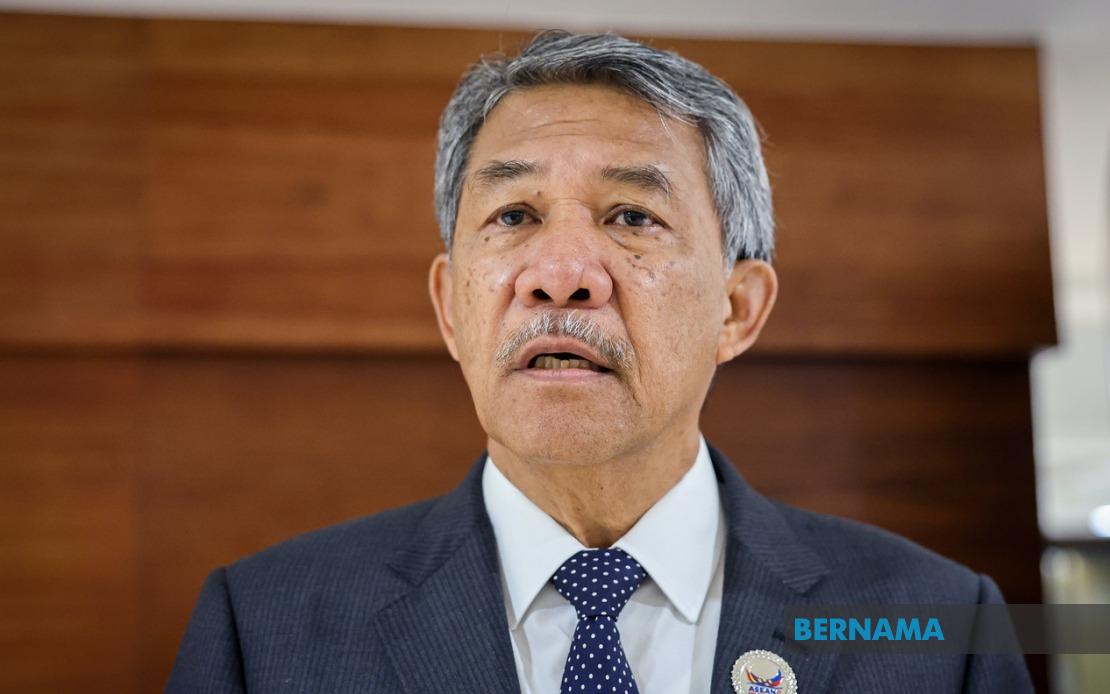
Four European nations have secured membership in the Treaty of Amity and Cooperation in Southeast Asia following approval at regional talks in Manila, marking a significant expansion of the bloc's international engagement. Sweden, Poland, Romania and Lithuania were formally admitted during the 59th ASEAN Foreign Ministers' Meeting held at the Philippine International Convention Centre on July 21, with Malaysian Foreign Minister Datuk Seri Mohamad Hasan confirming the decision.
The four countries are scheduled to formally execute their instruments of accession during a Friday ceremony coinciding with the treaty's 50th anniversary celebrations. Mohamad explained that the approval came through consensus at the plenary session of the Foreign Ministers' Meeting, the Post-Ministerial Conference and associated diplomatic gatherings. This represents a deliberate expansion of TAC membership to include nations outside the traditional Asia-Pacific sphere, broadening the treaty's geopolitical reach.
For Malaysian observers and policymakers, this development carries strategic implications. ASEAN's capacity to attract distant European nations demonstrates the region's credibility as a neutral, rules-based diplomatic forum. As Malaysia navigates its own regional and global partnerships, the TAC's growing international acceptance reinforces the value of ASEAN's foundational principles in an era of geopolitical fragmentation.
The treaty, established in 1976, codifies fundamental principles including peaceful coexistence, mutual respect for sovereignty, non-interference in internal affairs, and commitment to cooperation. These provisions have formed the bedrock of ASEAN's regional architecture and now serve as a framework that extends beyond Southeast Asia. The addition of four European signatories acknowledges the treaty's relevance as nations worldwide seek mechanisms for managing interstate relations without coercion or power-based competition.
Current TAC membership encompasses 58 High Contracting Parties, including all 11 ASEAN member states. Beyond Southeast Asia, the treaty counts Australia, China, India, Japan, New Zealand, the United States, Brazil, Peru, Germany, Türkiye, Ukraine, Saudi Arabia, Iran, Egypt and Morocco among its signatories. This diverse roster spanning multiple continents, regions and competing geopolitical interests underscores TAC's appeal as a neutral diplomatic instrument.
Moreover, the ASEAN Secretariat in Jakarta is reportedly processing numerous additional applications from countries seeking accession. This pipeline of pending memberships suggests that interest in joining the treaty remains robust. The continued demand reflects a broader recognition among nations that non-aligned, cooperation-focused frameworks offer value in addressing transnational challenges where traditional alliance structures prove limiting or inflexible.
For Southeast Asian nations including Malaysia, the expanding international membership of TAC reinforces the region's centrality in global affairs. Rather than being peripheral to major power competition, ASEAN and its foundational treaties serve as reference points for how peaceful coexistence can be institutionalized. The admission of Sweden, Poland, Romania and Lithuania—nations with their own complex relationships to major powers—demonstrates that countries across continents see value in anchoring themselves to ASEAN's diplomatic framework.
Modamad's remarks to the media underscored this diplomatic achievement, noting that the international community's confidence in ASEAN as a peaceful regional bloc remains strong. His emphasis on countries wishing to preserve peace and stability through cooperation reflects ASEAN's core messaging, even as global tensions rise elsewhere. For Malaysian diplomatic efforts, this messaging consistency matters, as it positions the region as offering solutions to an increasingly fractured world.
The timing of these admissions during the Philippines' ASEAN Chairmanship, under the theme "Navigating Our Future, Together," carries symbolic weight. The chairmanship's focus on collective navigation through uncertain times aligns with the deeper meaning of welcoming new TAC members. Rather than a ceremonial gesture, the expansion indicates genuine, ongoing global interest in ASEAN's values and mechanisms for managing interstate relations.
The 50-year history of TAC also warrants attention. Half a century of operation and evolution demonstrates institutional resilience. Unlike many regional frameworks that become moribund or capture by particular powers, TAC has remained relevant and inclusive. The addition of non-regional members required reinterpreting TAC's original purpose without abandoning its core principles—a diplomatic balancing act that ASEAN has managed successfully.
For Malaysia specifically, the treaty's growth supports the country's long-standing advocacy for regional autonomy and non-alignment. As Malaysian governments have emphasized ASEAN centrality across multiple decades and administrations, the treaty's expanding reach validates this diplomatic investment. The continued interest from distant nations in joining a framework established by Southeast Asian countries signals that ASEAN's influence extends beyond its immediate geography through soft power and principled diplomacy.
Looking forward, the processing of additional membership applications will likely continue. The accession pipeline suggests that TAC may become an even more global framework in coming years. For ASEAN members monitoring these developments, growth brings both opportunity and the subtle challenge of preserving the treaty's coherence as membership becomes increasingly heterogeneous.
Ultimately, the admission of Sweden, Poland, Romania and Lithuania reflects a deeper strategic reality: in an era marked by great power rivalry and alliance-based thinking, frameworks emphasizing cooperation over confrontation remain attractive to diverse nations. ASEAN's ability to offer such a platform, through TAC and broader diplomatic initiatives, positions the region as a consequential actor in global affairs—a status Malaysia has long worked to achieve and maintain.

