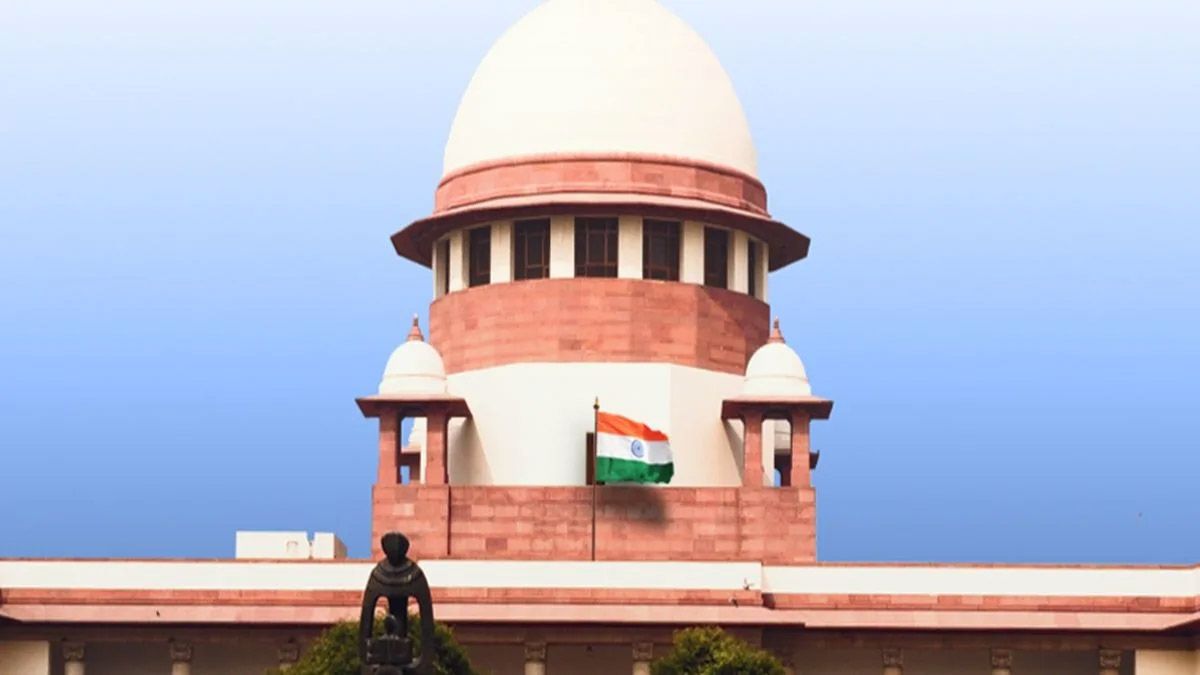
India's Supreme Court has intervened in a contentious animal-welfare dispute by staying a sweeping Madras High Court order that sought to prohibit all cow and calf slaughter across Tamil Nadu. A bench comprising Justices Vikram Nath and Sandeep Mehta issued the interim order on Monday while examining a Special Leave Petition filed by the Tamil Nadu government, effectively freezing the May 27 judgment until the case proceeds further. The move signals judicial concern about the scope and implications of the earlier ruling, with Justice Nath suggesting the High Court's pronouncement required "correction" before any permanent relief could be granted.
The legal battle centres on a fundamental question of judicial restraint: whether state courts can impose sweeping policy prohibitions that go beyond the specific circumstances presented to them. The original public interest litigation, filed by K Surya Prasanth, General Secretary of Hindu Makkal Katchi, concerned temporary structures erected in Coimbatore for cow slaughter during Bakrid festivities. However, the Madras High Court's response transcended this narrow grievance, issuing directions that blanket prohibitions on all cow and calf slaughter should apply throughout Tamil Nadu, on any day, regardless of whether facilities were authorised or unauthorised.
Tamil Nadu's government challenged this expansion of judicial authority, contending that the High Court had fundamentally misaligned itself with the statutory framework governing animal slaughter. Rather than regulating where and how slaughter occurs—confining it to designated facilities, for instance—the High Court had effectively introduced an absolute prohibition that contradicted multiple layers of existing legislation. The state emphasised that Article 48 of the Constitution and a 1976 Government Order encouraging cow protection represent policy guidance, not absolute mandates that override comprehensive statutory schemes designed to balance competing interests.
The legal landscape governing animal slaughter in Tamil Nadu is intricate and layered. The Tamil Nadu Animal Preservation Act, 1958, establishes a regulatory framework permitting cattle slaughter under specified conditions rather than banning it outright. This statute has long coexisted with national legislation including the Prevention of Cruelty to Animals Act, 1960, and the Prevention of Cruelty to Animals (Slaughter House) Rules, 2001, which establish standards for humane handling and facility operations. Additional frameworks including the Tamil Nadu Urban Local Bodies Act, 1998, the Tamil Nadu Urban Local Bodies Rules, 2023, and food safety regulations all presume that slaughter continues under proper oversight. The Madras High Court's judgment had essentially rendered these frameworks obsolete by imposing an unconditional bar.
The significance of this dispute extends beyond Tamil Nadu's borders, resonating across India's federal structure. Southern states with substantial Muslim populations and significant cattle-rearing traditions have long navigated tension between constitutional protections for religious practice and state policies promoting cattle preservation. The Madras High Court's approach—using constitutional language and historical government orders to justify sweeping judicial intervention—raised concerns that judicial activism could override the democratic legislative process and subordinate minority religious practices to majoritarian preferences without statutory foundation. The Supreme Court's interim stay suggests recognition that such expansive judicial remedies, however well-intentioned, may exceed appropriate judicial boundaries.
The temporal context of the case also matters significantly. The original petition alleged that temporary sheds had been erected specifically around Bakrid, the Islamic festival when animal sacrifice is performed as religious observance. By extending the prohibition to all days and all circumstances, the High Court arguably criminalised religious practice that had occurred openly and legally across Tamil Nadu for generations. The Supreme Court's hesitation to allow this blanket approach reflects constitutional concerns about protecting minority religious traditions within a secular democratic framework, even where majority sentiment may favour animal protection policies.
For Malaysian observers, this Indian legal development carries particular relevance. Malaysia's own constitutional architecture grants states concurrent jurisdiction over agriculture and animal welfare, while the federal government oversees religious matters affecting Muslim citizens' practice. Tamil Nadu's experience illustrates the complexity of managing cattle-related policies in religiously diverse societies where constitutional values, statutory law, and majoritarian sentiment occasionally collide. The Supreme Court's caution against judicial overreach provides instructive precedent about maintaining institutional boundaries when balancing religious freedom against animal-welfare concerns.
The regulatory versus prohibitionist distinction animating this dispute has practical implications extending far beyond courtroom rhetoric. Regulation assumes slaughter will continue but under controlled conditions—designated facilities, trained personnel, humane handling, inspection protocols, and food-safety oversight. Prohibition, by contrast, drives activities underground, eliminating regulatory oversight and potentially worsening animal welfare outcomes. The Tamil Nadu government's position—that the existing statutory framework provides adequate safeguards through designation of authorised facilities—rests on this pragmatic recognition that absolute bans often prove counterproductive in practice.
The Supreme Court's interim order preserves the status quo pending full arguments on the merits. Tamil Nadu will likely argue that the original petition's specific complaint about temporary structures in Coimbatore could have been addressed through enhanced enforcement of existing regulations, facility designation standards, and criminal provisions against unauthorised slaughter. The state will emphasise that the 1958 Act and subsequent rules provide ample authority for the government to designate facilities, refuse permits to unsuitable locations, and prosecute violations. Justice Nath's observation that the impugned order needed "correction" signals the bench's recognition that the High Court had conflated policy preference with judicial authority.
This case ultimately reflects a broader tension within India's constitutional system between protective jurisprudence and institutional restraint. While courts possess legitimate authority to enforce constitutional values, including protections for vulnerable creatures unable to voice their own interests, this authority must operate within appropriate limits. The Supreme Court's stay suggests that Indian jurisprudence is reassessing how aggressively courts should reshape statutory regimes through public interest litigation, particularly when doing so potentially impinges on religious practice or overrides legislative choices grounded in comprehensive statutory frameworks. The full judgment, when delivered, will likely provide important guidance on these boundaries for all of India's courts and regional variations in managing animal-welfare policy.

