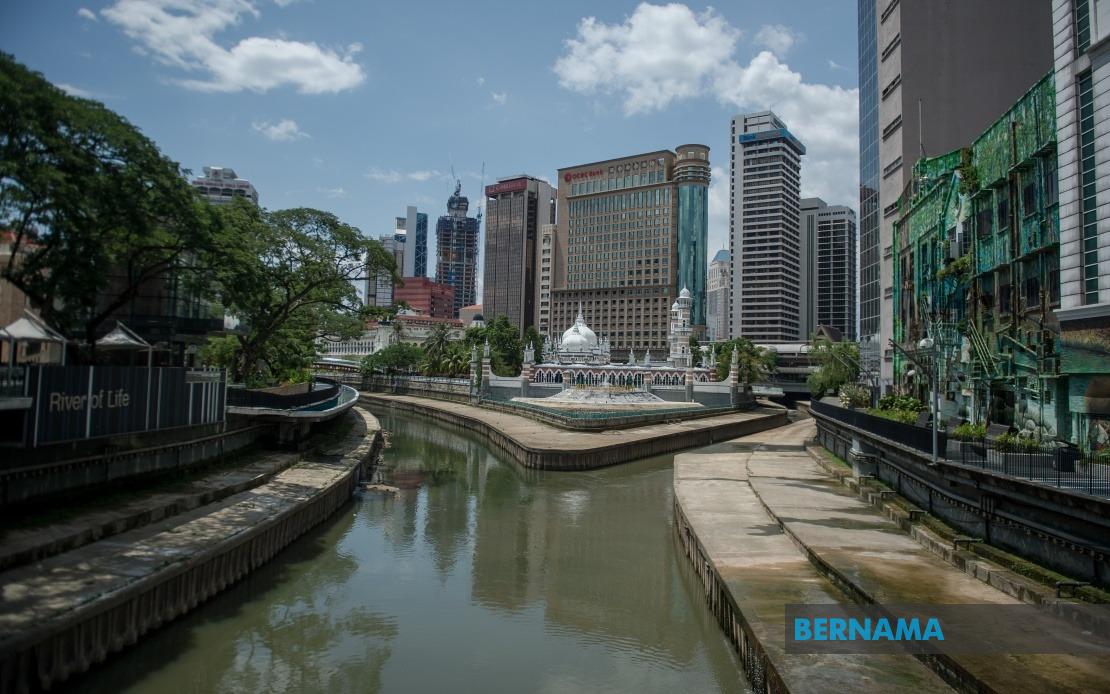
Authorities in Selangor have announced a substantial breakthrough in flood mitigation efforts along Sungai Klang, with the river's capacity to handle water flow rising to 22 per cent from the dangerously low baseline of less than five per cent. The improvement comes as the state intensifies its defence against the devastating monsoon flooding that has periodically ravaged metropolitan areas around Shah Alam and Kuala Lumpur, affecting hundreds of thousands of residents and causing billions of ringgit in economic losses.
The gains stem from an expansive river rehabilitation scheme spanning 56 kilometres, currently at 68 per cent completion, according to Syaiful Azmen Nordin, managing director of Landasan Lumayan Sdn Bhd (LLSB), the entity overseeing the initiative. Through dredging and riverbank reconstruction works focused on vulnerable neighbourhoods including Taman Sri Muda, the project has demonstrated concrete results in reducing the likelihood of catastrophic overflows that previously inundated residential and commercial zones during peak rainfall periods.
Since commencing in 2017, the operation has extracted approximately 1.2 million cubic metres of silt, clay, and other accumulated material from the riverbed, creating additional capacity to retain floodwaters during intense monsoon activity. This sustained removal effort directly addresses a longstanding vulnerability that water management specialists had identified: the progressive shallowing and narrowing of the channel due to decades of incomplete maintenance and natural sedimentation. The deepening work has been particularly critical in areas where water congestion during storms would previously trigger rapid overbank flow into neighbouring communities.
Importantly, Syaiful Azmen distinguished between the underlying structural capacity issues that this project addresses and the drainage failures that contributed to more recent flooding events. He clarified that certain inundation incidents, including those experienced by the state in 2021, resulted not from Sungai Klang itself breaching its banks but from inadequate internal stormwater systems in urban catchments, a separate infrastructure challenge requiring complementary interventions. This distinction underscores the complexity of flood management in rapidly urbanising regions, where both primary watercourse capacity and secondary drainage networks must function reliably during extreme rainfall.
The dredging programme represents only one dimension of the comprehensive rehabilitation strategy. Parallel to the physical enlargement of the channel, authorities have sustained an aggressive river-cleaning campaign that has hauled out more than 98,000 tonnes of solid waste—everything from plastic bags and construction debris to abandoned vehicles—since 2017, at a total investment of RM19.6 million. This parallel effort has yielded measurable improvements in water circulation and quality metrics, with the river's pollution classification improving from the severely degraded Class 5 status to the more acceptable Class 3 and 4 range.
The waste management dimension carries particular relevance for Malaysian policymakers grappling with urban pollution. The cleaning initiative has dramatically reversed an unsustainable accumulation trend, cutting annual rubbish inflows from 16,000 tonnes to between 5,000 and 6,000 tonnes through a combination of direct removal operations and public awareness campaigns. This reduction demonstrates that systematic intervention and community engagement can meaningfully address anthropogenic degradation of critical natural infrastructure, a lesson applicable to rivers across Southeast Asia.
Projection timelines indicate that the current phase of work will conclude by the end of 2025, with the Federal government taking responsibility for a subsequent widening and deepening initiative covering the Shah Alam to Mid Valley stretch. Upon full completion of dredging operations, the river's capacity is expected to climb to 40 per cent, nearly double the current achievement and approaching levels that hydraulic engineers consider adequate for managing once-in-a-hundred-year flood events under current climate patterns.
The phased expansion of responsibility between state and federal authorities reflects the institutional complexity surrounding major flood mitigation in Malaysia's most urbanised corridor. The Klang Valley's strategic and economic importance—home to the federal capital's adjacent municipalities, major port facilities, and critical manufacturing zones—ensures that flood prevention receives sustained policy attention and budgetary allocation at the highest levels. However, the sequential nature of these improvements also highlights the incremental pace of large-scale infrastructure transformation, suggesting that communities remain exposed to significant flood risk during the implementation period.
Context is essential for understanding the stakes involved. The 2021 floods affected over 600,000 people across Selangor and neighbouring states, destroying livelihoods and exposing the vulnerability of informal settlements and lower-income neighbourhoods that lack either elevation or robust drainage alternatives. Subsequent climate modelling indicates that extreme rainfall intensity is likely to increase over coming decades, placing even greater emphasis on expanding watercourse capacity rather than relying solely on land-use restrictions or emergency response protocols.
For Malaysian policymakers and regional observers, the Sungai Klang rehabilitation exemplifies both the technical feasibility and the financial commitment required to address flood vulnerability in tropical urban zones. The project demonstrates that sustained, evidence-based intervention can measurably improve flood resilience, yet the extended timeline—nearly a decade to reach 68 per cent progress, with completion still years away—underscores the resource intensity and complexity of retrofitting natural systems in densely populated regions. The parallel emphasis on waste removal and water quality improvement also recognises that flood defence intersects with broader environmental health objectives, a holistic approach increasingly advocated by international development and climate adaptation specialists.

