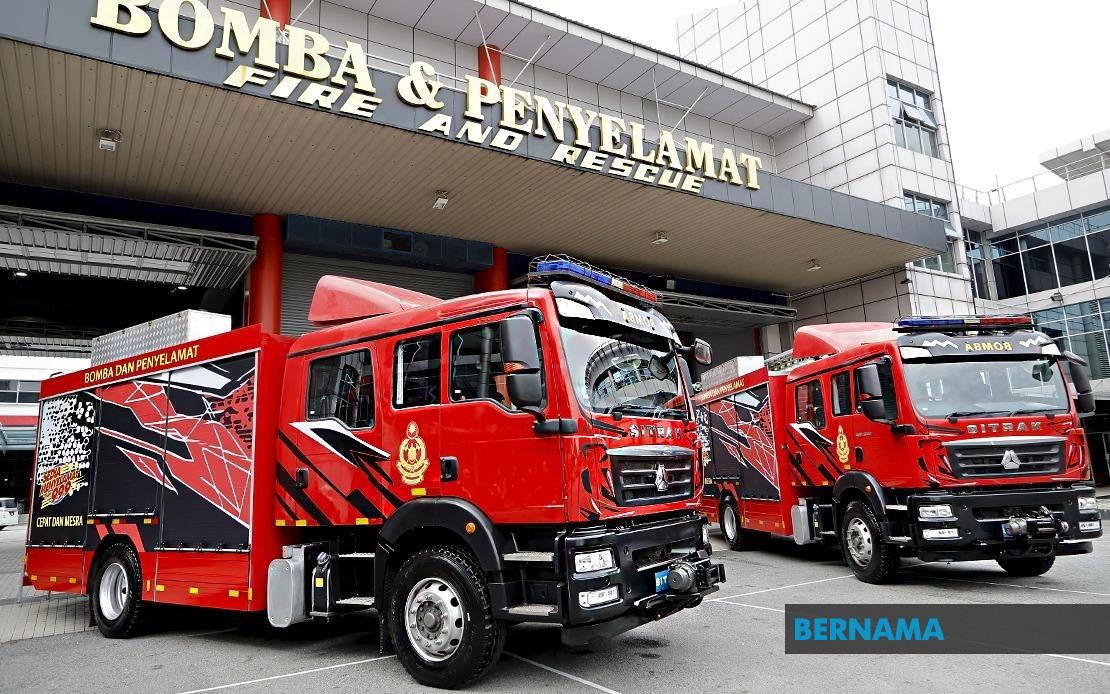
A moderate earthquake centred in North Sumatra sent tremors across Malaysia's industrial and commercial heartland on July 22, prompting an emergency response from the Fire and Rescue Department of Malaysia (JBPM) and widespread public concern aired through social media. The quake, which registered 5.7 on the Richter scale with its epicentre approximately 55 kilometres southwest of Langsa, Indonesia, was felt distinctly enough to trigger multiple reports from office buildings and commercial facilities scattered across the Klang Valley conurbation.
Selangor JBPM's assistant director of operations, Ashrul Riezal Asbar, confirmed that the department fielded three separate emergency reports within minutes of the seismic event occurring at 12:18 pm. The first of these came in at 12:31 pm concerning vibrations experienced at the Kajang Municipal Council building, signalling that the tremors had been noticeable enough to alarm workers and management. This was swiftly followed by a second report originating from INTI International College Subang on Jalan SS15 at 12:40 pm, indicating that the disturbance extended across a geographically dispersed area within the Klang Valley.
Rapid deployment of specialist teams from both Kajang and Subang Jaya stations allowed authorities to conduct comprehensive structural assessments of the affected buildings within the critical first hour following the earthquake. The inspections revealed reassuring findings: both the municipal council building and the college facility were determined to be entirely safe for continued occupation, with no visible cracks or signs of structural compromise identified during the thorough examination process. This swift clearance was crucial in preventing unnecessary panic among the thousands of office workers and students in these facilities.
A third emergency call reached the Kuala Lumpur JBPM operations centre at 12:32 pm, this time reporting tremors at Menara B2 Maju Link, a commercial tower located on Jalan Lingkaran Tengah 2 in Bandar Tasik Selatan. The Sungai Besi station dispatched a response team to the scene, where they discovered that building occupants had already begun self-evacuating as a precautionary measure, gathering in designated safe areas outside the structure. The tremors, which witnesses reported lasted approximately 15 seconds, had been sufficient to trigger standard emergency protocols among building management and safety personnel.
Upon completion of their structural inspection of Menara B2 Maju Link, the fire and rescue team confirmed that the building had sustained no visible damage and exhibited no structural weaknesses that would necessitate extended evacuation. The formal assessment determined the building suitable for immediate reoccupancy, allowing displaced workers to return to their offices and resume normal operations. This outcome mirrored the findings at the other two locations, suggesting that the earthquake's intensity, while clearly perceptible, had not exceeded the structural resilience of well-constructed modern buildings in the region.
Beyond the official emergency response framework, social media platforms became an informal information-sharing ecosystem as residents and workers across the broader Shah Alam area sought to understand and verify what they had experienced. The platform Threads, in particular, saw significant activity as users posted rapid-fire accounts of tremors felt in their respective locations, creating a crowdsourced map of seismic impact across the metropolitan area. This digital discourse served both to validate individual observations and to disseminate real-time information before official statements could be issued.
One user identified as 'nabilaishah', positioned in Section 26 at the time of the earthquake, shared a concise post describing the tremor before the area returned to normalcy within minutes. The brevity of the initial public comments reflected the quick resolution of the event and the absence of any apparent danger in the immediate aftermath. However, the volume of social media activity demonstrated the heightened alertness that seismic events trigger in urban populations, particularly in a region not accustomed to significant earthquake activity.
Other users reported a different initial reaction, with 'nadiaxzailan' revealing that she had initially attributed the vibrations to ordinary workplace disturbances or movement rather than recognising them as earthquake-related. Only through subsequent consultation with colleagues and cross-referencing with other social media posts did she connect the sensation of her office furniture shaking to a broader seismic event affecting the entire region. This pattern of delayed recognition highlights how people in seismically inactive areas often lack the intuitive frame of reference to immediately interpret earthquake signals, instead seeking external confirmation through social networks.
The geological context of this event underscores why tremors from North Sumatra can be distinctly felt across peninsular Malaysia, despite the considerable distance involved. The Sumatran fault system and associated subduction zones represent one of the most seismically active regions globally, generating frequent earthquakes that can transmit energy across the wider Southeast Asian region. While the 5.7 magnitude represents a moderate rather than major earthquake, its depth and location allowed vibrations to propagate effectively across the surrounding landscape, causing perceptible but ultimately harmless tremors in Malaysian population centres.
For Malaysia's emergency management framework, the incident served as a practical validation of existing protocols, demonstrating that rapid assessment and communication systems function effectively in responding to natural hazard emergencies. The coordination between multiple JBPM stations across Selangor and Kuala Lumpur, combined with systematic building inspections and clear official confirmation of structural safety, exemplified the institutional competence required to manage public anxiety during seismic events. The absence of injuries or property damage meant that the primary achievement lay in the swift restoration of public confidence and the resumption of normal economic activity.
For residents and businesses across the Klang Valley, the incident offered a sobering reminder of the region's vulnerability to seismic disturbances originating from the tectonically active margins of the Indonesian archipelago. While direct earthquake hazards to peninsular Malaysia remain relatively modest compared to regions closer to major fault systems, the phenomenon is real enough to merit continued attention to building codes, emergency preparedness, and public awareness. Going forward, the experience may prompt employers and building managers to refresh their evacuation procedures and staff training, ensuring that response times remain efficient should future seismic events occur.

