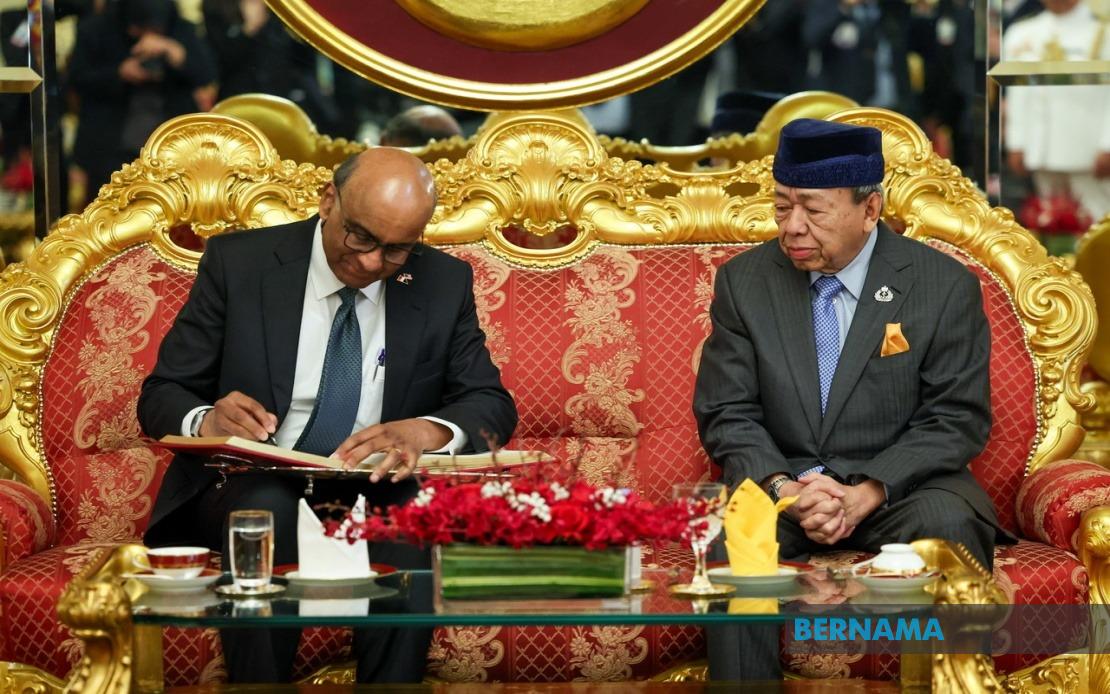
Singapore President Tharman Shanmugaratnam received a formal audience with Sultan Sharafuddin Idris Shah at Istana Alam Shah in Klang on July 14, underscoring the depth of bilateral relations between Malaysia and Singapore at the highest institutional levels. The Singapore head of state, arriving at the palace at 11 am, was formally received by the Raja Muda of Selangor, Tengku Amir Shah, reflecting the ceremonial importance accorded to the visit by the Selangor royal household.
The substantial engagement, which extended for approximately ninety minutes and concluded at 12.40 pm, brought together key representatives from both nations to discuss matters of mutual interest. Attending the audience was Malaysia's Entrepreneur Development and Cooperatives Minister Steven Sim, who held the role of minister-in-attendance throughout Tharman's visit. The presence of a senior federal minister alongside Selangor's royal family demonstrated the coordinated diplomatic approach taken by both Malaysian and Singaporean authorities to facilitate productive dialogue.
Tharman's visit forms part of a three-day state visit spanning July 13 to 15, conducted at the invitation of His Majesty Sultan Ibrahim, King of Malaysia. This official engagement represents a strategic reciprocal arrangement, with the Foreign Ministry noting that the president's journey to Malaysia mirrors Sultan Ibrahim's own state visit to Singapore conducted on May 6 and 7, 2024. Such structured exchanges between the monarchies of both nations serve to reinforce personal relationships and institutional frameworks that underpin the broader bilateral partnership.
The diplomatic scheduling and protocol surrounding Tharman's visit reflect the significance both countries place on maintaining strong political and ceremonial ties. Hosting a sitting head of state at the royal palace represents one of the highest forms of diplomatic recognition available within Malaysia's constitutional framework. The involvement of Tengku Amir Shah in receiving the Singapore president signals Selangor's active role in Malaysia's diplomatic engagement, particularly given the state's economic prominence and strategic location.
Beyond the ceremonial aspects, the extended duration of the audience suggests substantive discussions occurred between the parties. At this level of diplomatic engagement, conversations typically encompass trade relations, regional security concerns, cultural exchanges, and collaborative initiatives within ASEAN. The positioning of the Entrepreneur Development and Cooperatives Minister underscores Malaysia's interest in expanding economic cooperation, particularly through business development and cooperative ventures that could benefit entrepreneurs in both nations.
Singapore occupies a position of particular importance within Malaysia's regional and global trade architecture. The island republic stands as Malaysia's second-largest trading partner worldwide, while simultaneously maintaining the distinction of being the largest trading partner among all ASEAN member states. This economic reality reflects decades of integrated supply chains, financial linkages, and cross-border investments that have deepened the interdependence of both economies. Any high-level diplomatic visit between the two capitals inevitably touches upon these commercial dimensions, even where the formal agenda emphasises political and cultural matters.
The state visit mechanism employed by both nations serves multiple purposes beyond immediate bilateral engagement. It communicates to the broader international community the stability and strength of the Malaysia-Singapore relationship, a message that carries particular weight given the two nations' shared history and contemporary regional roles. Regular high-level exchanges help prevent misunderstandings and provide forums for addressing contentious issues before they escalate into diplomatic disputes.
For Malaysia, hosting Tharman's visit represents an opportunity to reinforce its position as a central actor in Southeast Asian affairs. As the largest economy in ASEAN and a country with significant regional influence, Malaysia uses such state visits to project stability and diplomatic sophistication. The involvement of the Selangor palace in the proceedings also serves to highlight Malaysia's federal structure and the important roles played by state rulers in the nation's constitutional and ceremonial life.
The timing of the visit, occurring within months of Sultan Ibrahim's return journey to Singapore, demonstrates the momentum both sides wish to maintain in their relationship. Regular exchanges at this level help ensure that bilateral matters receive consistent attention from decision-makers in both capitals. Given the range of shared challenges and opportunities facing Malaysia and Singapore—from maritime security to pandemic preparedness to economic integration—having established channels of direct communication between leaders proves invaluable.
Looking ahead, the significance of this audience extends beyond the immediate diplomatic courtesy. The visit provides opportunities for both nations to align on regional issues including those affecting ASEAN as a whole. With both Malaysia and Singapore holding influential positions within the regional bloc, their bilateral coordination often sets patterns that ripple through broader ASEAN discussions on trade, security, and political affairs. The substantive nature of discussions conducted during such state visits frequently influences positions both nations subsequently adopt in regional and international forums.

