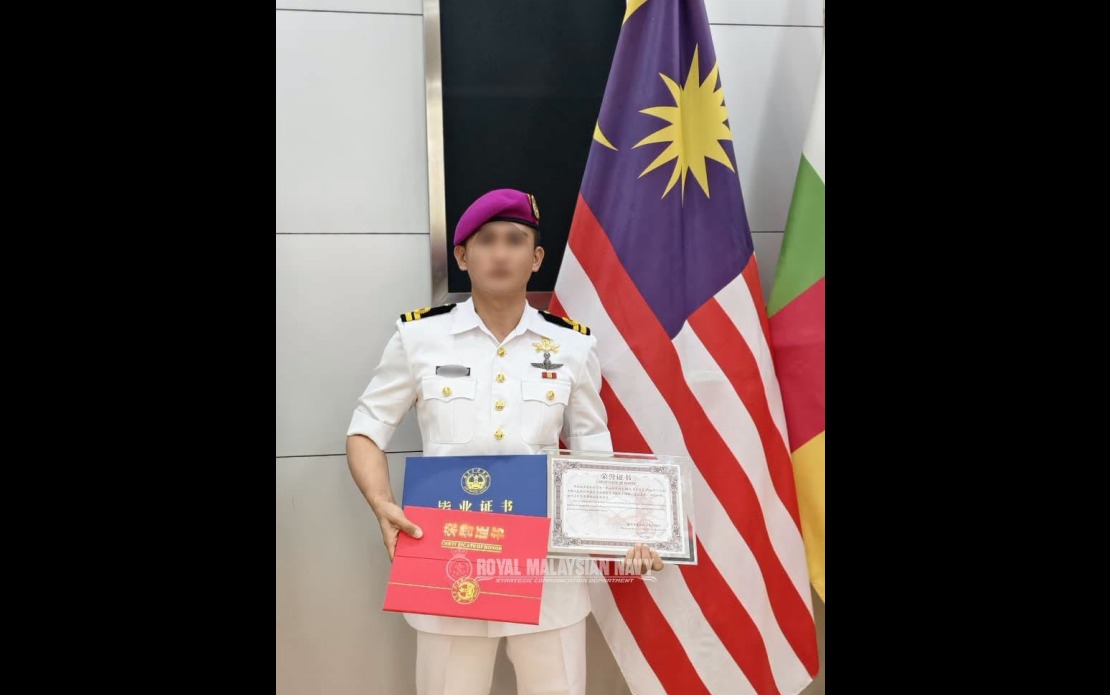
Sultan of Selangor Sultan Sharafuddin Idris Shah has commended a Royal Malaysian Navy PASKAL officer for achieving exceptional distinction in a demanding sniper infantry course conducted at the PLA Infantry Academy's Shijiazhuang Campus in Hebei Province, China. The accolade marks a significant milestone for Malaysia's elite special forces unit and underscores the nation's capacity to produce world-class military personnel capable of competing at the highest international standards.
The PASKAL member's accomplishment carries particular weight given his standing as the overall top performer among 131 students representing more than 24 countries who participated in the intensive five-month programme, which ran from March 1 to July 31. This multinational composition transformed the course into a genuinely competitive platform where participants from diverse military traditions and operational backgrounds converged to master specialised tactical skills. The officer's emergence as the leading graduate reflects not merely technical proficiency but also the adaptive capacity and disciplined mindset that characterise Malaysia's special operations forces.
Beyond the primary Excellent Student Award, the PASKAL member received two additional commendations recognising his exceptional performance throughout the assessment process. These honours—the Certificate of Honors for Excellent Cadre and Silver Badge Medals—underscore the rigorous evaluation framework employed by the Chinese institution and validate the comprehensiveness of his demonstrated expertise. Such layered recognition suggests that the officer excelled across multiple dimensions of the curriculum, whether in marksmanship precision, tactical application, physical endurance, or theoretical understanding of advanced sniper operations.
Sultan Sharafuddin, who holds the ceremonial position of Captain-in-Chief of the Royal Malaysian Navy, emphasised in his congratulatory statement that this achievement extends beyond individual accomplishment to represent collective honour for the service and the nation. His framing of the success as an example for other PASKAL officers and personnel reflects an understanding that excellence in military training functions as an institutional catalyst, elevating standards and inspiring heightened commitment across the entire special forces command.
The decision to pursue advanced sniper training within the People's Liberation Army framework reveals the depth of military cooperation between Malaysia and China, a relationship that has expanded considerably over the past decade. Malaysian military personnel regularly participate in training programmes hosted by Chinese defence institutions, benefiting from the PLA's extensive operational experience and technical sophistication. These collaborative initiatives serve mutual strategic interests while providing Malaysian forces with exposure to contemporary military methodologies and equipment standards employed by one of Asia's largest military establishments.
SNIPER operations represent one of the most demanding specialisations within elite military units, requiring exceptional marksmanship, patience, situational awareness, and psychological resilience. The Shijiazhuang campus curriculum likely encompassed advanced ballistics theory, long-range engagement tactics, concealment and movement techniques, target analysis, and integration with broader tactical operations. Mastery of such domains takes years of dedicated preparation, making the Malaysian officer's top-ranking achievement a testament to rigorous pre-course training and innate aptitude honed through extensive field experience.
RMN Chief Admiral Tan Sri Dr Zulhelmy Ithnain received commendation for fostering an institutional culture that prioritises professional development and international engagement. The willingness of service leadership to send personnel for training abroad, particularly to advanced programmes in friendly nations, reflects confidence in their capabilities and commitment to continuous capability enhancement. This strategic investment in human capital development positions the RMN to maintain operational relevance amid evolving maritime security challenges in the South China Sea and Indian Ocean regions.
PASKAL, formally designated the Royal Malaysian Navy's Special Naval Forces, operates as one of Southeast Asia's most capable maritime special operations units. Trained in amphibious infiltration, underwater demolition, hostage rescue, and direct action operations, PASKAL personnel face demanding selection processes and continuous skill validation. The addition of advanced sniper competencies to the unit's operational repertoire enhances its capacity for precision maritime operations and shore-based engagements, complementing its existing underwater and close-quarters combat proficiencies.
The success carries implications beyond naval circles, resonating throughout Malaysia's defence establishment as evidence of the quality and professional standards achieved by the country's military institutions. In an era when Southeast Asian nations contend with transnational security threats ranging from maritime piracy to terrorism, the cultivation of elite special operations capabilities backed by international training validation becomes strategically essential. The PASKAL officer's achievement demonstrates that Malaysian defence forces can compete credibly in the global military marketplace and contribute meaningfully to international security partnerships.
The international dimension of the Shijiazhuang programme—drawing participants from more than two dozen nations—created an environment where participants encountered diverse tactical doctrines and operational approaches. The Malaysian officer's emergence as top graduate among this heterogeneous cohort suggests adaptability to varied methodologies and the capacity to synthesise best practices from multiple military traditions. Such cross-cultural military engagement, conducted through structured professional training, also builds informal networks among allied military personnel that can facilitate cooperation during joint operations or crisis response scenarios.
Moving forward, this accomplished PASKAL officer will likely assume mentoring responsibilities within the unit, disseminating advanced sniper techniques and reinforcing institutional knowledge about best practices observed at the PLA academy. The experience gained through exposure to Chinese military training methods will inform how the unit structures its own professional development programmes. Furthermore, the recognition secured through this overseas achievement enhances the RMN's international reputation and demonstrates Malaysia's commitment to maintaining professional military standards aligned with leading regional and global defence establishments.

