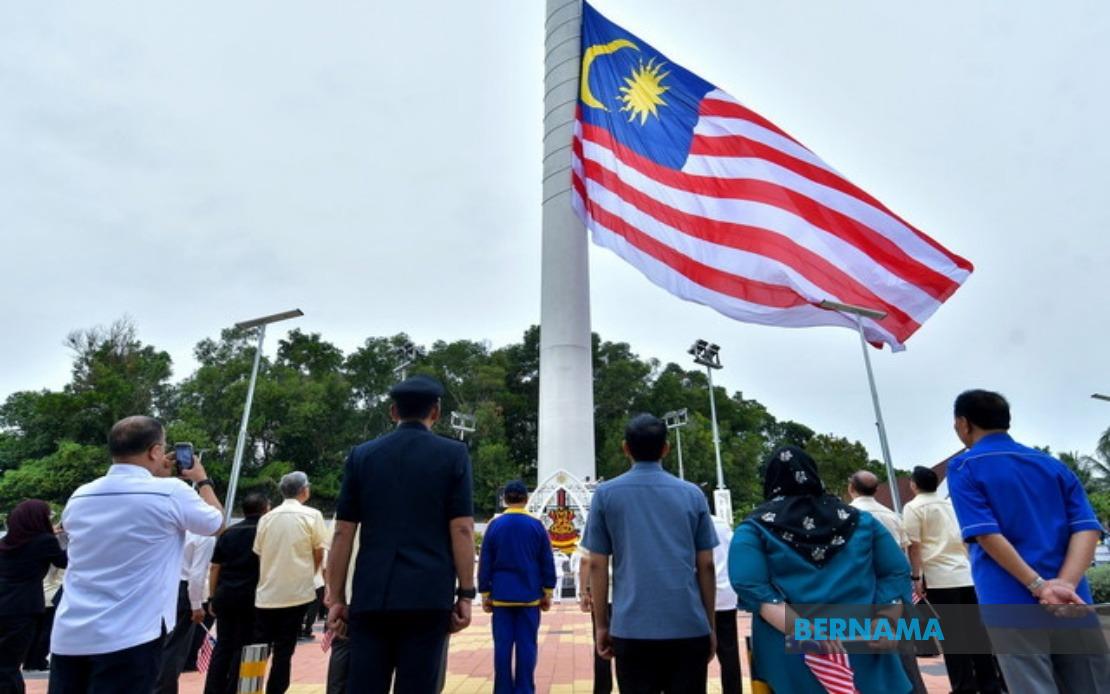
Sultan Sharafuddin Idris Shah of Selangor has drawn attention to a distinction too often overlooked during Malaysia's Independence celebrations: the Jalur Gemilang is far more than a ceremonial emblem hoisted during festive seasons. Speaking on August 26 during a flag-raising ceremony at Dataran Selangor, the Ruler emphasised that the national flag represents a collective identity that supersedes the various divisions characterising Malaysian society. His intervention carries particular weight given the periodic tensions that surface around questions of national belonging and whose interests the flag ultimately represents.
The Selangor Ruler's remarks reflect a sophisticated understanding of national symbolism in a diverse society. While Malaysians may diverge sharply on matters of race, religious practice, political ideology, and cultural heritage, Sultan Sharafuddin contended that the Jalur Gemilang serves as a powerful reminder of a fundamental commonality: all who fly it share citizenship in the same nation. This framing moves beyond platitudes to address a genuine challenge facing Malaysia's social cohesion. In an era when political actors occasionally invoke ethnic or religious identities to mobilise constituencies, a royal statement affirming the flag's inclusive meaning carries significance, particularly when delivered with the moral authority of a reigning monarch.
The Selangor royal household had previously authorised the continuous display of the Jalur Gemilang at the state's principal flagpole from late August through mid-September, encompassing both National Day on August 31 and Malaysia Day on September 16. The morning ceremony at Dataran Selangor formalised this arrangement while providing a platform for Sultan Sharafuddin to articulate his vision of patriotism rooted in substantive unity rather than symbolic gestures alone. This timing allows the message to reach audiences during the nation's most intensive period of flag-flying and nationalist rhetoric, creating an opportunity to shape how Malaysians conceptualise their relationship to national identity.
Crucially, Sultan Sharafuddin distinguished between the ease of patriotic performance and the genuine work of nation-building. Distributing thousands of flags throughout the National Month represents straightforward logistics; constructing a Malaysia where citizens of every ethnic background and faith tradition feel authentically valued and secure in their belonging presents an infinitely more demanding challenge. This observation resonates acutely in the Malaysian context, where periods of heightened nationalist sentiment occasionally coincide with expressions of ethnic or religious particularism that undermine the inclusive vision the Ruler advocates.
The Selangor monarch specifically called on the younger generation to receive education in respect for religious, racial, and cultural pluralism. Such instruction, he suggested, constitutes essential groundwork for sustaining the national unity the flag represents. This emphasis on intergenerational transmission acknowledges that patriotic sentiment cannot rely indefinitely on inherited assumptions; each generation must actively learn and internalise the values underlying a multicultural state. Educational institutions and families bear responsibility for cultivating this understanding rather than allowing it to atrophy through benign neglect.
Sultan Sharafuddin also addressed Malaysia's political leadership directly, urging politicians and officials to model behaviour consistent with the Jalur Gemilang's inclusive message. He called for demonstration of moderation, tolerance, and compassion as counterweights to the temptation to weaponise differences for electoral or factional advantage. The implicit critique here targets a recognisable pattern in Malaysian politics: the periodic amplification of divisive rhetoric during electoral campaigns or policy disputes. By framing such conduct as incompatible with genuine respect for national symbols, the Ruler invoked moral authority to discourage conduct he views as corrosive to national cohesion.
The Ruler's argument proceeded from a remarkable historical observation: the Jalur Gemilang has never discriminated between ethnic communities, whether Malays, Chinese, Indians, Kadazan-Dusuns, Ibans, or others, nor has it distinguished on grounds of religious affiliation among Muslims, Buddhists, Christians, Hindus, and adherents of other faiths. This formulation inverts the usual framing by suggesting that the flag itself embodies a principle of equality that ought to guide how Malaysians treat one another. By attributing non-discriminatory qualities to the national symbol, Sultan Sharafuddin subtly repositioned discussions of diversity from abstract idealism to grounded principle inherent in Malaysia's foundational emblem.
During a period when Southeast Asia experiences varied pressures on social cohesion, Malaysia's experience holds lessons for regional observers. The royal intervention demonstrates how constitutional monarchies can voice calls for unity without exercising partisan political power. Sultan Sharafuddin's position permits him to appeal to national sentiment while remaining formally above electoral competition, lending weight to messages that might carry less credibility if delivered by elected officials with obvious political interests. This dimension of constitutional monarchy provides mechanisms for reaffirming shared values during periods when political competition might otherwise emphasise division.
The Ruler's framing also addresses a tension within Independence Day celebrations themselves. National Day ceremonies inevitably involve ceremonial pageantry and festive atmosphere; yet Sultan Sharafuddin suggested that genuine independence means little without the capacity to sustain peaceful coexistence among diverse populations. This perspective inverts the chronology sometimes implicit in Malaysian discourse, which treats the achievement of political independence in 1957 as a largely completed historical episode. Instead, the Selangor Ruler positioned the building of a genuinely unified nation as an ongoing project requiring continuous effort and recommitment.
Moving forward, Sultan Sharafuddin proposed that Malaysians harness the Independence anniversary period to reinforce rather than merely commemorate unity. This reframing transforms National Month from a time of reflection on past achievements into an occasion for examining whether present social practices align with the flag's purported meaning. The practical implications extend beyond ceremonial displays to encompass how public institutions, private sectors, and communities actually treat citizens from different backgrounds in accessing services, employment, and civic participation. Measuring national unity by these indicators rather than by flag-flying frequency offers a more rigorous standard for assessing Malaysian progress toward the inclusive society the Jalur Gemilang symbolises.

