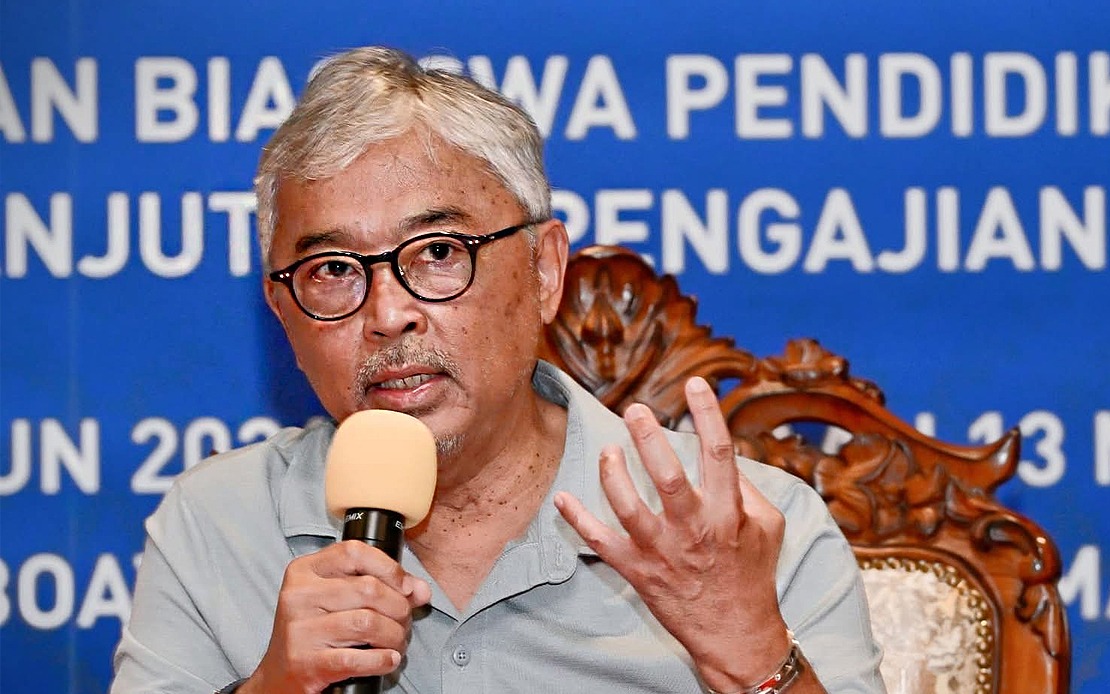
The Sultan of Pahang, Al-Sultan Abdullah Ri'ayatuddin Al-Mustafa Billah Shah, has called upon higher education institutions throughout the state to increase their commitment to supporting talented students from Tioman Island by establishing dedicated scholarship programmes. His appeal reflects a strategic vision to develop human capital from Malaysia's more remote regions and underscores the belief that geographic disadvantage should not be a barrier to academic advancement.
The Sultan's intervention was prompted by the Institut Jantung Negara University College (IJNUC), which recently awarded scholarships to two exceptional students from Tioman Island. According to His Majesty, this initiative should serve as a benchmark for other universities operating in Pahang, particularly those with the institutional capacity and resources to undertake similar community investment programmes. The emphasis on Pahang-based institutions reflects the Sultan's conviction that the state's higher education sector has both a moral and strategic responsibility to nurture talent from within their geographic jurisdiction.
In a statement released via official channels, Al-Sultan Abdullah expressed a straightforward principle: students from Tioman Island, despite their remoteness from the peninsula's educational centres, remain entitled to pathways towards higher learning. His assertion that "even though they are far from the mainland, they are still our children who must be given the opportunity to further their studies" frames access to quality tertiary education as a matter of fundamental equity rather than charitable benevolence. This framing carries implications for how Malaysian policymakers approach regional development and educational inequality across the country.
The two Tioman Island scholarship recipients were selected on the basis of demonstrated academic excellence and merit, ensuring that the programme maintains rigorous selection standards while expanding opportunity. The Sultan proceeded to personally attend the scholarship presentation ceremony at the Institut Jantung Negara, lending the occasion royal patronage and underlining the significance he attributes to educational advancement for island and rural communities. This hands-on approach demonstrates that the Sultan views education equity as a priority matter requiring active state engagement rather than passive reliance on institutional voluntarism.
Addressing the scholarship recipients directly, Al-Sultan Abdullah delivered an exhortation to view their opportunity not merely as personal advancement but as representation of their wider community. His charge that "failure is not an option" and that the recipients must become "benchmarks for other youths on Tioman Island" reframes their educational journey as carrying collective responsibility. This messaging underscores how educational mobility in Malaysia increasingly functions as a mechanism for demonstrating feasibility across different socioeconomic and geographic contexts.
Beyond the immediate scholarship initiative, the Sultan's remarks reveal broader concerns about educational access in rural and island economies. His recommendations that the two students maintain discipline, manage time effectively, and remain focused throughout their Kuala Lumpur studies acknowledge the particular pressures facing students from isolated communities adapting to urban university environments. This pastoral dimension—offering not just financial support but also encouragement for sustainable academic engagement—reflects an understanding that scholarships must be accompanied by holistic student support mechanisms.
The Sultan also extended formal recognition to the Institut Jantung Negara for its institutional commitment to corporate social responsibility across Pahang. His acknowledgment of IJN's consistent engagement with underserved communities, particularly in locations such as Kampung Bantal, positions the institution as exemplifying a model of institutional citizenship. For IJN, this royal endorsement provides significant symbolic capital and validates its expansion beyond clinical excellence into community-oriented development programming.
International recognition of IJN's cardiac expertise adds context to the Sultan's characterization of the institution as regionally preeminent. By pairing acknowledgment of medical excellence with appreciation for community engagement, Al-Sultan Abdullah sends a signal that institutional distinction encompasses social responsibility rather than existing in tension with it. This framing may influence how other Malaysian higher education institutions balance research prestige with community-oriented initiatives.
The Sultan's appeal has immediate implications for other universities operating within Pahang. It establishes an expectation that institutions with adequate resources should develop targeted scholarship programmes serving geographically marginal populations. This soft pressure—articulated through royal preference rather than legislative mandate—may catalyze institutional action more effectively than formal policy interventions, given the cultural weight of sultanic endorsement within Malaysian governance structures.
For Tioman Island's broader development trajectory, the scholarship initiative addresses a significant constraint on human capital formation. Island economies often experience brain drain as talented youth migrate to urban centres for education and employment, and typically lack robust mechanisms for channelling external investment back to community development. By creating pathways for tertiary qualification completion followed by potential return, scholarship programmes can contribute to building institutional and professional capacity within peripheral communities.
The Sultan's intervention also reflects evolving expectations around corporate and institutional citizenship in Malaysia. His explicit appreciation for IJN's combination of clinical excellence and community engagement suggests a growing premium placed on institutions that demonstrate commitment to inclusive development. This alignment between institutional prestige and social responsibility may influence strategic planning across Malaysia's higher education sector as competition for reputation intensifies.
Looking forward, the Sultan's appeal invites consideration of how sustainable scholarship financing might be embedded within institutional structures rather than remaining dependent on annual discretionary funding. Questions about scholarship quantum, duration, and sustainability mechanisms remain unaddressed in the immediate appeal but will likely require institutional-level innovation as universities respond to the implicit mandate.
The broader significance of this initiative extends beyond Tioman Island to encompass Malaysia's approach to educational equity across all island and rural populations. By elevating this issue through royal sanction, the Sultan has effectively placed student access from geographically peripheral communities on the national agenda, potentially influencing how federal and state governments allocate education development resources in coming years.

