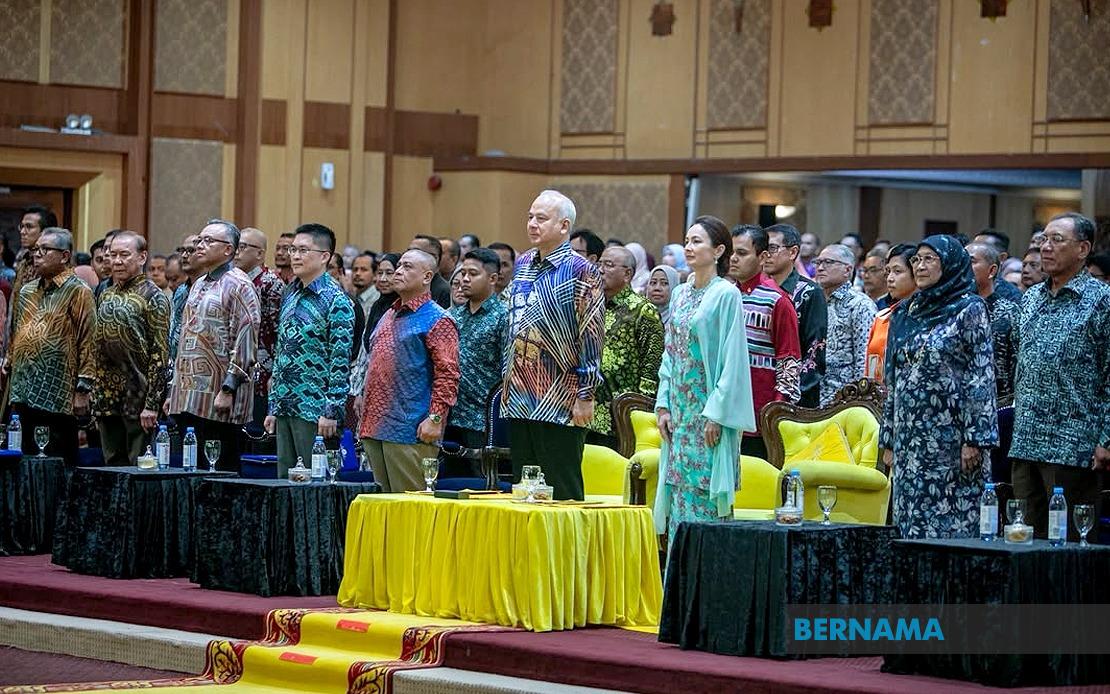
Sultan Nazrin Shah, the Sultan of Perak, graced a major Merdeka Month celebration in Ipoh on Thursday evening aimed at deepening patriotic values among young Malaysians and recognising educational excellence across the state. The event at Bangunan Perak Darul Ridzuan drew significant government representation, including Raja Permaisuri Tuanku Zara Salim, Menteri Besar Datuk Seri Saarani Mohamad, and Deputy Education Minister Wong Kah Woh, underscoring the importance placed on youth engagement during Malaysia's independence commemoration period.
The scale of participation this year demonstrates the growing resonance of such state-level initiatives. A total of 214,095 students submitted entries across multiple competition categories, representing 83.6 per cent of primary and secondary school enrolment throughout Perak. This unprecedented turnout reflects a deliberate strategy to make national consciousness-building activities inclusive rather than tokenistic, engaging the vast majority of the student population rather than selecting elite competitors alone.
Particularly noteworthy is the 15 per cent increase in participation compared with the previous year's edition. This growth trajectory suggests that schools and families have become increasingly aware of the programme's value beyond traditional academic metrics. The competitions span diverse disciplines—from linguistic contests in Malay and English to creative pursuits such as caricature drawing, poster design, and poetry composition—accommodating different student talents and learning styles.
Perak's Education Department director Zulkafli Mohamed Mokhtar contextualised the initiative within Malaysia's broader educational framework, linking it explicitly to the Malaysia Education Plan 2026-2035. This connection matters significantly for Malaysian educators and policymakers, as it positions Merdeka Month programming not as peripheral patriotic theatre but as integral to achieving the nation's core educational objectives of producing morally grounded, critically thinking citizens with genuine appreciation for national history and heritage.
The department's official address emphasised that such platforms serve multiple developmental functions simultaneously. Beyond instilling loyalty to the monarchy and nation—traditional objectives—the programme targets confidence-building and talent identification across varied fields. This holistic approach recognises that patriotic education functions most effectively when students see tangible personal benefits, whether through public recognition, skill development, or opportunities to showcase abilities in supportive environments.
Royal recognition formed a centrepiece of the evening's proceedings. Sultan Nazrin presented the Best Achievement award to Kinta Utara District Education Office, which received RM20,000 in cash recognition. This monetary incentive for district-level performance creates institutional motivation for schools and education administrators to encourage student participation, effectively cascading royal patronage through the entire educational hierarchy.
Individual student achievers received direct royal acknowledgement as well. Winners of upper secondary competitions included Ifwat Arrafi Mohd Amin from SMK Tun Abd Razak in Bagan Datuk, who triumphed in Malay language public speaking, and E Johnnes Abysia from SMK Sungai Pari in Kinta Utara, who won the English speaking category. These recognitions carry particular weight in Malaysian school culture, where royal endorsement of student accomplishment often becomes a defining moment in young people's educational journeys.
The breadth of competitions accommodated varying age groups and academic levels, with separate categories for primary, lower secondary, and upper secondary students. Events ranged from choral performances—both speaking and recitation—through musical presentations, to visual arts competitions encompassing drawing, caricature, and poster design. Essay writing and poetry composition attracted student writers, ensuring that diverse expression forms received equal platform recognition.
Tuanku Zara Salim's parallel role in presenting prizes for writing and visual arts categories reinforced the royal family's joint commitment to educational and cultural advancement. This shared responsibility between Sultan and Raja Permaisuri in presiding over prize ceremonies carries symbolic significance, demonstrating institutional prioritisation of youth development beyond ceremonial appearances.
The concluding exhibition tour of artworks and caricatures allowed royal visitors direct engagement with student creative output, moving beyond formal award presentations to appreciating the actual works students had produced. This personal dimension of royal involvement—rather than mere attendance at structured ceremonies—creates memorable impressions for young participants and validates creative expression as worthy of high-level attention.
For Malaysian educators and administrators, this Perak model offers instructive lessons about programme design at state level. The integration of patriotic objectives with talent discovery, the inclusion of diverse student populations rather than elite selection, and the explicit linkage to national educational planning frameworks create a comprehensive approach that transcends simple Independence Day commemoration. As other states consider their own Merdeka Month programming, Perak's documented success—particularly the substantial participation growth—provides a template for moving beyond aspirational rhetoric to achieving genuine student engagement with national identity formation and personal skill development.

