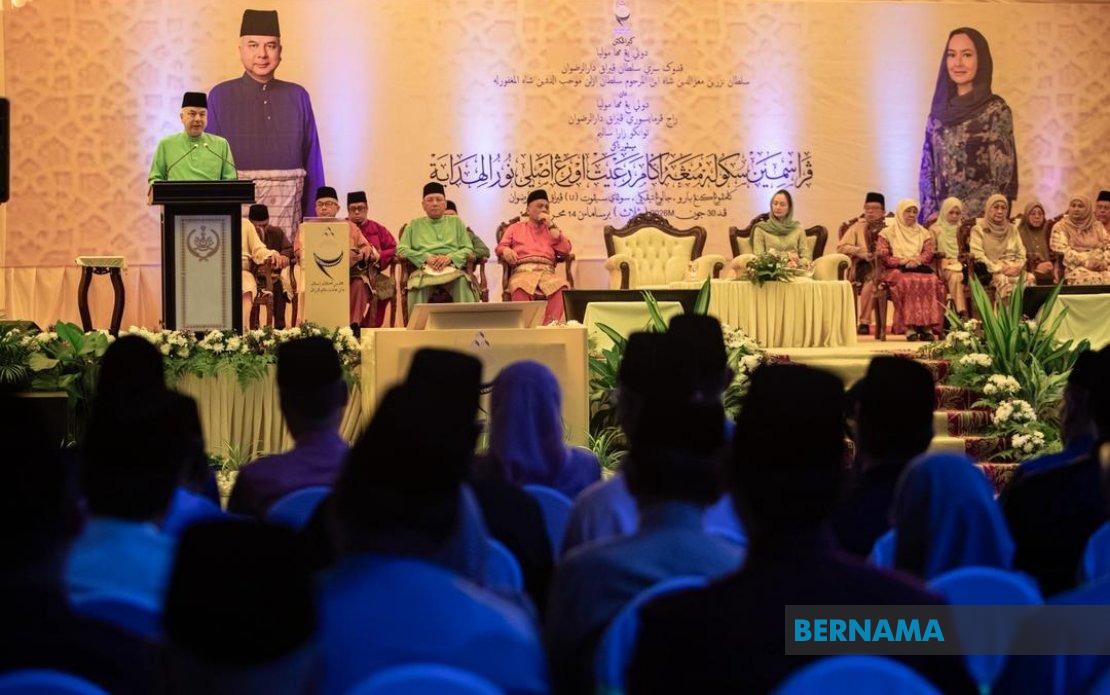
Sultan Nazrin Shah, the ruler of Perak, formally inaugurated Sekolah Menengah Agama Rakyat (SMAR) Orang Asli Nurul Hidayah in Kampung Kenang on Sunday, recognizing the institution as a watershed moment in advancing educational opportunities among the state's indigenous Orang Asli population. The ceremony at Sungai Siput Utara brought together senior members of the Perak royal household, state government officials, and Islamic leaders to mark what represents the nation's first secondary school specifically designed to serve the Orang Asli community through an integrated academic and religious curriculum.
The school's significance extends beyond its symbolic value as a dedicated educational facility for Malaysia's most marginalized indigenous groups. Sultan Nazrin used the occasion to articulate a broader vision of education as transformative infrastructure rather than merely a building project. He emphasized that establishing SMAR Nurul Hidayah constitutes a strategic investment in securing improved life prospects for Orang Asli youth, positioning educational access as fundamental to breaking cycles of disadvantage that have historically constrained indigenous communities in the region.
The institutional journey of SMAR Nurul Hidayah itself demonstrates the gradual scaling of indigenous education initiatives in Perak. What began as a religious learning centre focused on basic Islamic instruction—known locally as dakwah and fardu ain education—evolved into a comprehensive secondary institution blending conventional academic subjects with Islamic studies and religious formation. This thirty-year developmental trajectory underscores how persistent commitment to community-rooted education can eventually mature into formal accredited schooling that serves broader population needs.
Sultan Nazrin's remarks reflected a philosophical understanding of education's multifaceted purpose. He articulated a vision extending far beyond knowledge transmission, characterizing schooling instead as a holistic process cultivating intellectual capacity, spiritual development, emotional maturity, and physical wellbeing. This framework aligns with contemporary educational thinking that recognizes schools as institutions responsible for shaping well-rounded citizens capable of ethical reasoning and constructive social contribution, rather than merely delivering academic content.
The school's track record offers concrete evidence supporting this broader vision. Sultan Nazrin noted that SMAR Nurul Hidayah graduates have not merely advanced their own circumstances but have returned to Kampung Kenang and surrounding Orang Asli settlements to become educators, community leaders, and advocates for continued learning among their peers. This pattern of educated individuals reinvesting in their home communities suggests the school has successfully catalyzed indigenous leadership development—arguably the most meaningful measure of educational success in marginalized populations.
For Malaysia's wider indigenous policy landscape, this institution represents an important model. The Orang Asli population, numbering approximately 180,000 across the peninsula, has historically experienced severe educational disparities compared to other demographic groups, with lower enrollment rates, higher dropout incidence, and limited pathways to secondary and tertiary qualification. Creating culturally-informed educational institutions like SMAR Nurul Hidayah that blend religious and academic content addresses both substantive learning gaps and the particular barriers—including cultural disconnection and religious identity affirmation—that discourage Orang Asli student persistence.
The institutional framework supporting SMAR Nurul Hidayah demonstrates how collaboration between religious authorities, state government, and indigenous communities can generate educational innovation. Involvement from the Perak Islamic Religious and Malay Customs Council (MAIPk) and the Perak Islamic Religious Department (JAIPk) reflects recognition that religious education providers possess comparative advantages in reaching indigenous populations, particularly given Islam's significant presence within many Orang Asli communities. This partnership model potentially offers replicable pathways for other Malaysian states seeking to enhance indigenous educational provision.
Sultan Nazrin's emphasis on preserving moral character and syariah values alongside academic excellence articulates educational priorities that resonate within Malaysian Islamic governance frameworks. However, the specific application to Orang Asli learners carries additional significance. Indigenous communities in Malaysia face pressures from modernization, resource extraction, and assimilationist policies that historically marginalized their cultural distinctiveness. Educational institutions that simultaneously develop academic capacity and reinforce religious-moral grounding may provide psychological scaffolding helping indigenous youth navigate competing identity claims while maintaining connection to their community heritage.
The new infrastructure improvements at SMAR Nurul Hidayah, which Sultan Nazrin highlighted as catalysts for enhanced teaching quality, address practical constraints historically limiting indigenous school performance. Inadequate facilities in rural and remote indigenous settlements contribute to teacher recruitment challenges, reduced student motivation, and measurable achievement gaps. Physical plant improvements thus carry disproportionate significance in indigenous educational contexts where resource scarcity has traditionally constrained institutional effectiveness.
Looking regionally, Malaysia's efforts to develop indigenous-specific educational institutions merit attention from other Southeast Asian nations facing comparable indigenous disadvantage. Countries including Thailand, Myanmar, and Indonesia grapple with similar educational disparities affecting hill tribe, ethnic minority, and indigenous populations. The SMAR Nurul Hidayah model—combining religious identity affirmation, academic rigor, and explicit community-oriented curricula—offers a potentially transferable approach to culturally-responsive secondary education in diverse societies.
The school's alignment with national educational equity aspirations deserves emphasis. MAIPk's stated commitment to ensuring every child regardless of background or geography enjoys equal educational access and future-shaping opportunities directly addresses constitutional guarantees and national development objectives long articulated in Malaysian policy frameworks. SMAR Nurul Hidayah operationalizes these commitments concretely within an indigenous context historically characterized by educational exclusion and opportunity deprivation.
Sultan Nazrin's broader reflections on education as foundational to progress, character development, and societal dignity place indigenous educational advancement within a comprehensive national vision. Yet the concentration of his remarks on SMAR Nurul Hidayah's specific achievements and potential suggests recognition that realizing this vision demands institution-specific commitment and resource concentration, not merely policy pronouncements. The school thus stands simultaneously as particular achievement in Perak indigenous affairs and exemplar of what sustained educational investment can accomplish for historically disadvantaged communities.

