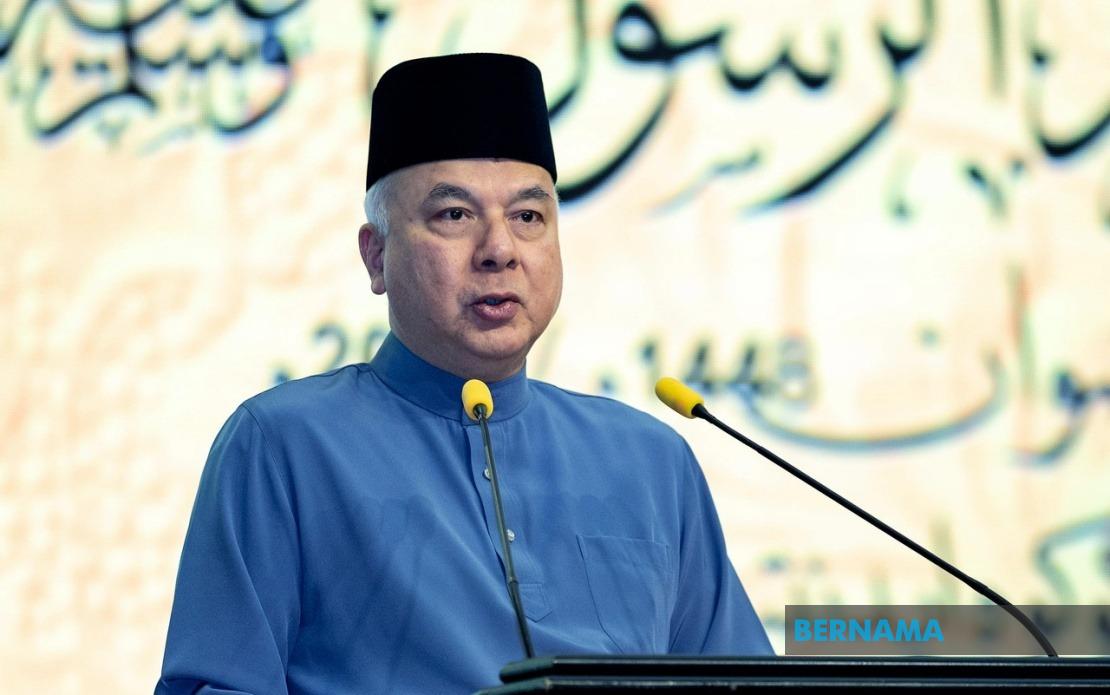
Sultan Nazrin Shah of Perak delivered a pointed call for Islamic unity during the Perak-level Maulidur Rasul celebration in Ipoh on August 25, expressing concern that the ummah faces unprecedented fragmentation from multiple directions. The Sultan identified a constellation of divisive forces—ranging from partisan political competition to doctrinal disagreements across different Islamic schools of thought, ethnic tensions, and individual self-interest—that have collectively weakened the cohesion Muslims once displayed. His intervention came at a moment when Malaysia's Islamic discourse increasingly reflects broader societal polarisation, with religious communities grappling alongside their secular counterparts with questions of identity and belonging in an interconnected world.
The challenges Sultan Nazrin outlined extend beyond conventional political disagreement. He pointed to how the pursuit of personal advancement, status, material accumulation, and creature comforts has gradually eroded what he characterised as the fundamental spirit of Islamic brotherhood. This diagnosis resonates across the Malaysian Islamic establishment, where religious scholars and administrators have grown concerned about the instrumentalisation of faith for factional gain. In the Malaysian context, where Islam holds constitutional prominence and Muslim-majority politics often pivots on appeals to religious identity, such frank acknowledgment of internal fractures carries weight. The Sultan's remarks implicitly challenge political and religious leaders to examine whether they have inadvertently prioritised narrow institutional interests over collective spiritual wellbeing.
The Sultan's address positioned Muslim leaders, Islamic organisations, and religious movements as bearers of particular responsibility in addressing these divisions. He explicitly urged them to curtail unnecessary disputes and reduce the temperature of political rivalry, advocating instead for a strategic pivot toward endeavours that genuinely advance the ummah's material and spiritual interests. This framing distinguishes between the natural competition inherent to pluralistic societies and the destructive factionalism that he contends has become entrenched. For Malaysian policymakers and religious administrators, the distinction carries practical implications: it suggests that leadership requires not merely managing disagreements but actively redirecting institutional energy toward collaborative projects that transcend sectarian or political boundaries.
Within this broader call for realignment, Sultan Nazrin highlighted specific domains where Muslim-led initiatives demonstrate tangible promise. Islamic economics and Islamic finance represent growing sectors that promise both ideological coherence and practical utility in Malaysia's diverse marketplace. The halal industry, now a significant component of Malaysia's international trade positioning, exemplifies how Islamic principles can anchor both commercial success and community identity. Waqf systems—endowments rooted in Islamic charitable tradition—offer mechanisms for sustainable social provision that bypass politicised state structures. The Sultan's invocation of digital dakwah, or Islamic preaching through contemporary media, acknowledges that Muslims cannot simply resist modernity but must instead actively shape how faith is transmitted and understood in digital contexts. Institutional strengthening of family structures through explicitly Islamic frameworks provides a counterweight to the atomising forces of contemporary consumer culture. These examples share a common thread: they represent positive-sum activities where Muslim advancement does not require another group's diminishment and where success can be measured against intrinsic principles rather than political scorecards.
The Sultan's emphasis on expanding and reinforcing these constructive initiatives carries implicit critique of how contemporary Islamic discourse in Malaysia often fixates on defensive postures or zero-sum political competition. By cataloguing concrete, productive domains for Muslim energy and ingenuity, he offered a reorientation toward what might be termed progressive Islamic development—not in the colloquial political sense, but in the sense of building institutions and practices that authentically serve Muslim communities while engaging meaningfully with contemporary realities. For Malaysian policymakers concerned with both religious harmony and economic innovation, his framework suggests opportunities for cross-communal collaboration: many Malaysians of diverse faiths have stakes in halal industry standards, Islamic finance inclusion, and family institution resilience.
A parallel concern animating Sultan Nazrin's address involved the cultural and identity pressures emanating from globalised influences. Social media, popular entertainment, and modern lifestyle patterns now reach Malaysian Muslims with unprecedented immediacy and ubiquity, creating what he characterised as erosive pressure on Islamic identity and values. This diagnosis aligns with broader anxieties expressed across Southeast Asia, where rapid technological penetration and cultural globalisation have forced Muslim-majority societies to reckon with questions of authenticity, adaptation, and continuity. The Sultan implicitly rejected both wholesale rejection of modernity and uncritical absorption of external influences, instead framing the challenge as requiring sophisticated navigation.
His emphasis on achieving balance between modernisation and Islamic principle articulates a tension that Malaysian Islamic leadership has grappled with for decades. The Sultan argued that progress and technological advancement need not entail loss of confidence in Islamic identity—indeed, that Muslims should approach this balance with conscious intentionality rather than allowing default market forces or cultural drift to determine outcomes. This formulation has particular resonance in Malaysia, where the constitutional settlement grants Islam distinctive institutional status while the nation simultaneously pursues technological and economic development within global frameworks. The Sultan's suggestion that wise approaches and deliberate strategies are required acknowledges that the outcome is not predetermined; Muslims possess agency in shaping how their communities engage with modernity.
The event itself, attended by prominent members of Perak's royal household including Raja Permaisuri Tuanku Zara Salim and Raja Muda Raja Jaafar Raja Muda Musa, as well as Perak Menteri Besar Datuk Seri Saarani Mohamad, underscored the formal institutional setting in which these remarks were delivered. Sultan Nazrin's constitutional role as ruler of Perak, combined with his reputation as a thoughtful commentator on Islamic and governance matters, means his public statements carry particular weight within Malaysian political and religious circles. The gathering at a Maulidur Rasul celebration—commemorating the Prophet Muhammad's birthday—provided an appropriate venue for emphasising shared spiritual identity and collective religious purpose.
For Malaysia specifically and Southeast Asia more broadly, Sultan Nazrin's intervention carries several implications worth examining. First, it signals that within the highest reaches of Malaysia's Islamic institutional hierarchy, there is recognition that current patterns of competitive Islamicisation and factional religious politics may be counterproductive to genuine community interests. Second, it offers an alternative framing—one centred on practical advancement in economically productive and socially stabilising domains rather than on political dominance or cultural exclusivity. Third, it acknowledges that modernity and Islamic identity need not exist in zero-sum tension, and that contemporary Muslims possess tools and intellectual resources for navigating this relationship thoughtfully. These themes resonate beyond Perak or Malaysia, offering perspectives relevant to Muslim communities across Southeast Asia who confront analogous questions of identity, modernisation, and political coexistence in pluralistic societies.

