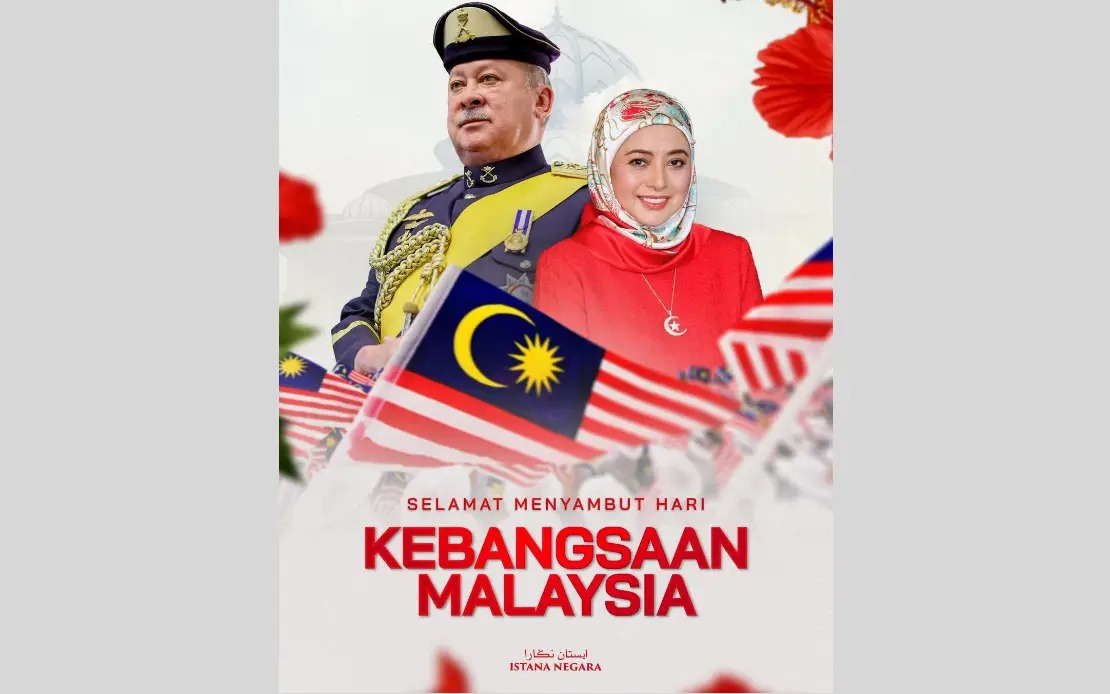
Malaysia marked its 69th National Day on August 31 with Sultan Ibrahim and Raja Zarith Sofiah leading festivities in Putrajaya, delivering royal greetings to the nation through an official message posted to the King's Facebook page. The royal couple's presence underscored the ceremonial significance of the occasion, as the country reflected on nearly seven decades of independence and the journey towards the Malaysia MADANI vision.
The day began with Their Majesties arriving at the Putrajaya venue at 8 am, where Prime Minister Datuk Seri Anwar Ibrahim and his wife Datuk Seri Dr. Wan Azizah Wan Ismail received them alongside Communications Minister Datuk Seri Fahmi Fadzil, who chairs the National Day and Malaysia Day Main Committee for 2026. This high-level attendance demonstrated the government's commitment to honouring the nation's foundational values and projected continuity in national leadership and vision.
This year's National Day celebration embraced the thematic framework "Malaysia MADANI: Kesejahteraan Dinikmati" (Malaysia MADANI: Shared Prosperity Enjoyed), positioning the festivities as more than ceremonial pageantry. Instead, the chosen theme represents a deliberate effort to communicate the administration's policy priorities and values to Malaysians. The MADANI concept has emerged as the governing administration's overarching narrative for national development, emphasising inclusive prosperity and dignified living standards accessible to all citizens regardless of socioeconomic background.
The formal proceedings commenced with a military ceremony, establishing the patriotic tone before transitioning to cultural entertainment segments and an elaborate parade. This structural approach mirrors decades of National Day tradition, yet the 2024 iteration incorporated contemporary elements reflecting modern Malaysia. The pageantry sequence allowed both symbolic and substantive messaging about national identity and direction.
The parade itself represented a massive logistical undertaking, mobilising 10,819 participants organised across 76 distinct contingents. Supporting this human element were 22 brass bands providing musical accompaniment, 11 specially decorated vehicles, and an impressive deployment of 328 land, sea and air assets demonstrating the capabilities of Malaysia's defence and security apparatus. The inclusion of 112 service animals added another layer of pageantry while highlighting the versatility and professionalism of these units. Notably, organisers incorporated 22 electric vehicles into the parade, signalling Malaysia's gradual transition toward sustainable transportation and environmental consciousness—a subtle but significant policy statement embedded within celebratory spectacle.
Among the parade's most visually striking elements was a human graphic display staged on the terraces surrounding the main venue. This formation involved coordinated positioning of spectators and participants to create 26 distinct visual patterns, each designed to represent and celebrate facets of Malaysia's multicultural and multiethnic fabric. Rather than merely depicting diversity as abstract concept, the human graphic approach made the celebration's diversity tangible and visually arresting, enabling broadcast audiences and physical attendees to witness the nation's pluralistic character embodied literally by Malaysians of different backgrounds working in coordinated formation.
The scale and sophistication of this year's National Day celebration reflect both resource allocation and strategic importance the government places on these annual ceremonies. In the Malaysian political context, where public perception and national narrative construction carry considerable weight, such celebrations serve functions beyond mere remembrance. They provide platforms for political messaging, demonstrations of state capacity, and opportunities to reinforce national unity narratives—particularly important in a diverse nation navigating competing demands and occasional communal tensions.
For Malaysia's regional standing, successful domestic National Day celebrations carry diplomatic significance. ASEAN neighbours and international observers monitor how member states commemorate foundational moments and articulate national vision. Malaysia's emphasis on the MADANI framework during these festivities signals to regional and global audiences the nation's policy direction and domestic priorities, positioning the country as focused on inclusive development and multicultural stability—messaging that resonates throughout Southeast Asia where similar challenges preoccupy governments.
The 2024 National Day also occurred against a backdrop of Malaysia's ongoing political maturation following the transition to the current administration. By featuring the King and Queen prominently, and by securing attendance from senior Cabinet members including the Prime Minister, the celebration reinforced constitutional monarchy principles and governmental stability. These elements carry particular resonance in Malaysian democratic discourse, where the constitutional role of the Agong and principles of institutional stability represent enduring anchors in national political life.

