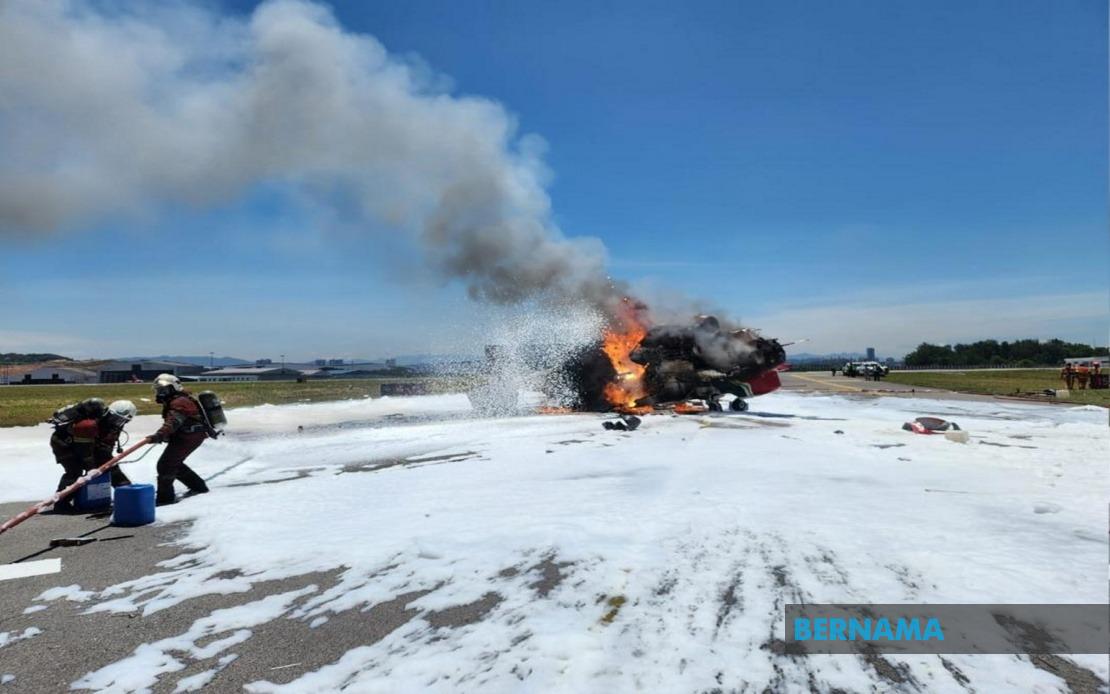
Sultan Abdul Aziz Shah Airport in Subang returned to normal operations on Thursday afternoon after a temporary shutdown prompted by a Kamov KaV-32S helicopter catching fire during ground engine testing. The runway reopened for incoming and outgoing traffic at 2.57 pm, less than three hours after the incident that disrupted air traffic at one of Malaysia's busiest airports.
The explosion occurred at 12.28 pm at Taxiway Victor when a crew of four Ukrainian nationals were conducting routine maintenance activities on the aircraft. The helicopter, registered to a Ukraine-based company, was undergoing an engine run-up test—a standard procedure to verify aircraft systems and engine performance during maintenance cycles. One crew member sustained minor injuries from debris generated by the explosion, though the incident could have resulted in far more serious consequences given the proximity of the aircraft to airport infrastructure and personnel.
CAAM chief executive officer Capt Datuk Norazman Mahmud confirmed the closure and subsequent reopening, emphasizing that passengers should verify their flight status with airlines directly. The authority's swift response prevented extended disruptions, though the temporary suspension still created logistical challenges across multiple carriers operating from the facility. Flight information displays throughout the terminal showed updated schedules as airlines adjusted their operations following the clearance.
The temporary closure resulted in eight inbound flights being diverted to alternative airports, while three outbound services experienced delays as crews and passengers waited for runway operations to resume. For a hub airport handling dozens of daily movements, even a brief closure creates cascading effects throughout the aviation network, affecting connecting passengers and crew rotations. The diversions likely added several hours of flying time for affected aircraft and extended passenger journeys significantly.
Sultan Abdul Aziz Shah Airport, strategically located near Kuala Lumpur, serves as a crucial gateway for domestic and regional flights. The facility processes hundreds of flight movements daily, making any operational disruption noteworthy for the broader Malaysian aviation ecosystem. The incident highlights the critical nature of aircraft maintenance procedures and the potential risks inherent in ground operations, even when conducted by experienced personnel.
The helicopter involved in the incident was not registered to Malaysian operators, underscoring the international nature of aircraft maintenance and leasing arrangements in the region. Foreign-registered aircraft frequently conduct maintenance at Malaysian facilities, which benefit from established infrastructure and skilled technicians. This incident, however, raises questions about safety protocols and oversight mechanisms governing maintenance activities at civilian airports, particularly those involving ground engine testing that can generate significant hazards.
The Malaysian Civil Aviation Authority's response demonstrated established emergency procedures, with rapid assessment and decision-making leading to the runway's reopening within hours. The authority suspended all departures and arrivals during the initial investigation and clearance of the accident site, prioritizing passenger safety over schedule adherence. This precautionary approach is standard practice following aircraft incidents, allowing investigators to examine the scene and verify that airport infrastructure suffered no damage affecting operational safety.
CAAM's coordination with airlines ensured that the diversion process proceeded smoothly, with alternative airports prepared to accommodate unexpected arrivals. The logistics of managing diverted flights—including fuel considerations, crew legality limitations, and passenger accommodations—required seamless coordination between multiple stakeholders. Airlines maintained communication with passengers throughout the disruption, though such incidents inevitably cause frustration for travelers already accustomed to navigating Malaysia's humid equatorial climate and periodic weather-related delays.
The incident serves as a reminder of the importance of rigorous maintenance protocols in aviation safety. Ground engine run-up tests, while routine, involve operating aircraft engines at controlled conditions and must be conducted in designated areas with appropriate safety measures. The presence of four crew members suggests the maintenance was being conducted according to standard procedures, yet the explosion indicates either an unforeseen mechanical failure or a procedural deviation that warrants thorough investigation.
For Malaysian aviation stakeholders, the incident underscores the need for continued vigilance regarding safety standards at civilian facilities. As Southeast Asia's aviation sector expands and aircraft movements increase, maintaining robust oversight of maintenance activities becomes increasingly critical. The rapid resolution of this incident demonstrates that existing response mechanisms functioned effectively, though post-incident reviews will likely examine whether additional safeguards could further reduce risks associated with ground maintenance operations at busy commercial airports.

