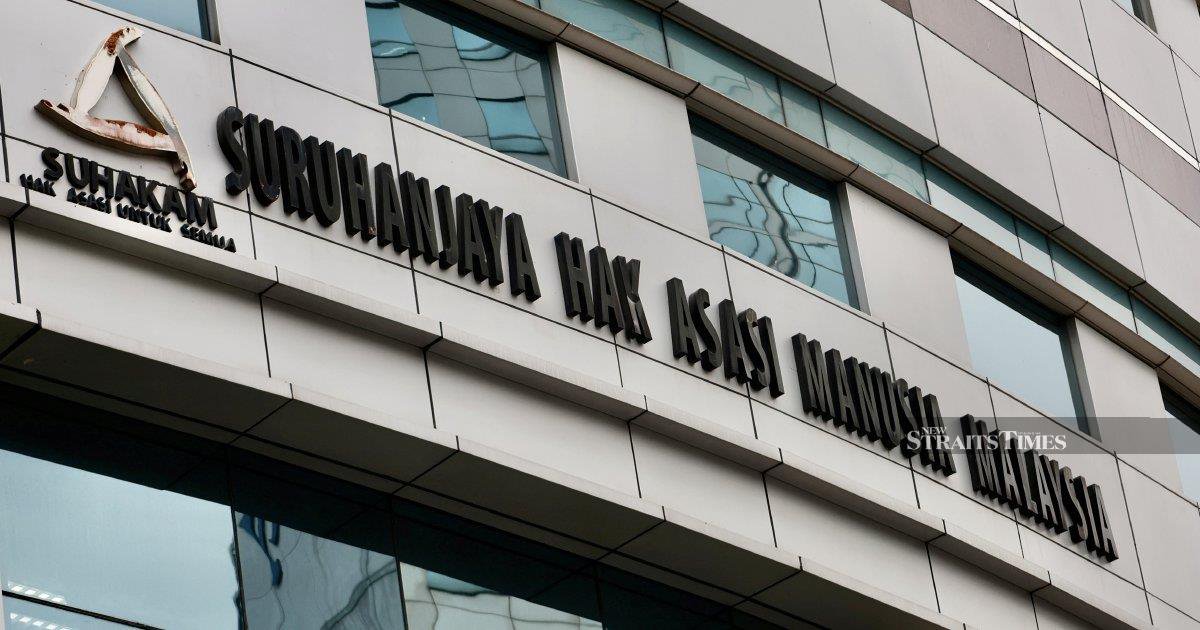
The Human Rights Commission of Malaysia (Suhakam) has sounded a fresh alarm over judicial developments in the long-stalled investigation into the enforced disappearance of Pastor Raymond Koh, after the Court of Appeal chose to uphold a legal stay that blocks earlier High Court orders from proceeding. The decision represents another procedural setback in a case that has drawn international scrutiny and raised persistent questions about state accountability in one of Malaysia's most controversial missing-persons matters.
Pastor Koh, a prominent Christian minister and vocal social critic, vanished in February 2017 under circumstances that his family and human rights groups have long attributed to enforced disappearance by state agents. In the years since, his case has become emblematic of broader concerns about the rule of law and access to justice in Malaysia. The stay order now in place effectively prevents court-mandated investigative steps from advancing, a development that Suhakam views as fundamentally inconsistent with Malaysia's human rights obligations.
The commission's expression of deep concern reflects growing frustration within Malaysia's civil society ecosystem at the apparent stalling of accountability mechanisms. Suhakam, tasked with investigating human rights violations and advising government on compliance with international standards, occupies a unique position as an independent watchdog despite being statutorily established. Its public statement signals that even institutional bodies designed to scrutinize state conduct feel the investigation has encountered troubling legal obstacles.
The stay mechanism itself warrants scrutiny in this context. Such orders, typically granted during the appeals process to maintain the status quo pending final judgment, have the practical effect of suspending enforcement of court decisions. In a case involving an alleged enforced disappearance, however, the suspension of investigative orders creates a qualitatively different situation than a stay on, say, commercial obligations. Every month of procedural delay compounds the investigative challenges and lengthens the period during which evidence may deteriorate or witnesses become unavailable.
Malaysia's international standing adds another layer to this development. The country has been subject to United Nations Human Rights Council scrutiny regarding disappearances and extrajudicial killings, with UN bodies having previously called for clarity on several high-profile cases. Pastor Koh's file remains open in international human rights documentation, and judicial delays reinforce the narrative—problematic from Malaysia's perspective—that domestic mechanisms cannot or will not deliver accountability for such serious allegations.
The broader pattern of legal maneuvering in this case has troubled observers who track rule-of-law issues across Southeast Asia. Malaysia historically positioned itself as a jurisdictional leader within the region, with relatively sophisticated court systems and democratic institutions. Yet cases like Pastor Koh's demonstrate how procedural complexity and appellate tactics can effectively insulate certain matters from substantive resolution, raising questions about whether institutional design adequately protects the most vulnerable from state overreach.
For the Christian community in Malaysia and civil rights advocates more broadly, the ruling compounds years of frustration. Pastor Koh was not a fringe figure but a respected faith leader who had openly commented on issues including migrant worker rights and religious freedom. His disappearance sent ripples through activist networks and religious minorities who viewed him as a principled voice. The apparent legal stonewalling of his case sends a cautionary message about the costs of speaking truth to power in Malaysia's political landscape.
The stay's implications extend beyond Pastor Koh's individual case. It demonstrates how the appellate system can function, in practice, as a brake on investigative progress when institutional interests align with procedural conservatism. This is particularly acute in cases where government agencies or officials are implicated, since state legal resources can sustain technical appeals indefinitely. Private citizens lacking comparable legal capacity face an asymmetrical fight to access justice.
Suhakam's intervention, while principled, also underscores the limitations of independent human rights bodies without enforcement power. The commission can document violations, investigate complaints, and make recommendations, but it cannot override appellate court decisions. This structural gap between identification of rights abuses and actual remediation remains a defining feature of Malaysia's human rights architecture. Suhakam's concern, however forcefully expressed, functions primarily as advocacy rather than remedy.
Looking ahead, the case will likely continue grinding through Malaysia's court system, with further appeals possible. The underlying allegations—that Pastor Koh was forcibly taken and spirited away by state operatives—remain unresolved. Meanwhile, the legal process itself becomes part of the injury: delay amounts to a secondary denial of justice, extending the trauma for his family and reinforcing the perception that certain authorities operate beyond effective accountability.
For Malaysian policymakers concerned about the nation's regional reputation and human rights standing, this trajectory presents a challenge. Resolving such cases transparently and swiftly would signal commitment to rule of law and accountability. Instead, the accumulating stays and procedural barriers suggest, to international observers and domestic skeptics alike, that institutional mechanisms may be deliberately designed to shield rather than expose alleged state wrongdoing.

