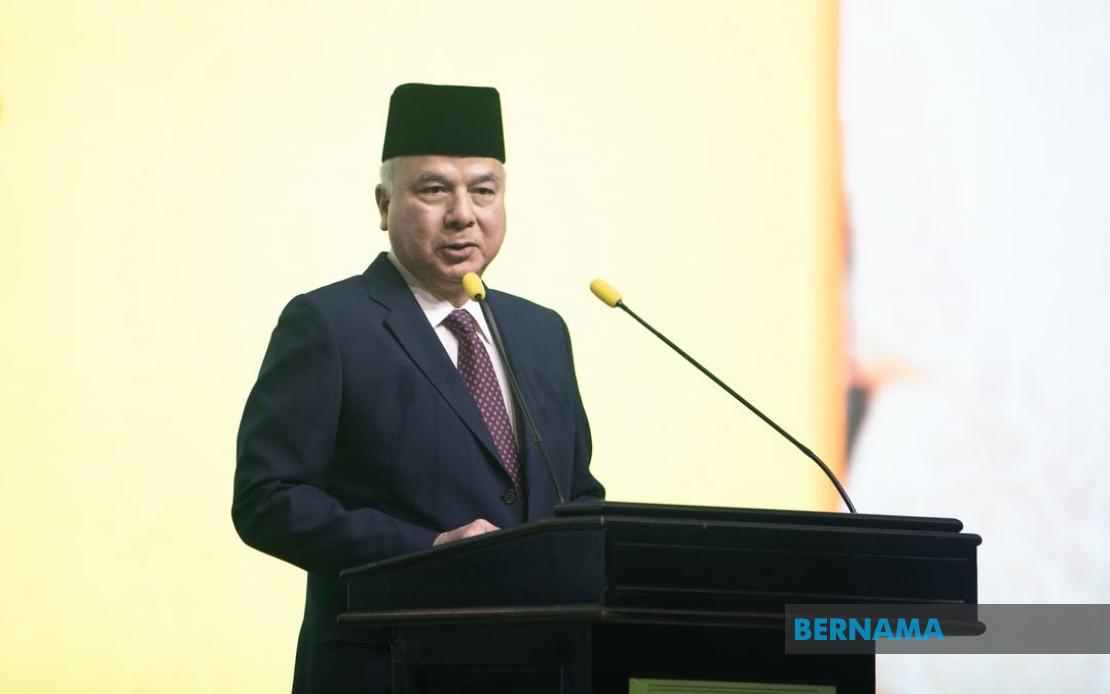
The Sultan of Perak, Sultan Nazrin Shah, has delivered a pointed message about the foundations of national stability and prosperity: wealth and talent alone cannot sustain a functioning state. At the 8th World Conference on Islamic Thought and Civilisation in Ipoh, His Royal Highness outlined how institutional weakness, unaccountable governance, and self-serving politics undermine even resource-abundant nations, a cautionary observation particularly relevant to Southeast Asia's developing economies.
Speaking at an event themed "Everyone Matters: Pride and Unity in Islam", Sultan Nazrin articulated a comprehensive vision of good governance that transcends mere administrative efficiency. He defined effective governance as the orchestration of interconnected institutional elements capable of surviving individual leaders and political cycles. This distinction matters enormously for Malaysia and the region, where institutional continuity has often been tested by changes in political administration and where the strength of checks and balances remains a critical democratic indicator.
Transparency in public financial management forms one pillar of this governance framework. Sultan Nazrin emphasised that citizens must see evidence that their tax contributions genuinely serve collective welfare rather than private interests or political patronage networks. This transparency requirement carries particular significance in Malaysia, where public expenditure accountability and anti-corruption efforts represent ongoing governance challenges. When governments operate opaque budgetary systems, public confidence erodes systematically, especially among economically marginalised populations.
The impartial application of law constitutes the second essential element. Sultan Nazrin stressed that accountability mechanisms must apply universally, regardless of an individual's social standing or political influence. A justice system perceived as selective or politically weaponised corrodes institutional legitimacy and invites public disengagement. Southeast Asian nations frequently grapple with perceptions of two-tiered legal systems, making this principle directly applicable to regional governance debates.
Civil political disagreement, channelled through legitimate institutional pathways rather than extra-legal means, characterises stable democracies. Crucially, Sultan Nazrin noted that political stability should not be confused with the absence of debate. Rather, the most resilient polities maintain robust argumentative traditions precisely because institutional frameworks peacefully accommodate disagreement. This observation challenges authoritarian impulses toward manufactured consensus and validates pluralistic democratic systems where opposition voices function as necessary accountability mechanisms.
Institutional erosion, however, manifests through citizens' declining confidence in electoral integrity, judicial independence, and the disinterestedness of public office. When these foundational assumptions crumble, state capacity deteriorates. Significantly, Sultan Nazrin highlighted that vulnerable populations suffer disproportionately from institutional breakdown. The poor, marginalised, and voiceless lose access to what minimal protections functional institutions provide, creating cascading crises of service delivery and social cohesion.
Government budgets, according to Sultan Nazrin's framing, represent moral documents as much as financial instruments. Budgetary allocations reveal explicit governmental priorities and demonstrate whose welfare receives protection. In Malaysia and Southeast Asia, where development disparities between urban and rural areas, between different ethnic communities, and between socioeconomic classes remain pronounced, budgetary analysis becomes a crucial tool for assessing whether inclusive governance rhetoric translates into material resource distribution.
A professional civil service operating according to impartial principles regardless of citizens' race, religion, or political affiliation embodies state unity concretely. Civil servants functioning as servants of the entire populace rather than particular constituencies or patronage networks strengthen institutional legitimacy. Conversely, politicised bureaucracies that dispense services based on political affiliation undermine institutional credibility and fragment national cohesion, a tension evident throughout Southeast Asia's developing democracies.
Leadership characterised by humility, consultation before legislation, and recognition that power represents a temporary public trust resonates more profoundly than rhetoric. Sultan Nazrin's emphasis on borrowed rather than owned power suggests an understanding that legitimate authority derives from public consent and remains perpetually subject to renewal through accountability. This conception challenges populist or personalised approaches to governance that dominate certain regional political movements.
Economic development cannot be pursued in isolation, a principle especially critical for geographically and economically integrated Southeast Asia. Sultan Nazrin advocated for strategic openness to international trade, investment flows, technological transfers, and knowledge exchanges while cautioning against dependency relationships. This balancing act proves particularly relevant as ASEAN nations navigate great-power competition and pressures toward economic bloc formation.
Malaysia's positioning as a global Islamic finance hub provides concrete opportunity for advancing cooperative development frameworks. Islamic finance's philosophical foundations emphasising risk-sharing, asset-backing, and equitable wealth participation offer tools for cross-border infrastructure investment and small-medium enterprise financing across Organisation of Islamic Cooperation nations. This potential remains substantially underrealised despite Malaysia's institutional advantages, suggesting untapped pathways for regional economic integration and development financing.
Sultan Nazrin's analysis ultimately advocates for institutional robustness as the prerequisite for translating material resources and human talent into sustained national progress. Without transparent governance, accountable leadership, impartial law application, and civil disagreement mechanisms, even favourable initial conditions deteriorate. This framework provides Malaysian policymakers and regional observers a comprehensive governance standard against which to evaluate institutional performance and national trajectory.

