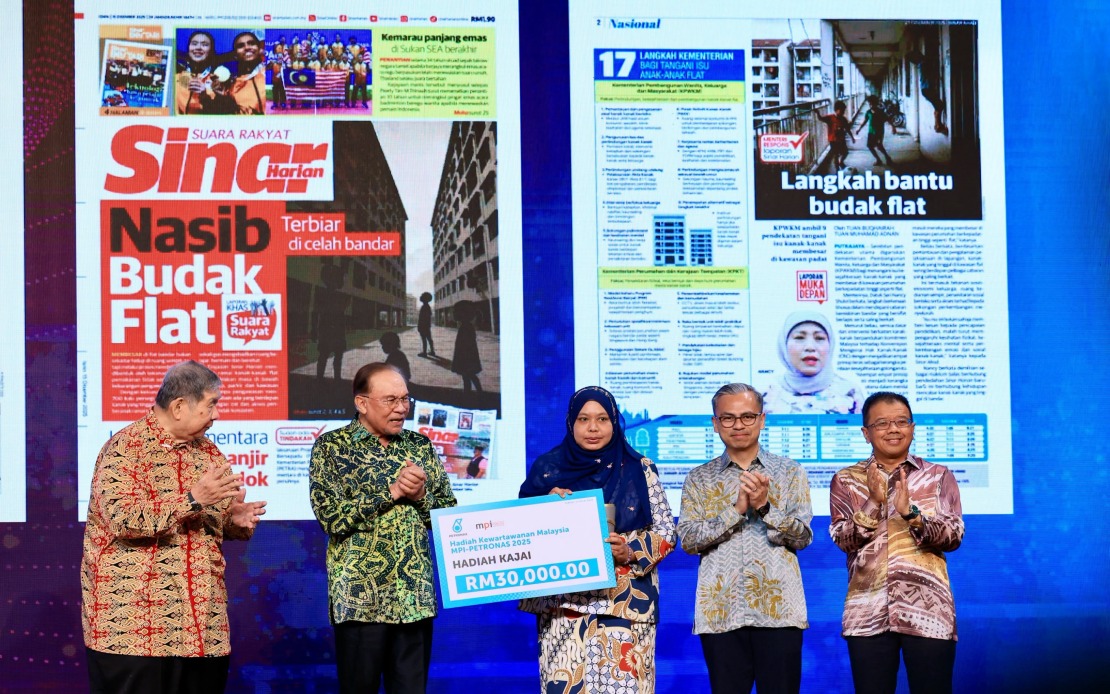
Communications Minister Datuk Seri Fahmi Fadzil has stressed that ethical, independent and responsible journalism forms the backbone of a resilient democracy and an informed citizenry. Speaking at the Malaysian Journalists' Night (MWM) 2026 event in Kuala Lumpur on July 18, Fahmi highlighted how media practitioners serve as custodians of public discourse, a role that has grown increasingly demanding as information flows proliferate across multiple platforms and channels.
The minister, who attended the gala alongside Prime Minister Datuk Seri Anwar Ibrahim, acknowledged the mounting pressures facing the journalism profession in the digital age. The exponential growth in information volume has created unprecedented challenges for both news organisations and audiences seeking reliable reporting. Simultaneously, the prevalence of misinformation and deliberate disinformation campaigns—often amplified through social media—has become a destabilising force in the information ecosystem, threatening public trust and democratic discourse.
Fahmi called on journalists and editors to maintain unwavering commitment to professional standards and truthful reporting. His remarks underscored government recognition that media freedom and journalistic integrity are not obstacles to good governance but essential partners in creating accountable institutions and policies that reflect public interest. The minister's emphasis on upholding truth in service to both people and nation reflects a broader acknowledgment that Malaysia's democratic development hinges on the quality and independence of its fourth estate.
The Malaysian Journalists' Night brought together approximately 1,000 attendees representing the full spectrum of Malaysia's media ecosystem. Beyond journalists and editors, the gathering included government ministry officials, corporate leaders, academic representatives and industry partners. This diverse attendance underscores the interconnected nature of modern governance, where media, business, civil service and educational institutions must work in concert to address national challenges and opportunities.
A centrepiece of the evening was the presentation of the MPI-PETRONAS Malaysian Journalism Awards 2025, which recognised outstanding achievement across the journalism profession. These accolades serve multiple purposes: they celebrate excellence in reporting, acknowledge the dedication of individual journalists and newsrooms, and reinforce professional standards within the industry. By honouring exceptional work, the awards program encourages higher editorial standards and demonstrates that quality journalism remains valued despite economic pressures facing news organisations globally.
The Malaysian Press Institute, which organises the annual Journalists' Night, operates as the custodian of professional norms within Malaysia's media landscape. The event has evolved into a prestigious occasion that strengthens relationships between the media industry, government agencies and corporate entities. These networks are particularly important in Malaysia's context, where collaborative approaches to addressing national issues—from economic policy to public health to security matters—require both transparent communication and mutual understanding between different stakeholders.
The challenge of misinformation has become central to discussions about media responsibility across Asia. Malaysia, like its regional neighbours, has experienced the corrosive effects of false narratives spreading through digital channels, undermining public confidence in institutions and stoking social division. Journalists and news organisations operating in this environment face the dual responsibility of publishing accurate information while also educating audiences about how to identify and resist manipulation.
Fahmi's message also carries implications for how Malaysia positions itself relative to global trends in media freedom and digital governance. While some governments have moved toward restricting press freedom in the name of combating misinformation, the Malaysian government's public support for ethical journalism suggests a different approach—strengthening rather than constraining the media's watchdog function. This positioning reflects confidence that robust, independent reporting serves national interests better than controlled information flows.
For Malaysian readers and regional observers, the minister's comments highlight ongoing tensions in contemporary democracies worldwide. The expansion of digital platforms has democratised information production while simultaneously enabling rapid spread of falsehoods. Traditional gatekeeping functions performed by professional journalists have weakened, yet the need for trustworthy, verified information has never been greater. The recognition at the Journalists' Night that excellence in journalism requires sustained commitment to integrity speaks to this central challenge.
The gathering also underscores the complex relationship between media freedom and national development in Southeast Asia. As countries in the region pursue economic modernisation and technological advancement, they must simultaneously navigate questions about press liberty, government transparency and public discourse. Malaysia's approach—emphasising journalistic responsibility and integrity rather than censorship—offers one model for balancing these competing demands.
Looking forward, the emphasis on ethical standards and independent reporting becomes particularly relevant as Malaysia confronts issues ranging from economic inequality to climate change to political polarisation. Each of these challenges requires informed public debate grounded in factual reporting. Journalists and news organisations have a significant role in ensuring that such debates occur on the basis of verified information rather than rumour or propaganda.
The participation of Prime Minister Anwar Ibrahim alongside Communications Minister Fahmi at the Journalists' Night sent a signal about government-media relations in Malaysia. Rather than adversarial posturing, the event projected an image of collaborative engagement around shared values of professional excellence and public service. Whether this cooperation extends to protection of editorial independence during contentious reporting remains a question that media watchers across the region will continue monitoring.
Ultimately, Fahmi's remarks serve as a reminder that democracy in the 21st century depends not simply on institutional structures but on the quality of information and discourse flowing through those institutions. Malaysian media practitioners, facing resource constraints and commercial pressures alongside digital disruption, require acknowledgment that their work contributes fundamentally to national wellbeing. The Journalists' Night and its associated awards represent one mechanism through which this contribution is recognised and professional standards are reinforced across the industry.

