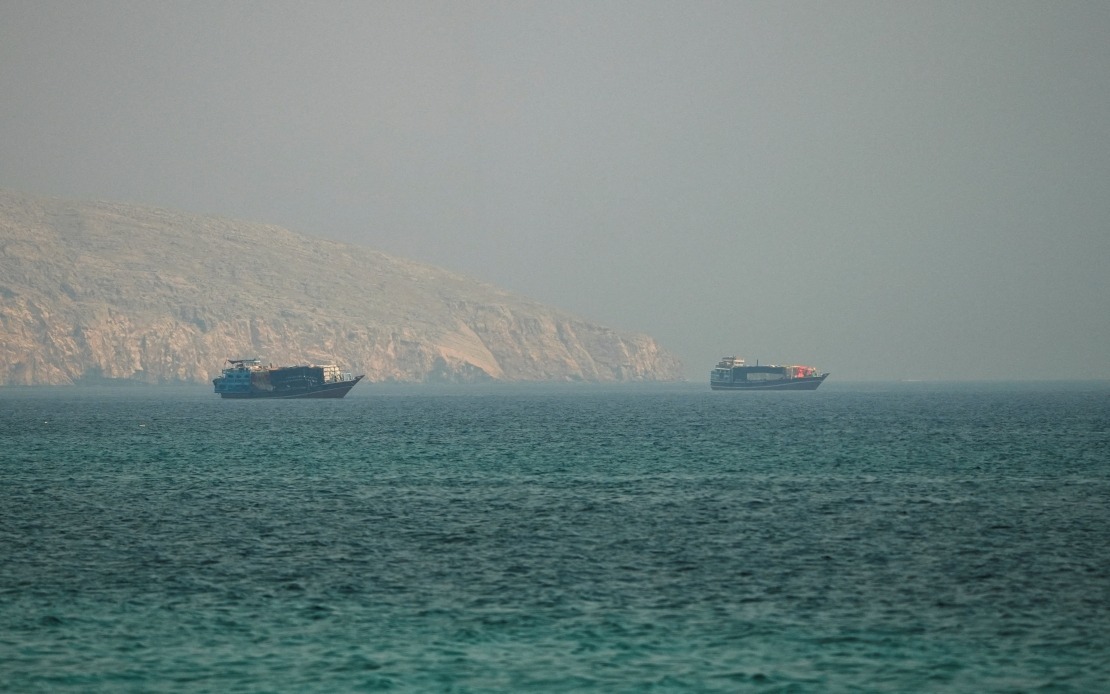
One of the world's most critical shipping arteries remains engulfed in heightened conflict, with the UK Maritime Trade Operations (UKMTO) confirming this week that security conditions in the Strait of Hormuz have not improved despite recent diplomatic efforts. The Joint Maritime Information Centre issued fresh guidance acknowledging that the southern passage through this strategic waterway, which handles roughly one-third of global seaborne oil, continues to face what officials term a "severe" threat environment. The assessment underscores the fragile state of international maritime commerce in the region, with merchant vessels operating under conditions of significant uncertainty and risk.
The escalating pattern of attacks on commercial shipping in recent months has drawn attention to the vulnerability of supply lines that are critical not only to Middle Eastern oil exporters but to energy-dependent economies throughout Asia, including Southeast Asia and Malaysia. Each incident involving merchant vessels in the Strait compounds concerns about global energy security and the potential for disruption to crude oil supplies and prices. For a trading nation like Malaysia with substantial shipping interests and significant reliance on stable energy markets, developments in this waterway carry direct economic implications. The UKMTO's continued "severe" designation reflects ongoing military confrontations between major powers in the region rather than a situation moving toward resolution.
The UK agency's latest notification specifically emphasises that despite the volatile security landscape, the expanded southern route remains open to all maritime traffic. This messaging appears calibrated to prevent total evacuation of commercial vessels from the waterway while acknowledging genuine hazards. The guidance advises mariners to expect radio contact from naval forces operating across very high frequency channels and to maintain constant situational awareness regarding designated mine-danger areas. These technical precautions reflect operational realities in a zone where both state and non-state actors conduct military operations, and where the consequences of miscommunication or navigational error could prove catastrophic for civilian crews and cargo.
Underlying the maritime security crisis is an intensifying military competition between the United States and Iran, each claiming to respond defensively to the other's provocations. American forces have conducted multiple strikes targeting Iranian military installations and infrastructure, with Washington maintaining that these operations constitute necessary responses to Iranian attacks on commercial shipping. The US narrative frames its military actions as protective measures defending the freedom of navigation that merchants depend upon. This positioning, however, exists alongside Iranian assertions that external powers have no legitimate role in determining how vessels transit Iranian-claimed waters.
Iran's strategic response has involved deploying drone strikes against American military facilities stationed throughout the Persian Gulf region and extending operations into neighbouring Jordan, demonstrating the conflict's expanding geographic footprint. Tehran simultaneously insists that maritime traffic coordinate directly with Iranian authorities before passage and reject routes other than those designated by Iran itself. This demand for traffic coordination combined with restrictions on acceptable shipping corridors creates practical complications for international maritime operators seeking to navigate between competing claims of authority and legitimacy. For international shipping companies, the situation presents a classic dilemma between the legal fiction of unrestricted passage and the operational reality of Iranian enforcement mechanisms.
Significantly, diplomatic engagement between the two adversaries has occurred recently under international mediation. Pakistan facilitated negotiations resulting in a memorandum of understanding signed last month specifically targeting de-escalation and the potential for a comprehensive peace agreement. The document's existence suggests both parties recognise the costs and risks of sustained military confrontation. However, the initial optimism surrounding this diplomatic initiative has already encountered serious headwinds, with continued hostile military actions by both sides suggesting that political commitments to negotiated settlement may not translate into immediate changes in operational behaviour. The persistence of attacks and counter-strikes despite the signed agreement raises questions about whether either side possesses sufficient political will or institutional control to enforce compliance with peaceful conduct among all military units.
For regional economies and Malaysian policymakers tracking these developments, the situation presents a complex challenge. The Strait of Hormuz's critical importance to global energy markets means that sustained instability cannot be dismissed as a distant geopolitical dispute. Disruptions to shipping through this chokepoint carry consequences for fuel costs, manufacturing competitiveness, and macroeconomic stability across Southeast Asia. Malaysia's maritime industry, including shipping firms and port operations, must continuously reassess risk calculations and insurance premiums for vessels transiting the region. The longer the security situation remains unresolved, the greater the economic drag from routing inefficiencies, elevated insurance costs, and delays to supply chains.
The expanded southern shipping route referenced in UKMTO guidance offers some operational flexibility, yet the fundamental challenge persists: vessels must pass through Iranian-controlled waters regardless of which route they select. The psychological and operational weight of transiting a waterway designated as "severe" threat naturally influences crew morale, operational decision-making, and the commercial viability of carrying certain cargo types. Insurance and security companies have implemented additional protocols and monitoring systems, all adding to operational costs that ultimately reach consumers through higher commodity prices. The cumulative effect of these incremental cost pressures, when aggregated across global maritime commerce, affects inflation and economic growth in oil-importing nations throughout Asia.
The divergent approaches taken by the United States and Iran regarding maritime authority and passage rights reflect deeper strategic competition for influence in the Persian Gulf region. American emphasis on freedom of navigation aligns with its interests in maintaining open access for international commerce and military operations. Iran's insistence on coordination and route designation represents its assertion of sovereignty and attempts to extract economic benefit or political leverage from its geographic position. These competing visions of maritime order remain fundamentally incompatible without significant compromise from one or both parties, yet diplomatic progress requires precisely such compromise.
Moving forward, international observers will watch whether the recently signed memorandum of understanding between Iran and the US proves robust enough to withstand the operational pressures and political incentives that continue driving military escalation. The UKMTO's continued "severe" threat assessment suggests maritime professionals remain unconvinced that meaningful de-escalation has begun. For Malaysia and other Southeast Asian nations dependent on stable energy supplies and reliable maritime commerce, the Strait of Hormuz situation demands sustained attention. Any further deterioration could accelerate the economic pressures already evident in higher insurance costs and shipping delays, with effects rippling through regional supply chains and consumer prices across the Association of Southeast Asian Nations.

