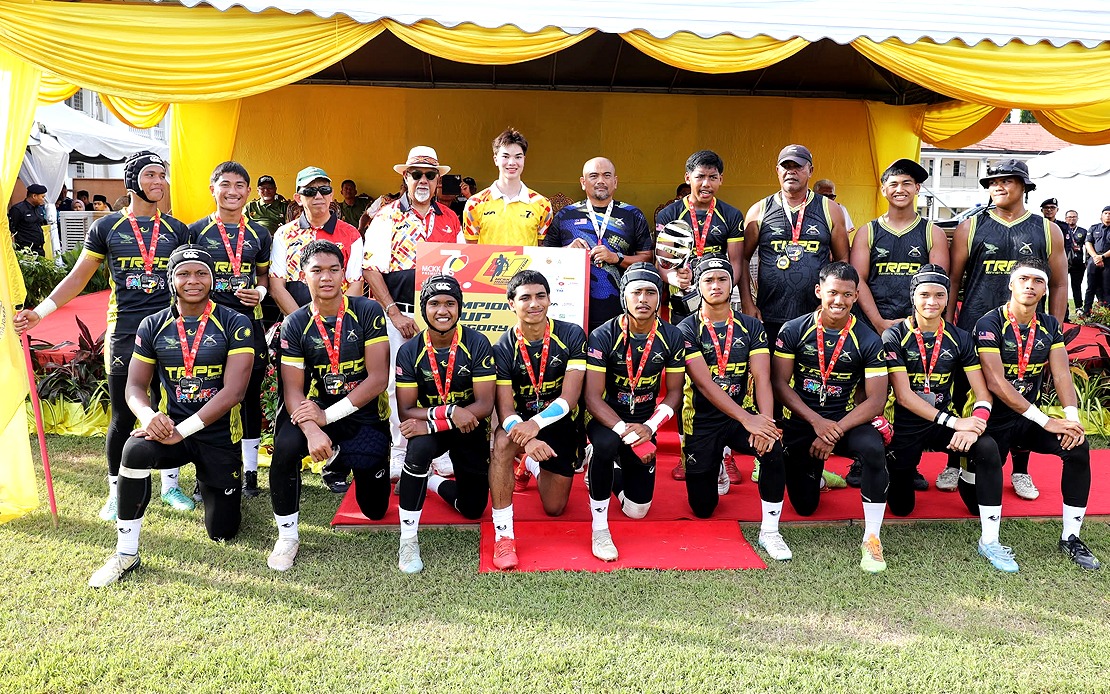
Sekolah Sukan Malaysia Pahang has cemented its status as Malaysia's premier school rugby programme by claiming a second successive MCKK Premier 7s championship. The Pahang-based sporting school demonstrated composure and tactical discipline in a tightly fought Cup final against Sekolah Sukan Tunku Mahkota Ismail, ultimately prevailing 19-14 at the Malay College Kuala Kangsar field in Perak on July 5. The victory represents a significant achievement for an institution that has become increasingly dominant in secondary school rugby circles across the nation.
The triumph means SSMP has retained possession of the NJ Ryan Trophy, the tournament's premier award, for a consecutive season. Notably, the Kuala Lumpur final also saw SSMP overcome the same opponent in last year's decider, suggesting a developing rivalry between the two schools that have emerged as the country's foremost rugby talent incubators. This back-to-back success underscores SSMP's investment in coaching, player development, and the broader athletic infrastructure that has become a hallmark of the school's programme.
The Cup final itself proved to be a compelling encounter that showcased the quality of rugby being played at Malaysia's secondary school level. Both SSMP and SSTMI brought disciplined, attacking approaches to the match, with neither team willing to concede ground without a fight. The intensity and technical proficiency displayed by the young athletes reflected months of preparation and the coaching expertise available within Malaysia's rugby establishment. Until the final whistle, the outcome remained uncertain, lending credence to the notion that these two institutions are producing players capable of representing the nation at higher levels of competition.
Beyond the premier competition, the 14th edition of the MCKK Premier 7s produced several compelling contests across its various divisions. In the Plate category, SMK Tun Hussein Onn executed a strong performance to overcome Sekolah Sultan Alam Shah with a 24-19 victory. This secondary competition tier continues to provide meaningful tournament experience for schools developing their rugby capabilities, and the result suggests THOR possesses a competitive squad capable of progression to higher-level tournaments.
The Bowl division saw SMK Hosba claim its respective title through a 17-12 triumph over SMK Syed Sirajuddin, demonstrating the breadth of competitive talent distributed across Malaysia's secondary school system. Such competitions serve a crucial function in identifying emerging rugby talent outside the traditional powerhouse schools and providing development pathways for younger players. The relatively tight margins in these matches indicate that rugby culture is spreading beyond the elite institutions.
MRSM Balik Pulau dominated the Shield competition with a commanding 22-0 shutout victory against Royal Military College, a result that exemplified the growing gap between schools with robust rugby programmes and those with less established infrastructure. The comprehensive nature of the victory suggests that sustained investment in the sport at institutional level produces tangible performance differentials. RMC, despite its military academy heritage, found itself unable to contain MRSMBP's intensity and tactical execution.
The tournament's closing ceremony and prize distribution were presided over by Raja Datuk Seri Azlan Muzaffar Shah, son of the Sultan of Perak, whose attendance reflected the event's status within Perak's sporting calendar and the broader recognition of school rugby as an important component of Malaysia's youth development infrastructure. The presentation of trophies and medals to winning schools and individual award recipients provided official recognition of the young athletes' achievements and reinforced the connection between royal patronage and grassroots sporting excellence.
The MCKK Premier 7s tournament occupies a unique position in Malaysian secondary school sports, having reached its 14th edition with sustained institutional support and high standards of competition. Held annually at Malay College Kuala Kangsar, one of Malaysia's most prestigious educational institutions, the sevens format has proven particularly suited to developing ball-handling skills, tactical awareness, and physical conditioning among teenage players. The tournament's structure across multiple competition tiers ensures that schools at various developmental stages can participate meaningfully.
For Malaysian rugby observers and youth development officials, the continued success of SSMP and SSTMI raises important questions about talent concentration and competitive balance within school rugby. While both institutions deserve recognition for their investment and excellence, the consistent appearance of the same schools in finals poses long-term considerations for the sport's growth. Developing rugby depth beyond the established powerhouses remains a strategic priority for national rugby boards seeking to broaden the talent pool from which representative teams are selected.
The prevalence of purpose-built sporting schools within Malaysia's secondary education system, exemplified by SSMP and SSTMI, reflects a deliberate policy approach to identifying and nurturing athletic talent from an early age. These institutions provide specialist coaching, training facilities, and competitive opportunities that conventional schools struggle to match. The concentration of resources and expertise within such establishments has undoubtedly elevated playing standards but simultaneously highlights disparities in opportunity available to talented athletes attending traditional schools without dedicated sports programmes.
Moving forward, the MCKK Premier 7s tournament will likely continue as a showcase for emerging rugby talent and a significant milestone in the competitive calendar for Malaysia's secondary school athletes. The tournament's credibility and prestige, demonstrated by high-quality finals and royal patronage, position it as a pathway to elite-level rugby for successful competitors. SSMP's successful retention of the trophy suggests the school has established a sustainable competitive advantage that may extend beyond the current season.

