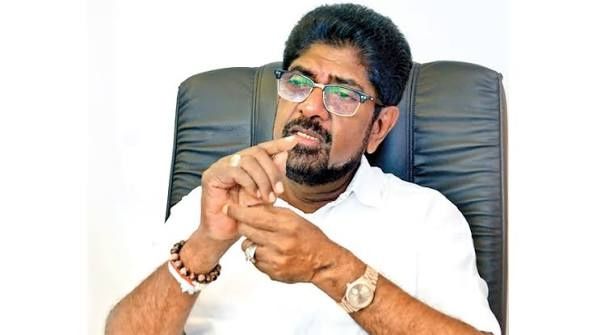
A prominent Sri Lankan former minister has been taken into custody by the country's anti-corruption authorities over allegations he facilitated the theft of an ancient ceremonial stone from a historic royal residence. Keheliya Rambukwella was detained following an investigation by the Commission to Investigate Allegations of Bribery or Corruption (CIABOC) into the disappearance of the ornamental rock, a move that underscores the mounting legal troubles facing officials from Sri Lanka's recent administrations.
The object at the centre of the case is a substantial carved circular granite stone commonly referred to as a moonstone, which formed part of the decorative threshold entrance to the palace of Veera Parakrama Narendrasinghe, Sri Lanka's final Sinhala monarch, who held power until 1739. This artifact carries considerable cultural and historical significance for the nation, embodying centuries of architectural and symbolic heritage. The theft itself occurred in December 2022, according to CIABOC's findings, yet the investigation took several months to culminate in formal charges.
According to the anti-corruption commission, Rambukwella not only participated in arranging the removal of the valuable historic object but also actively worked to impede the police investigation that followed. CIABOC released a statement declaring that the former official had "conspired, aided and abetted the theft" while occupying a ministerial position, establishing that the alleged criminal conduct occurred whilst he held public office. This layering of charges—covering both the principal offense and obstruction of justice—reflects prosecutors' determination to pursue accountability on multiple fronts.
Beyond the moonstone case, authorities have simultaneously pursued Rambukwella on a separate charge involving the misappropriation of state resources. He stands accused of using government funds to employ six individuals for private commercial purposes, effectively converting public money into personal business operations. This allegation exemplifies the kind of institutional corruption that has plagued Sri Lanka's governance structures, whereby officials blur the lines between state resources and private enrichment.
The arrest arrives as Rambukwella navigates an ongoing court proceeding centred on a far more serious allegation that implicates his tenure as health minister. During his time in that position, he purportedly approved the procurement of a critical cancer treatment medication that proved to be counterfeit—essentially water sold at pharmaceutical prices. This discovery has prompted law enforcement to pursue charges, with police evidence presented to the court establishing that Rambukwella authorised the questionable purchase.
The counterfeit drug scandal extends beyond Rambukwella alone, with multiple senior officials from the health ministry apparatus facing indictment. This suggests a systemic failure in procurement oversight and regulatory mechanisms rather than isolated malfeasance by a single actor. The breadth of the investigation indicates that institutional safeguards designed to prevent such abuses either malfunctioned or were deliberately circumvented at various levels of the bureaucracy.
Contextualising these developments requires understanding the acute crisis that gripped Sri Lanka's healthcare and broader economy during his period as health minister. The island nation confronted an unprecedented shortage of essential medicines beginning in 2022, directly stemming from its default on approximately US$46 billion in foreign debt obligations. This sovereign debt crisis, which prompted Sri Lanka's formal bankruptcy declaration in April 2022, created conditions of scarcity and desperation that may have incentivized officials to pursue irregular supply channels or overlook procedural safeguards.
The pharmaceutical shortage that Rambukwella's ministry faced represented not merely an administrative inconvenience but a genuine public health emergency, with patients unable to access life-saving treatments. Cancer patients seeking chemotherapy and individuals requiring other critical medications found themselves in impossible situations. Yet rather than navigate these constraints through transparent emergency procurement protocols or public communication about shortages, authorities allegedly resorted to obtaining counterfeit drugs, creating an even graver threat to public health by administering false treatments to vulnerable patients.
These accumulating allegations paint a portrait of institutional decay that extended across multiple government portfolios during a period of national distress. The pattern—involving a sacred cultural artifact, state resource diversion, and pharmaceutical fraud—suggests governance failures that transcended individual cases of corruption. For Malaysia and other Southeast Asian nations, the Sri Lankan example underscores the dangers of inadequate institutional checks and the vulnerability of public systems during economic crises, when pressure to maintain appearances or deliver services may override procedural integrity.
Rambukwella's detention represents a signal that post-crisis accountability mechanisms in Sri Lanka are functioning, though with considerable delay. The CIABOC's pursuit of charges across multiple domains indicates that anti-corruption bodies are casting wider nets than they might have during periods of political stability. However, questions persist about whether these prosecutions extend sufficiently through the chain of command or whether junior officials and ministers become convenient scapegoats while higher-level political actors escape scrutiny. The coming court proceedings will reveal whether Sri Lanka's justice system can sustain comprehensive accountability or whether institutional momentum for reform will dissipate as immediate crisis pressures ease.

