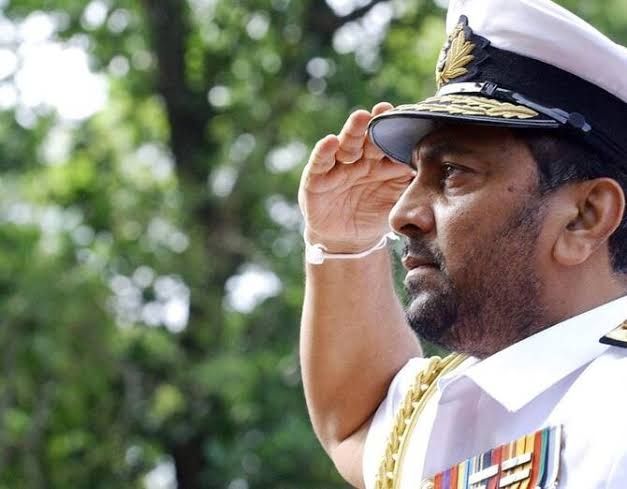
Sri Lanka's anti-corruption authorities have taken Admiral of the Fleet Wasantha Karannagoda into custody, marking another significant step in the country's escalating legal action against figures connected to the Rajapaksa dynasty. The 73-year-old retired senior naval officer was apprehended by the Bribery Commission over allegations that he improperly facilitated the military enlistment and overseas training of Yoshitha Rajapaksa, son of former president Mahinda Rajapaksa, without the candidate possessing the necessary qualifications.
Karannagoda's arrest centres on a 2006 recruitment decision that allowed Yoshitha Rajapaksa to join the navy despite failing to meet standard entry requirements. The scope of the corruption allegations extends beyond mere enlistment, encompassing the irregular arrangement of international naval training opportunities that would not normally have been available to someone with such questionable credentials. This pattern of preferential treatment highlights how proximity to political power in Sri Lanka has historically created pathways for circumventing institutional rules and meritocratic procedures.
The arrested officer occupies a sensitive position in Sri Lanka's modern military history. Karannagoda served as navy commander during the critical 2009 conclusion of the decades-long conflict with Tamil separatists, a period that remains contentious due to widespread allegations of mass atrocities and extrajudicial killings. His subsequent elevation to the rank of admiral of the fleet in 2019 occurred during Gotabaya Rajapaksa's presidency, when senior military figures close to the ruling family received preferential advancement. He currently holds no active naval position.
The arrest also reflects the legal jeopardy facing Yoshitha Rajapaksa himself, who remains free on bail following his detention last month. The younger Rajapaksa confronts separate charges involving the misappropriation of state resources for his own overseas training at Dartmouth, a prestigious British naval college. Investigators allege that public funds were inappropriately diverted to finance his attendance at an institution that would typically require private payment. This aspect of the case suggests a pattern where family connections granted access to costly international military education normally unavailable to ordinary service members.
Karannagoda's broader legal troubles extend well beyond corruption allegations related to recruitment procedures. British sanctions imposed in March 2025 identified him as a figure credibly implicated in severe human rights violations and extrajudicial killings during his military tenure. These international restrictions signal that overseas governments view him as bearing responsibility for grave abuses committed during armed conflict. Additionally, he faces domestic conspiracy to murder charges concerning the deaths of eleven young men during the 2008-2009 period, the final stages of the Tamil conflict when allegations of summary executions became widespread.
The trajectory of these murder charges illustrates how political transitions fundamentally reshape accountability in Sri Lanka. The charges were initially dropped in October 2021 when Gotabaya Rajapaksa, Mahinda's brother, occupied the presidency and possessed sufficient political leverage to shield military figures from prosecution. However, the ascension of President Anura Kumara Dissanayake in September 2024 initiated a decisive policy shift. Dissanayake's electoral platform explicitly pledged to dismantle corruption networks and investigate long-dormant high-profile criminal cases, and his administration has demonstrated willingness to resurrect previously abandoned prosecutions against figures connected to the former regime.
The reinvigorated legal offensive targeting the Rajapaksa family represents a fundamental recalibration of political power in Colombo. Numerous family members and their inner circle face multiple pending criminal charges spanning fraud, misappropriation, and violence-related offences. These prosecutions were effectively dormant during periods of Rajapaksa political dominance but have accelerated markedly under Dissanayake's tenure. The pattern demonstrates how judicial systems in South Asia remain vulnerable to political manipulation, with legal action intensifying or diminishing based on which faction controls state power.
Yoshitha Rajapaksa's own predicament extends beyond military-related corruption. He is undergoing criminal prosecution after failing to provide satisfactory explanations for the financial sources underlying a substantial property purchase made during his father's presidency between 2005 and 2015. When questioned by investigators, he claimed that a grandaunt had gifted him gemstones which he subsequently sold to raise funds. However, when investigators questioned the grandaunt, she expressed inability to recall or explain how she had originally obtained these valuable stones, creating a transparent gap in the wealth explanation.
The broader Rajapaksa legal exposure has widened considerably in recent months. Gotabaya Rajapaksa, the former president and Mahinda's younger brother, received a foreign travel restriction last month. The prohibition stems from suspected involvement in the catastrophic Easter Sunday bombings of 2019, which claimed 279 lives and represented Sri Lanka's deadliest terrorist attack in recent memory. These allegations suggest potential negligence or complicity in security failures that enabled suicide bombers to execute coordinated strikes against churches and luxury hotels.
The intensity and breadth of legal action targeting the Rajapaksa network reflects wider patterns in post-conflict societies where transitions in political control frequently trigger efforts to prosecute predecessors. For Malaysia and other Southeast Asian nations grappling with corruption and accountability challenges, Sri Lanka's experience illustrates both the possibilities and limitations of prosecutorial action. Legal systems that remain subordinate to political power structures produce outcomes that oscillate between aggressive prosecution and selective immunity depending on which faction holds executive authority.
These developments carry particular significance for regional observers concerned with governance standards and democratic institutions. While President Dissanayake's anti-corruption agenda represents a genuine departure from his predecessors' protection of the Rajapaksa family, the underlying vulnerability of judicial independence to political interference remains evident. Sustainable accountability requires institutional reforms that insulate courts from executive manipulation, a challenge that extends throughout South Asia and threatens the credibility of legal outcomes regardless of which faction currently benefits from prosecution or protection.

