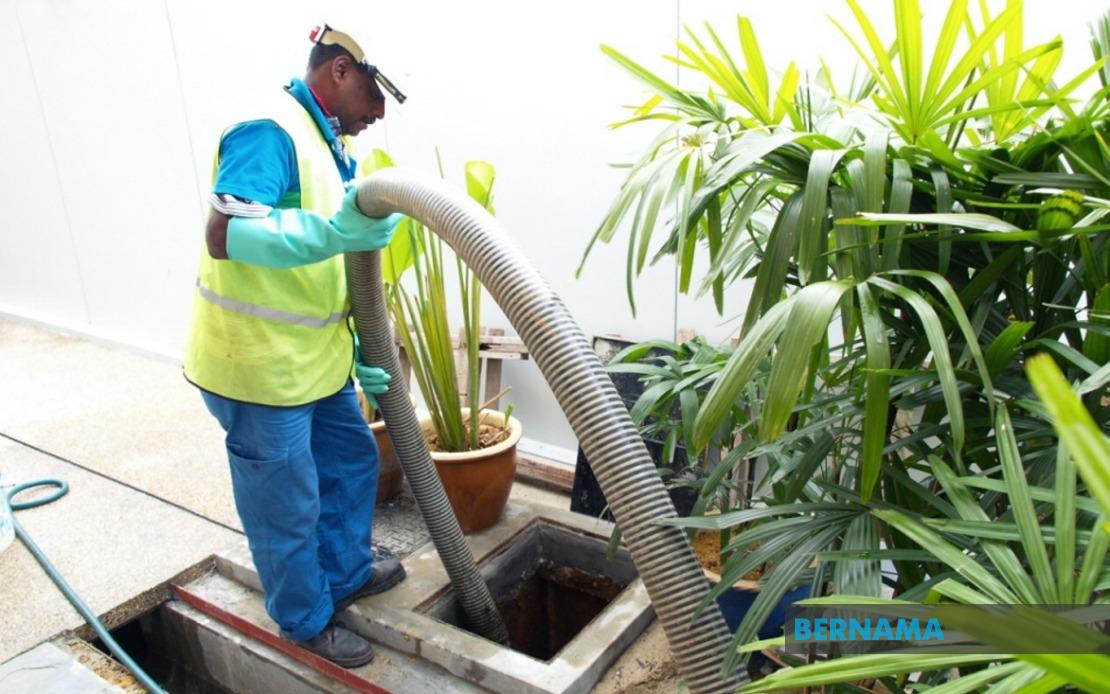
The National Water Services Commission (SPAN) has launched a major enforcement drive in Sungai Petani, issuing 270 compliance notices to premises owners who have neglected their statutory obligation to empty and maintain septic tanks. The sweep, which took place on August 5, formed part of Operation Padi 2, a broader inspection campaign running from August 4 to 6 that examined 341 properties across the business district, uncovering widespread non-compliance with water service regulations.
Director of SPAN's Operations Division Enforcement Section, Ainal Yusman Mohamad Yusop, explained that the targeted inspection covered both commercial and domestic premises, with 242 commercial properties and 99 residential units scrutinised during the operation. The compliance notices relate specifically to failures to follow directives from Indah Water Konsortium Sdn Bhd (IWK), the contractor responsible for managing the town's sewerage and sanitation infrastructure. The scale of the enforcement action underscores a systemic problem affecting Sungai Petani's infrastructure maintenance landscape.
What emerged during the inspections is particularly alarming for public health officials: many of the affected buildings date from the 1970s and 1980s, and their septic systems have suffered from decades of benign neglect. Ainal Yusman revealed that some septic tanks have gone unmaintained for over fifteen years, with records indicating certain installations received their last professional service in 1997 or 1999. This means some systems have been operating without proper desludging—the removal of accumulated sludge—for nearly a quarter-century, well beyond any reasonable operational lifespan and creating potential environmental and health hazards.
Under Section 65(1)(c) of the Water Services Industry Act 2006 (Act 655), property owners are legally required to engage licensed service providers or permit holders to conduct regular desludging of their septic systems. This regulatory framework exists to prevent sewage overflow, groundwater contamination, and the spread of waterborne diseases. The fact that such widespread non-compliance has persisted suggests that enforcement has been inconsistent or insufficiently resourced until this present operation, raising questions about how other municipalities across Malaysia are managing similar infrastructure.
The enforcement mechanism employed by SPAN offers property owners a structured pathway to compliance rather than immediate penalties. Owners of the 270 premises receiving notices have a fourteen-day window to respond and arrange for their septic tanks to be emptied by accredited contractors. This grace period is designed to give property owners reasonable time to source licensed service providers and schedule the work, acknowledging that some may not have been aware of their non-compliance status.
Should owners fail to act within the fortnight, SPAN has indicated it will escalate enforcement measures, progressing to formal offence notices and formal investigations. The potential financial consequences are substantial: violators face fines not exceeding RM50,000 upon conviction. For business operators already managing tight margins, such penalties represent a serious financial threat, which should motivate prompt action. However, the structure also raises concerns about whether smaller business owners and domestic property managers have adequate awareness of these requirements or reliable access to affordable licensed desludging services.
The septic tank crisis in Sungai Petani reflects broader challenges facing smaller Malaysian towns in managing ageing infrastructure and ensuring property owner compliance with environmental regulations. Many premises, particularly older commercial buildings and shophouses, were constructed before modern centralised sewerage systems became standard, leaving them dependent on on-site septic systems that require active maintenance. The transition from passive neglect to active enforcement suggests SPAN is attempting to reverse years of accumulated non-compliance, though the underlying question remains whether property owners and businesses understand why such maintenance matters.
For Malaysian businesses and property owners beyond Sungai Petani, this enforcement action serves as a cautionary reminder that regulatory agencies are increasing their focus on water and sanitation compliance. Similar operations in other towns and cities should be anticipated, and property owners would be prudent to audit their own septic systems' maintenance records now rather than await a compliance notice. The fourteen-day notice periods and substantial fines indicate that authorities are moving from advisory to punitive approaches.
The timing of Operation Padi 2 also reflects Malaysia's broader push toward improved water security and environmental management. As water scarcity becomes an increasing concern across the region, regulators are emphasising that proper sewage management protects both groundwater reserves and surface water sources from contamination. Septic tank overflow and inadequate maintenance pose direct risks to water quality, making this enforcement initiative part of a larger infrastructure protection strategy. For Sungai Petani, addressing the 270 notices could measurably improve the town's environmental health and reduce the load on IWK's treatment facilities.
While SPAN's enforcement is necessary and overdue in many respects, the scale of non-compliance also hints at systemic issues: whether property owners received clear communication about their obligations, whether licensed desludging services are sufficiently available and competitively priced in the area, and whether smaller business operators have the financial capacity to absorb the costs of both historical maintenance and ongoing compliance. Future enforcement campaigns might benefit from being paired with awareness campaigns and support mechanisms to help vulnerable property owners transition to compliance without undue hardship.

