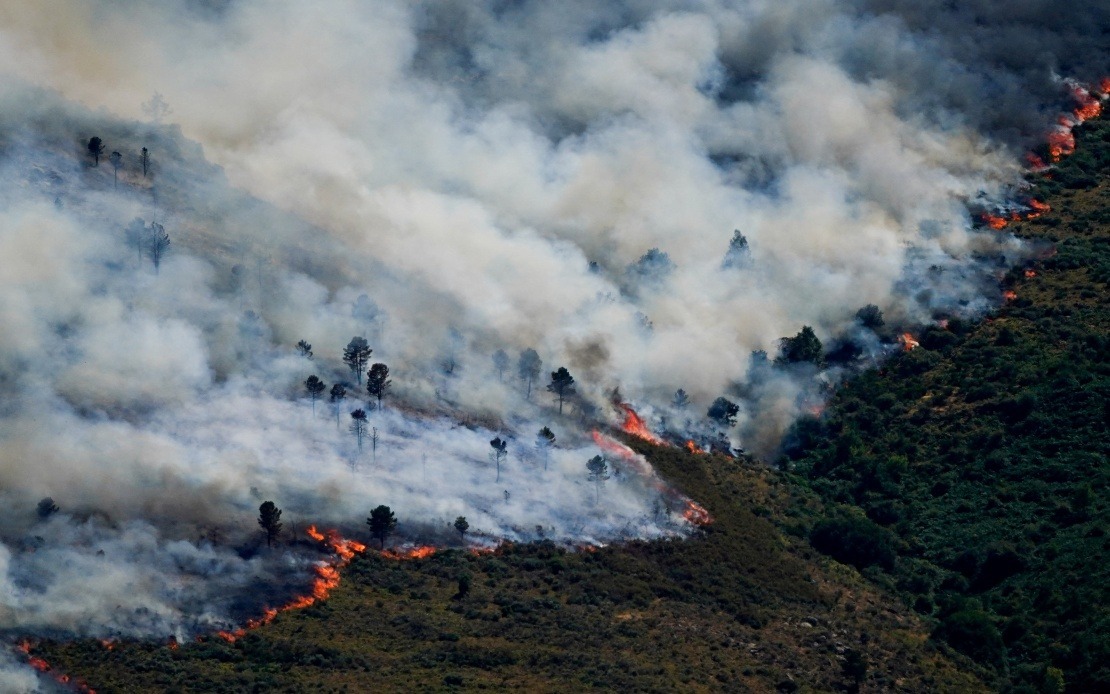
A major forest fire erupting near the village of Gátova in eastern Spain's Valencia region has forced authorities to evacuate around 1,000 people, marking another significant wildfire incident in a country grappling with unusually severe conditions this summer. The evacuation operation, coordinated by regional civil protection officials, has included the deployment of buses for residents lacking personal transportation, reflecting the scale and urgency of the emergency response mounted by regional and national authorities.
Juan Carlos Valderrama, the minister responsible for civil protection in the Autonomous Community of Valencia, confirmed the evacuation measures on Saturday, emphasising the provision of transport logistics to ensure orderly and safe relocation of affected populations. The blaze, which erupted late Thursday evening following a lightning strike, had by Friday evening consumed more than 400 hectares of vegetation across the rugged terrain surrounding Gátova. Despite intensive firefighting efforts mobilised since the outbreak, the fire remains uncontrolled, posing ongoing risks to surrounding communities and infrastructure.
The village of Gátova, with a permanent population of around 450 residents, experiences substantial seasonal population swings as Mediterranean tourism peaks during summer months, potentially doubling its numbers with holidaymakers and seasonal visitors. This demographic shift has significant implications for evacuation logistics and resource allocation, as authorities must account for transient populations less familiar with local emergency procedures and evacuation routes. Television documentation of the unfolding crisis showed flames advancing dangerously close to residential and commercial structures, underscoring the immediate physical threat posed by the spreading fire.
The Spanish state's emergency response has been substantial, with the Military Emergency Unit (UME) mobilised alongside numerous regional and local fire brigades. The challenging topography of the affected area necessitated deployment of specialised aerial assets, including firefighting helicopters and fixed-wing aircraft capable of delivering water and retardant to inaccessible terrain. This multi-layered response reflects Spain's institutional preparedness for major wildfire incidents, though the sheer scale of fires nationwide suggests resources remain under considerable strain.
Underlying the intensity and frequency of Spain's wildfire crisis this year are interconnected environmental factors that have profound implications for Mediterranean regions and beyond. Persistent drought conditions combined with record temperatures have rendered vegetation exceptionally flammable, creating conditions that allow fires to spread with alarming rapidity. Climate scientists have increasingly attributed such extreme weather patterns to anthropogenic climate change, linking localized emergencies to global atmospheric processes. For Malaysia and Southeast Asia, Spain's experience offers cautionary perspective on climate-related natural disasters, particularly given the region's own vulnerability to droughts and flooding amplified by shifting climatic patterns.
The European Commission's Forest Fire Information System (EFFIS) has documented the alarming national scope of Spain's wildfire season, reporting that 425 separate forest fires have consumed more than 297,000 hectares of Spanish territory thus far in the year. This cumulative destruction vastly exceeds typical seasonal patterns, indicating that Spain is experiencing a genuine wildfire crisis rather than isolated incidents. The statistical picture demonstrates that the Valencia fire, while serious, represents merely one manifestation of a much broader emergency affecting the entire country, particularly Mediterranean zones where conditions are most extreme.
Regional weather volatility is simultaneously creating secondary hazards requiring emergency intervention. Further north along the Costa Daurada coastline near Tarragona, heavy rainfall triggered a structural collapse in the town of Roda de Berà early Saturday morning, injuring three individuals with one sustaining serious injuries. The episode illustrates how climate disruption is generating multiple, interconnected emergency scenarios: extreme heat and dryness fuelling wildfires in some areas whilst intense precipitation events trigger flooding and structural failures elsewhere. Meteorological records from the affected zone documented rainfall exceeding 200 litres per square metre within just a few hours, a concentration that overwhelms drainage infrastructure and destabilises structures.
For Malaysia and the broader Southeast Asian region, Spain's concurrent wildfire and flooding crises offer important lessons regarding climate adaptation and disaster preparedness. Both phenomena—extreme heat-driven wildfires and intense precipitation events—increasingly characterise the region's own weather patterns. The integration of military assets, civil protection agencies, and specialised aerial resources into Spain's response framework represents a model of institutional coordination that developing nations might study and adapt to their particular contexts.
The Valencia evacuation underscores how modern wildfire incidents demand not only firefighting capability but sophisticated logistics, communication, and population management systems. Spanish authorities' provision of transportation, coordination with emergency services, and sustained operational commitment reflect institutional maturity developed through experience with multiple major incidents. For countries in Southeast Asia managing comparable or even more complex geography and larger populations, such operational models carry significant strategic value as climate impacts intensify.

