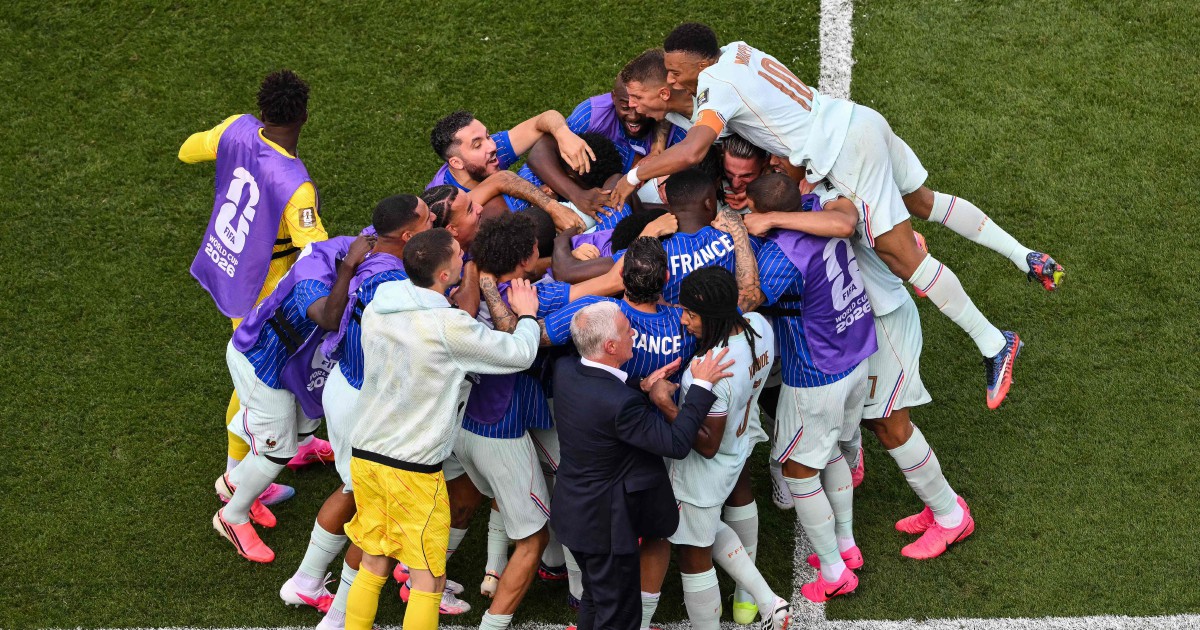
Spain's former prime minister Mariano Rajoy has found himself at the centre of a diplomatic controversy after making contentious remarks about the composition of France's national football squad. The conservative politician's comments, delivered on Sunday, prompted immediate condemnation across Spain and France, with observers accusing him of promoting xenophobic sentiment ahead of what was likely a significant sporting encounter between the two nations.
Rajoy's assertion that the French team contained "no French players" struck many as a thinly veiled criticism of immigration and multiculturalism in France. The statement appeared designed to challenge the national identity of France's squad, suggesting that the players did not represent France's authentic character. Such remarks carry particular weight in Spanish political discourse, where debates about national identity and immigration often become flashpoints in broader ideological disputes.
The backlash emerged swiftly from multiple quarters. Spanish commentators and political figures questioned whether such rhetoric served any constructive purpose, especially given Spain's own multicultural football heritage and immigrant communities. Critics noted that similar arguments could easily be levelled at Spain's own national team, which has benefited enormously from international talent and players of diverse backgrounds. The apparent hypocrisy of attacking France's team composition while Spain itself benefits from immigration fuelled much of the domestic criticism.
In France, the response was equally sharp. French observers interpreted Rajoy's comments as an attack on French republicanism and the nation's constitutional commitment to treating all citizens equally regardless of ethnic or national origin. The remark seemed to question the legitimacy of French citizens of immigrant descent representing their country, an argument that directly contradicts modern French legal and social principles. French commentators highlighted how such sentiments reflect broader xenophobic movements across Europe that attempt to narrowly define national identity along ethnic rather than civic lines.
The timing of Rajoy's comments added another layer of concern. Coming as part of sports commentary, the remarks demonstrated how inflammatory rhetoric can seep into ostensibly apolitical spaces, using football as a vehicle for expressing exclusionary views about immigration and belonging. This pattern has become increasingly visible across European political discourse, where sporting events often become occasions for advancing nationalist arguments that veer into xenophobic territory.
For Malaysian and Southeast Asian observers, the incident offers important insights into evolving European identity politics. Spain and France, both established democracies with strong republican traditions, nonetheless grapple with questions about national identity and immigration that often mirror debates in the region. Southeast Asian nations with their own histories of migration, multiculturalism, and the integration of diaspora communities may find relevant lessons in how European societies wrestle with defining national belonging in ethnically diverse contexts.
Rajoy's remarks also reflected broader European political trends that have gained momentum in recent years. Conservative and right-wing parties across the continent have increasingly adopted rhetoric challenging the legitimacy of citizens with immigrant backgrounds, seeking to create artificial distinctions between "authentic" nationals and others. These arguments have gained particular resonance in countries experiencing high immigration and economic uncertainty, though they fundamentally misconstrue how modern nations actually function demographically.
The football context is significant because national sports teams have always represented nations through the prism of talent, achievement, and institutional structures rather than ethnic homogeneity. France's squad, like most successful European teams, reflects the nation's actual composition: a society enriched by immigration and built by people of diverse backgrounds. By suggesting these players somehow lack authenticity, Rajoy proposed a vision of national representation divorced from contemporary reality and legal frameworks that treat all citizens as equal members of the body politic.
Spanish football fans and analysts were particularly vocal in pointing out the inconsistency of such criticism. Spain's successful national teams in recent decades have included players of diverse ethnic and immigrant backgrounds who became legendary figures in Spanish football. The suggestion that national identity could be questioned based on player composition struck many as fundamentally misguided and counterproductive to the inclusive vision of Spanish society that many citizens preferred to promote.
The incident underscores how political figures remain under significant scrutiny regarding their public statements, particularly on matters touching national identity and immigration. In an era of heightened social sensitivity to xenophobia and discrimination, remarks that seem to challenge the legitimacy of citizens based on ethnic background face immediate and substantial opposition. Rajoy's comments, whether intended as passing sports commentary or deliberate political statement, ultimately achieved neither diplomatic finesse nor constructive engagement with legitimate debates about immigration policy.
As Spain and France continue their relationship as EU partners and neighbours, such incidents serve as reminders of the persistent undercurrent of nationalist sentiment in European politics. The controversy also highlights how easily sports discourse can become corrupted by exclusionary ideology, transforming discussions of athletic achievement into vehicles for promoting narrow definitions of national belonging. For the international community watching European political developments, the episode demonstrates that even experienced former leaders can stumble into xenophobic rhetoric when discussing multicultural societies.

