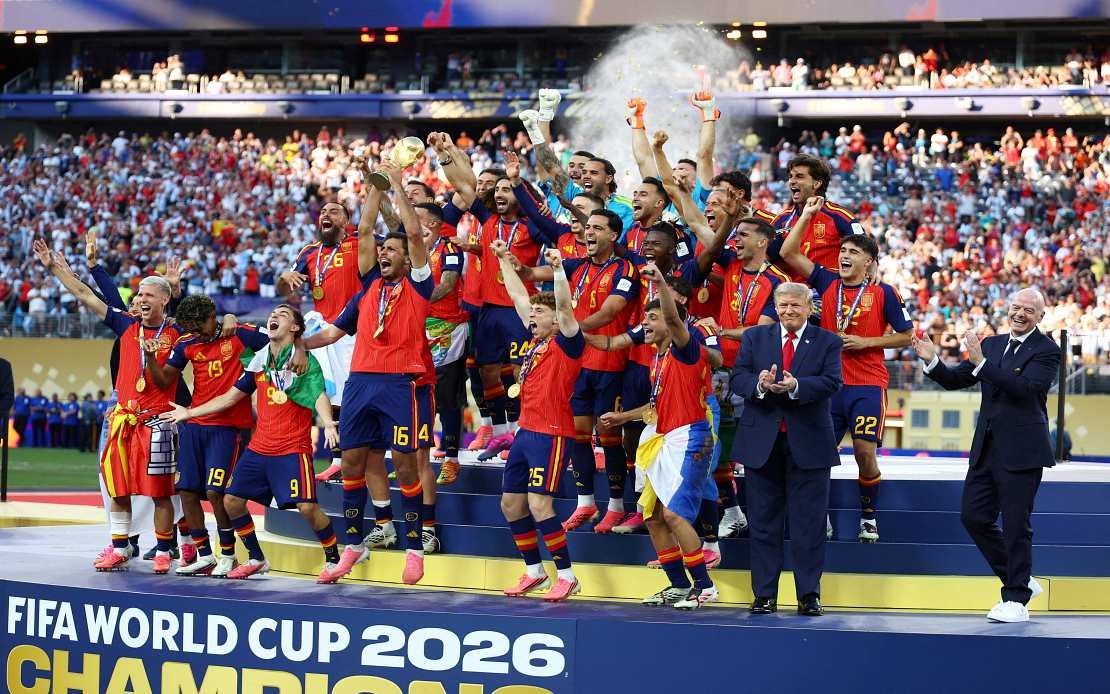
Spain's triumphant World Cup squad will touch down in Madrid on Monday afternoon to a hero's welcome, with organisers bracing for unprecedented crowds across the capital as the nation celebrates its second men's tournament title. The chartered flight carrying captain Rodri and his teammates is scheduled to arrive at Madrid airport at 12.50 pm, marking the beginning of what promises to be one of the most significant sporting celebrations in recent Spanish history.
The Spanish Football Federation has orchestrated an ambitious itinerary designed to accommodate the estimated hundreds of thousands of supporters expected to line Madrid's streets. Following their arrival at the airport, the squad will proceed directly to the Royal Palace, where King Felipe VI will host an official state reception. This formal acknowledgment of the team's achievement underscores the cultural significance of the victory within Spanish society, where football commands deep national pride and emotional investment.
The centrepiece of Monday's celebrations will be an open-top bus parade through central Madrid, a traditional spectacle that allows fans to personally greet their heroes. The route through the capital's main thoroughfares is expected to draw unprecedented numbers as supporters gather to witness the team displaying the World Cup trophy. Such parades have historically transformed major Spanish cities into seas of red and gold, with spontaneous festivities spilling beyond official venues.
Ceremonialsculpted around Cibales Square will provide the focal point for the day's festivities, with the main stage show commencing at 6 pm. The team is scheduled to make their grand appearance at 9 pm, when they will address the assembled crowds from the iconic plaza. This timing suggests organisers expect the gathering to swell throughout the afternoon and evening as word spreads and working hours conclude, potentially drawing one of the largest civilian assemblies Madrid has witnessed in years.
The emotional resonance of Spain's victory extends beyond mere sporting achievement. By defeating Argentina through Ferran Torres' extra-time goal in the United States, the Spanish national team claimed a second men's World Cup title, adding to their previous championship and cementing their status among football's elite nations. The presence of the Spanish royal family at the New Jersey stadium, alongside Prime Minister Pedro Sánchez, reflected the governmental and institutional weight placed on the tournament and the team's performance.
Dome the tournament. Prime Minister Sánchez subsequently posted on the social media platform X, declaring "We Are World Champions. Our national team is tremendous. Thanks, Team." His public recognition both acknowledged the players' contribution and sought to channel the collective euphoria toward national unity and pride. Such political engagement with sporting success remains a defining characteristic of major tournament victories, where leaders recognise the capacity of athletic achievement to temporarily transcend partisan divisions.
Defender Marc Cucurella articulated the players' anticipation of returning home, noting their eagerness to share the triumph with supporters who could not attend matches. His remarks reflect a growing awareness among modern athletes of their responsibility to recognise fan sacrifice and commitment, whilst simultaneously emphasising that championship victories belong to the entire nation rather than merely the twenty-three individuals who competed. This democratisation of celebration has become standard rhetoric in contemporary sports, yet carries genuine weight when examining the emotional investment communities make in national teams.
For regional observers beyond Spain's borders, the celebration offers instructive parallels regarding how nations absorb and process major sporting triumphs. Throughout Southeast Asia, where football commands passionate followings despite the region's teams not achieving World Cup glory, the Spanish homecoming illustrates the magnitude of national sporting occasions. The scale of planned festivities demonstrates how football transcends entertainment to become a vehicle for expressing collective identity, national pride, and social cohesion.
The logistics of accommodating such crowds present practical challenges that Spanish authorities must navigate carefully. Crowd management, security arrangements, and traffic coordination will require meticulous planning to ensure celebrations remain joyful rather than becoming chaotic. Madrid's experience hosting major events will prove invaluable, though the spontaneous nature of popular celebrations means unexpected circumstances inevitably arise.

