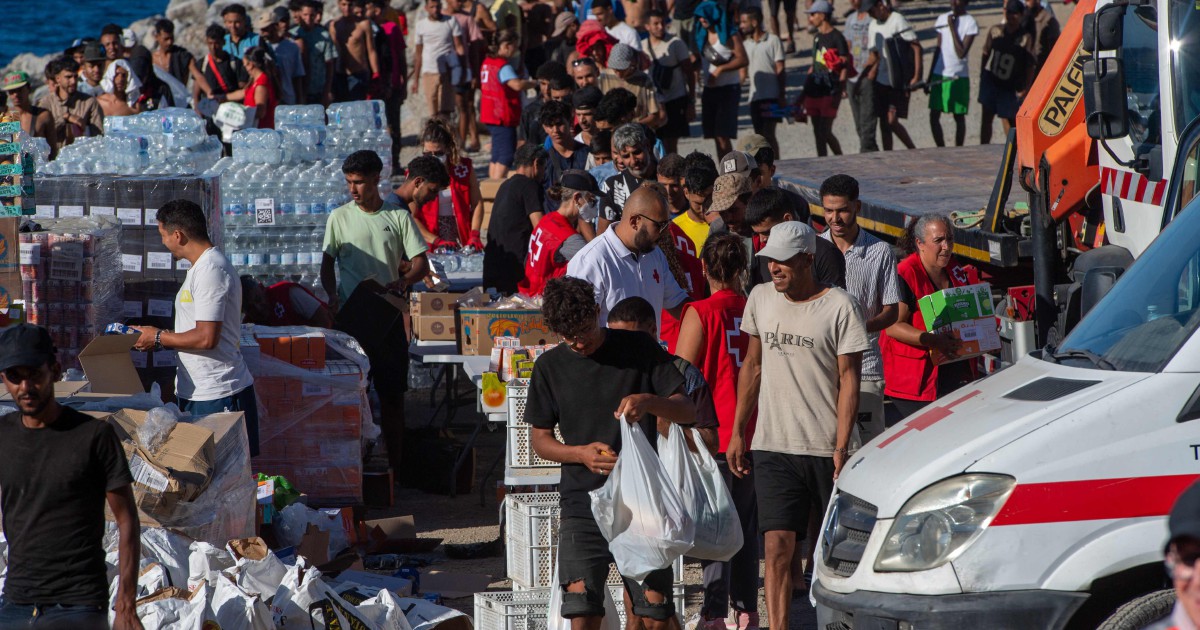
Spanish Prime Minister Pedro Sanchez has attributed blame for a disinformation campaign surrounding the Ceuta migrant crisis to Russia and Israel, marking a significant development in the diplomatic fallout from the incident. In statements delivered on Monday, Sanchez indicated that intelligence assessments had detected coordinated efforts by these two nations to amplify false narratives concerning Spain's approach to migration. The allegation stands in contrast to initial speculation about potential involvement from Morocco, which Sanchez explicitly absolved of responsibility in the spreading of misleading claims.
The Ceuta migration surge, which occurred in the preceding month, saw thousands of migrants attempt to cross into the Spanish enclave from the African mainland, overwhelming local authorities and prompting emergency responses. This dramatic influx had prompted swift condemnation from European political figures and forced the Spanish government into crisis management mode. The underlying causes of the sudden movement remained contested, with various observers pointing to policy shifts, regional tensions, or external manipulation as potential triggers. Sanchez's statement suggests that deliberate information warfare played a meaningful role in either precipitating or exacerbating the phenomenon.
While the Spanish prime minister provided public acknowledgment of these intelligence findings, he refrained from detailing the specific mechanisms through which the disinformation was distributed. Modern campaigns of this nature typically exploit social media platforms, messaging applications, and news outlets sympathetic to particular geopolitical interests. For Malaysian and Southeast Asian observers, the Ceuta incident underscores how migration crises in Europe increasingly become fodder for international manipulation, a pattern with troubling echoes in the Indo-Pacific region where similar vulnerabilities exist along migration corridors and in refugee hosting arrangements.
The invocation of Russian disinformation aligns with broader patterns documented across European and North American contexts, where Moscow has been repeatedly linked to campaigns designed to deepen social divisions and undermine confidence in government institutions. Russian state actors and their proxies have developed sophisticated methodologies for identifying existing tensions and magnifying them through coordinated amplification across digital platforms. Spain's migration debate, already contentious domestically given the country's geographic position as Europe's primary gateway for African arrivals, provided fertile ground for such manipulation.
The reference to Israeli involvement introduces a more novel dimension to the disinformation narrative. Israel's strategic communication apparatus has faced scrutiny in recent years for its digital outreach efforts, though accusations of coordinated disinformation campaigns specifically targeting European migration policy remain less commonly documented than those directed toward Russia. The inclusion of Israel in Sanchez's assessment suggests either that intelligence agencies possessed concrete evidence of joint activity, or that Spain's government sought to avoid appearing to single out any single nation. The geopolitical implications merit careful examination, particularly regarding how traditional adversaries and regional powers might coordinate informational strategies.
Sanchez's explicit exoneration of Morocco carries particular diplomatic weight given the bilateral relationship's historic complexity. Spain and Morocco share the Strait of Gibraltar and maintain contested maritime boundaries; their relationship oscillates between cooperation and confrontation depending on political circumstances and leadership personalities. The Ceuta crisis itself had threatened to destabilize bilateral ties, with some Spanish officials and media outlets initially suggesting Moroccan complicity or indifference. By publicly clearing Morocco of spreading disinformation, Sanchez appears to be attempting to compartmentalize the migration crisis from broader diplomatic disputes, limiting the potential for cascading tensions.
For regional analysts in Southeast Asia, the incident illustrates how migration flows—an issue of acute relevance across ASEAN territories—increasingly become subject to information warfare. The Rohingya refugee crisis, irregular migration through the Sulu-Celebes corridor, and Bangladeshi emigration routes all represent potential vectors for similar manipulation. Understanding how external powers might exploit these vulnerabilities through coordinated disinformation campaigns should inform policymaking in the region. Malaysia, Indonesia, Thailand, and the Philippines all face potential exposure to strategies designed to exploit migration controversies and deepen political instability.
The timing of Sanchez's statement and its framing deserve scrutiny as well. By attributing the crisis primarily to foreign manipulation rather than domestic policy choices or regional conditions, the Spanish government positioned itself as a victim of external interference rather than accountable for its own migration governance. This narrative construction, while politically expedient, may obscure genuine policy debates about asylum procedures, border management, and Spain's role within the broader European migration framework. Such framing becomes particularly relevant in contexts where public discourse around migration has already been heavily polarized by existing disinformation.
The broader implications for international cooperation on information security remain substantial. If Russian and Israeli actors coordinated efforts targeting Spain, the incident suggests that traditional geopolitical rivals and regional powers may nonetheless collaborate on specific informational objectives when interests align. This possibility complicates assumptions about clear adversarial blocs in digital space and raises questions about how nations might develop defensive strategies against multi-actor disinformation campaigns. International frameworks for attribution and response remain underdeveloped, leaving states like Spain to publicly identify culprits while lacking robust enforcement mechanisms.
Moving forward, Spain's government faces the challenge of addressing both the underlying migration pressures in the Mediterranean region and the informational vulnerabilities that foreign actors successfully exploited. The incident demonstrates that even relatively mature democracies with sophisticated intelligence capabilities remain susceptible to well-coordinated disinformation efforts, particularly when targeting issues where genuine public concern and political disagreement already exist. For Malaysia and other Southeast Asian nations navigating similar complex terrain, the Ceuta crisis offers instructive lessons about the layered vulnerabilities inherent in migration management and the necessity of developing integrated strategies addressing both material security and information environment resilience.

